-
Spring Boot_1【配置环境&&项目结构&&Spring Security相关】
一:配置环境

二:项目开发
A.项目结构

B.注解


C.项目各层实现
C1:pojo层

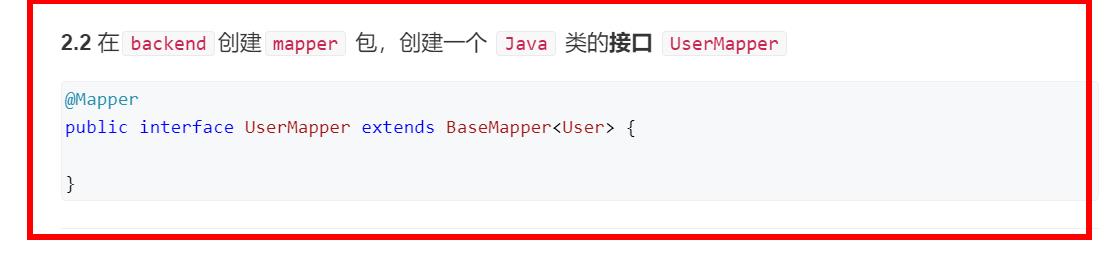
C2:mapper层
C3:controller层
@RestController public class UserController { @Autowired UserMapper userMapper; /** * 查询所有用户 */ @GetMapping("/user/all/") public List<User> getAll() { return userMapper.selectList(null); } /** * 查询单个用户 */ @GetMapping("/user/{userId}/") public User getUser(@PathVariable int userId) { QueryWrapper<User> queryWrapper = new QueryWrapper<>(); queryWrapper.eq("id",userId); return userMapper.selectOne(queryWrapper); // 范围遍历 // public ListgetUser(int userId) // queryWrapper.ge("id", 2).le("id", 3); // return userMapper.selectList(queryWrapper); } /** * 添加某个用户 直接输入 id name password * @param userId * @param username * @param password * @return Add User Sucessfully */ @GetMapping("/user/add/{userId}/{username}/{password}/") public String addUser (@PathVariable int userId, @PathVariable String username, @PathVariable String password) { User user = new User(userId, username, password); userMapper.insert(user); return "Add User Sucessfully"; } /** * 删除某个用户,直接输入 id * @param userId * @return Delete User Successfully */ @GetMapping("/user/delete/{userId}/") public String deleteUser(@PathVariable int userId) { userMapper.deleteById(userId); return "Delete User Successfully"; } }- 1
- 2
- 3
- 4
- 5
- 6
- 7
- 8
- 9
- 10
- 11
- 12
- 13
- 14
- 15
- 16
- 17
- 18
- 19
- 20
- 21
- 22
- 23
- 24
- 25
- 26
- 27
- 28
- 29
- 30
- 31
- 32
- 33
- 34
- 35
- 36
- 37
- 38
- 39
- 40
- 41
- 42
- 43
- 44
- 45
- 46
- 47
- 48
- 49
- 50
- 51
- 52
- 53
- 54
- 55
- 56
- 57
- 58
- 59
- 60
- 61
1.user+生成的密码
spring security机制:用户认证

C4:service层
2.明文密码(数据库) [注数据库存密码要{noop}]


第一步

@Service public class UserDetailsServiceImpl implements UserDetailsService { //快捷键 windowsalt + insert / mac是option + enter @Autowired private UserMapper userMapper; // 传入 username 返回对应的信息,在这里也就是id name pwd @Override public UserDetails loadUserByUsername(String username) throws UsernameNotFoundException { QueryWrapper<User> queryWrapper = new QueryWrapper<>(); queryWrapper.eq("username", username); User user = userMapper.selectOne(queryWrapper); if (user == null) { throw new RuntimeException("用户不存在"); } return new UserDetailsImpl(user); } }- 1
- 2
- 3
- 4
- 5
- 6
- 7
- 8
- 9
- 10
- 11
- 12
- 13
- 14
- 15
- 16
- 17
- 18
- 19
- 20
第二步

@Data @NoArgsConstructor @AllArgsConstructor public class UserDetailsImpl implements UserDetails { private User user; @Override public Collection<? extends GrantedAuthority> getAuthorities() { return null; } @Override public String getPassword() { return user.getPassword(); } @Override public String getUsername() { return user.getUsername(); } @Override public boolean isAccountNonExpired() { return true; } @Override public boolean isAccountNonLocked() { return true; } @Override public boolean isCredentialsNonExpired() { return true; } @Override public boolean isEnabled() { return true; } }- 1
- 2
- 3
- 4
- 5
- 6
- 7
- 8
- 9
- 10
- 11
- 12
- 13
- 14
- 15
- 16
- 17
- 18
- 19
- 20
- 21
- 22
- 23
- 24
- 25
- 26
- 27
- 28
- 29
- 30
- 31
- 32
- 33
- 34
- 35
- 36
- 37
- 38
- 39
- 40
- 41
- 42
- 43
- 44
3.密文密码(数据库)
@Configuration @EnableWebSecurity public class SecurityConfig { @Bean public PasswordEncoder passwordEncoder() { return new BCryptPasswordEncoder(); } }- 1
- 2
- 3
- 4
- 5
- 6
- 7
- 8
- 9
- 10

-
相关阅读:
DNS协议、ICMP协议、NAT技术
A Cooperative Approach to Particle Swarm Optimization
QGis软件 —— 9、QGis - 由点绘制热力图来模拟人流量(绘制点方式、excel导入数据方式)
Go基础——指针、结构体
深入理解 Python 虚拟机:字节(bytes)的实现原理及源码剖析
使用C语言实现静态顺序表
QT中的inherits
kafka环境配置以及Java代码测试
大龄、零基础,想转行做网络安全。怎样比较可行?
网络、网络协议模型、UDP编程——计算机网络——day01
- 原文地址:https://blog.csdn.net/qq_52384627/article/details/126226036
