-
《算法系列》之队列与堆
简介
队列和堆也是基础的数据结构,无论刷不刷题都需要了解的数据结构。其中堆可以看做是优先队列,在很多语言中,都有优先队列或者说堆的的容器可以直接使用,但是在面试中,面试官更倾向于让更面试者自己实现一个堆。所以建议读者掌握大小根堆的实现方法,尤其要搞懂建堆、调整和删除的过程。
理论基础
队列(Queue)是一种先进先出(FIFO,First-In-First-Out)的线性表。和栈一样,队列是一种操作受限制的线性表。在具体应用中通常用链表或者数组来实现。队列只允许在后端(称为
rear)进行插入操作,在前端(称为front)进行删除操作。队列的学习可以类比栈。队列是实现广度优先搜索的重要数据结构。

基于链表实现队列:public class Queueimplements Iterable { private Node head; private Node last; private int N; // 内部类 private class Node{ // 链表所存元素 public T item; public Node next; // Node的有参构造 public Node(T item,Node next){ this.item=item; this.next=next; } } // 队列的构造 public Queue(){ // head结点不存储元素 this.head=new Node(null,null); this.last=null; this.N=0; } public boolean isEmpty(){ return N==0; } public int size(){ return N; } // 尾插 public void enqueue(T t){ // 尾结点为null if(last==null){ last=new Node(t,null); head.next=last; }else{ // 尾结点不为null // 记录旧尾结点 Node oldlast=last; // 更新尾结点 last=new Node(t,null); // 旧的尾结点指向新的尾结点 oldlast.next=last; } N++; } // 头取 public T dequeue(){ if(isEmpty()){ return null; }else{ // 旧的首结点的下一个结点 Node oldFirst=head.next; // 更新首结点的下一个结点 head.next=oldFirst.next; N--; // 因为取元素是在删除,如果删完了就需要重置last=null if(isEmpty()){ last=null; } // 先进先出,头取 return oldFirst.item; } } @Override public Iterator iterator() { return new MyIterator();} private class MyIterator implements Iterator{ // 记录每次遍历的结点 private Node n; MyIterator(){ this.n=head; } @Override public boolean hasNext() { return n.next!=null; } @Override public Object next() { n=n.next; return n.item; } } public static void main(String[] args) { Queue q=new Queue(); q.enqueue("a"); q.enqueue("b"); q.enqueue("c"); q.enqueue("d"); for(String k:q){ System.out.println(k); } // 删除一个元素(先进先出) System.out.println(q.dequeue()); for(String k:q){ System.out.println(k); } } } - 1
- 2
- 3
- 4
- 5
- 6
- 7
- 8
- 9
- 10
- 11
- 12
- 13
- 14
- 15
- 16
- 17
- 18
- 19
- 20
- 21
- 22
- 23
- 24
- 25
- 26
- 27
- 28
- 29
- 30
- 31
- 32
- 33
- 34
- 35
- 36
- 37
- 38
- 39
- 40
- 41
- 42
- 43
- 44
- 45
- 46
- 47
- 48
- 49
- 50
- 51
- 52
- 53
- 54
- 55
- 56
- 57
- 58
- 59
- 60
- 61
- 62
- 63
- 64
- 65
- 66
- 67
- 68
- 69
- 70
- 71
- 72
- 73
- 74
- 75
- 76
- 77
- 78
- 79
- 80
- 81
- 82
- 83
- 84
- 85
- 86
- 87
- 88
- 89
- 90
- 91
- 92
- 93
- 94
- 95
- 96
- 97
- 98
- 99
- 100
- 101
- 102
- 103
- 104
- 105
- 106
- 107
- 108
- 109
- 110
- 111
- 112
- 113
- 114
- 115
堆(Heap)是计算机科学中一类特殊的数据结构,是最高效的优先级队列。 堆通常是一个可以被看做一棵完全二叉树的数组对象。 堆是非线性数据结构,相当于一维数组,有两个直接后继。将根结点最大的堆叫做最大堆或大根堆,根结点最小的堆叫做最小堆或小根堆。堆总是满足下列性质:
- 堆中某个结点的值总是不大于或不小于其父结点的值。
- 堆总是一棵完全二叉树。

基于数组实现大顶堆:
public class MyPriorityQueue { public static void shiftDown(int[] arr,int parent){ // 首先的记录孩子的节点位置,parent元素的下表是0 // 左孩子节点的下标是2*parent + 1只需要记录左孩子的节点位置即可,如果父节点的值,大于子节点的值 // 需要将节点进行交换,交换的时候,是将两个子节点中最小的节点进行交换 int child = 2* parent + 1; // 记录数组长度,也就是堆的长度 int size = arr.length; while (child < size){ // 找到节点中的最大值 if(child + 1 < size && arr[child] < arr[child + 1]){ child = child + 1; } // 找到之后将节点进行交换 if(arr[parent] < arr[child]){ int temp = arr[parent]; arr[parent] = arr[child]; arr[child] = temp; }else { // 此时不用进行调整 break; } // 完成之后让节点parent指向子节点继续向下执行 parent = child; child = 2*parent + 1; } } public static void shiftUp(int[] arr, int child) { // 父节点的元素下标正是child - 1 再除以2 int parent = (child-1) / 2; while (child > 0){ // 大堆的方式,把子节点向上调整 if(arr[parent] < arr[child]){ int temp = arr[parent]; arr[parent] = arr[child]; arr[child] = temp; }else { break; } child = parent; parent = (child-1) / 2; } } // 建堆操作 public static void createHeap(int[] array){ for(int i = (array.length - 1 -1) / 2; i >= 0;i--){ shiftDown(array,i); } } private int[] arr = new int[100]; // 记录对的元素个数 private int size = 0; // 往堆中插入元素 public void offer(int val){ if(size >= arr.length){ return; } arr[size] = val; size ++; // 插入之后,需要将元素进行向上调整 // 将刚插入的最后一个元素向上调整 shiftUp(arr, size-1); } // 获取堆顶元素 public Integer peek(){ if(size == 0){ return null; } return arr[0]; } // 删除操作,一定是删除堆顶元素 public Integer poll(){ if(size == 0){ return null; } // 获取堆顶元素 int popElement = arr[0]; // 和堆的最后一个元素进行交换 int temp = popElement; popElement = arr[size -1]; arr[size - 1] = popElement; // 交换完成之后,删除即可 size--; // 删除之后,进行shiftUp操作 shiftUp(arr, size - 1); return popElement; }- 1
- 2
- 3
- 4
- 5
- 6
- 7
- 8
- 9
- 10
- 11
- 12
- 13
- 14
- 15
- 16
- 17
- 18
- 19
- 20
- 21
- 22
- 23
- 24
- 25
- 26
- 27
- 28
- 29
- 30
- 31
- 32
- 33
- 34
- 35
- 36
- 37
- 38
- 39
- 40
- 41
- 42
- 43
- 44
- 45
- 46
- 47
- 48
- 49
- 50
- 51
- 52
- 53
- 54
- 55
- 56
- 57
- 58
- 59
- 60
- 61
- 62
- 63
- 64
- 65
- 66
- 67
- 68
- 69
- 70
- 71
- 72
- 73
- 74
- 75
- 76
- 77
- 78
- 79
- 80
- 81
- 82
- 83
- 84
- 85
- 86
- 87
- 88
- 89
- 90
- 91
- 92
- 93
- 94
- 95
- 96
- 97
- 98
解题心得
- 单纯的队列与堆的题其实并不算多,但我们仍要重点了解这两种基础数据结构。
- 堆排序在很多大公司的面试中很常见,需要重点学习。
- 队列在广度优先搜索中很有用。
- 这里的堆是指数据结构,和操作系统的“堆栈”概念是两种概念。
- 堆可以看做是优先队列。
- 堆通常是一个可以被看做一棵完全二叉树的数组对象。
算法题目
215. 数组中的第K个最大元素
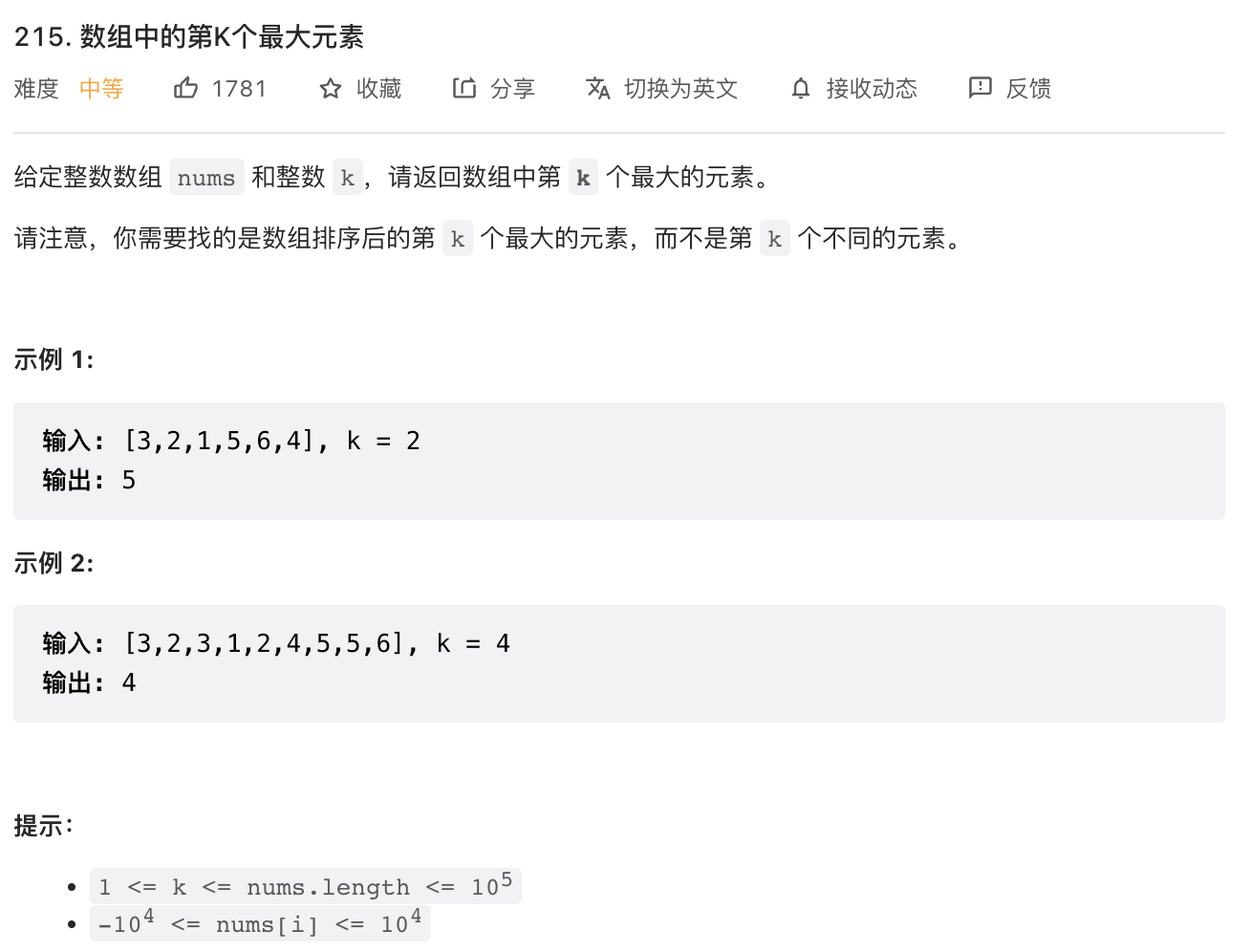
题目解析:我们也可以使用堆排序来解决这个问题,即建立一个大根堆,做 k - 1次删除操作后堆顶元素就是我们要找的答案。
代码如下:/** * 基于堆排序的选择方法 */ class Solution { public int findKthLargest(int[] nums, int k) { int heapSize = nums.length; buildMaxHeap(nums, heapSize); for (int i = nums.length - 1; i >= nums.length - k + 1; --i) { swap(nums, 0, i); --heapSize; maxHeapify(nums, 0, heapSize); } return nums[0]; } public void buildMaxHeap(int[] a, int heapSize) { for (int i = heapSize / 2; i >= 0; --i) { maxHeapify(a, i, heapSize); } } public void maxHeapify(int[] a, int i, int heapSize) { int l = i * 2 + 1, r = i * 2 + 2, largest = i; if (l < heapSize && a[l] > a[largest]) { largest = l; } if (r < heapSize && a[r] > a[largest]) { largest = r; } if (largest != i) { swap(a, i, largest); maxHeapify(a, largest, heapSize); } } public void swap(int[] a, int i, int j) { int temp = a[i]; a[i] = a[j]; a[j] = temp; } }- 1
- 2
- 3
- 4
- 5
- 6
- 7
- 8
- 9
- 10
- 11
- 12
- 13
- 14
- 15
- 16
- 17
- 18
- 19
- 20
- 21
- 22
- 23
- 24
- 25
- 26
- 27
- 28
- 29
- 30
- 31
- 32
- 33
- 34
- 35
- 36
- 37
- 38
- 39
- 40
- 41
218. 天际线问题


题目解析:如果将所有的建筑的边界作为一条线,那么所有的答案都在这些线上。考虑任意一条线,那么这条线和所有相交的建筑(这里排除掉刚好和建筑右边界相交),取一个最高的高度,然后判断这个高度是否和ans末尾最后一个元素的高度相等,不相等就加入进去,在这里为了快速得到最高的高度,使用一个堆来进行记录。
代码如下:/** * 扫描线 + 优先队列 */ class Solution { public List- 1
- 2
- 3
- 4
- 5
- 6
- 7
- 8
- 9
- 10
- 11
- 12
- 13
- 14
- 15
- 16
- 17
- 18
- 19
- 20
- 21
- 22
- 23
- 24
- 25
- 26
- 27
- 28
- 29
- 30
- 31
- 32
- 33
- 34
- 35
- 36
- 37
- 38
- 39
- 40
- 41
- 42
- 43
225. 用队列实现栈

题目解析:这题多少有点多此一举的感觉,为了满足栈的特性,即最后入栈的元素最先出栈,在使用队列实现栈时,应满足队列前端的元素是最后入栈的元素。可以使用两个队列实现栈的操作,其中 queue1用于存储栈内的元素,queue2作为入栈操作的辅助队列。
代码如下:/** * 两个队列 */ class MyStack { Queuequeue1; Queue queue2; /** Initialize your data structure here. */ public MyStack() { queue1 = new LinkedList (); queue2 = new LinkedList (); } /** Push element x onto stack. */ public void push(int x) { queue2.offer(x); while (!queue1.isEmpty()) { queue2.offer(queue1.poll()); } Queue temp = queue1; queue1 = queue2; queue2 = temp; } /** Removes the element on top of the stack and returns that element. */ public int pop() { return queue1.poll(); } /** Get the top element. */ public int top() { return queue1.peek(); } /** Returns whether the stack is empty. */ public boolean empty() { return queue1.isEmpty(); } } - 1
- 2
- 3
- 4
- 5
- 6
- 7
- 8
- 9
- 10
- 11
- 12
- 13
- 14
- 15
- 16
- 17
- 18
- 19
- 20
- 21
- 22
- 23
- 24
- 25
- 26
- 27
- 28
- 29
- 30
- 31
- 32
- 33
- 34
- 35
- 36
- 37
- 38
- 39
回到首页
下一篇
-
相关阅读:
马尔可夫预测案例分析
大前端 - 泛客户端 - Electron
LeetCode_动态规划_中等_97.交错字符串
第三类医疗器械经营许可证经营范围
前端修罗场,祝您中秋快乐
在 Python 中构建一体化音频分析工具包,在一个地方分析您的音频文件
ECMAScrip-ES6-新变量-let--注意块级作用域
linux,从零安装mysql 8.0.30 ,并且更新至mysql 8.0.36
Ubuntu 20.04 安装 SmartGit
wx.request请求eggjs报invalid csrf token
- 原文地址:https://blog.csdn.net/qq_22136439/article/details/126089658
