• STL--List--与正反向迭代器复写


    前言:

    • 本文介绍STL——list功能复写,重点是迭代器,感受泛型编程,函数重载之美

    • 博主收集的资料New Young,连载中。

    • 博主收录的问题:New Young

    • 转载请标明出处:New Young

    迭代器

    正向迭代器

    思路

    1. list的关键地方是对迭代器的复写,在复写这一过程,可以不断体会C++语言泛型编程,函数重载的魅力

    2. 不同于vector,string,其底层类似数组,它们的迭代器是对元素对象的==“通用指针”,通过指针的运算,就可以完成很多操作:++,解引用等,但是因为结点是在堆上是随机存储的,因此链表的迭代器必然要进行改变,同时为了支持算术运算(++,–…)解引用等操作,链表的迭代器必然要封装成一个结构体==。

    3. 为什么使用结构体?结构体默认成员是public,方便访问成员。

    4. 同时又因为list是有const之分,因此迭代器分为iterarot和const_iterator,注意这里的const是指节点中的data不可更改,但是迭代器仍是可以改变的,对比常量指针)**但是这2者的功能非常类似,因此这里就通过类模板的模板参数进行区别。----``泛型编程**

    请添加图片描述

    构造函数

    注意拷贝构造函数的形参,是最小权限,可以满足很多情形:匿名对象,类型提升

    //迭代器
    	template 
    	struct list_iterator
    	{
    typedef list_iterator					 iterator;
    		typedef list_iterator   const_iterator;
    		typedef list_node									Node;
    		typedef list_iterator						Self;
    		Node* _node;
    		list_iterator( Node*x)
    			:_node(x)
    		{
    			;
    		}
    		list_iterator() 
    		{}
    		//场景:权限缩小的拷贝,同时因为计算需要,生成临时对象时会调用
    		//其它的通过默认的拷贝构造和默认赋值运算符即可
    		list_iterator(const iterator& x) : _node(x._node)
    		{
    
    		}
    
    • 1
    • 2
    • 3
    • 4
    • 5
    • 6
    • 7
    • 8
    • 9
    • 10
    • 11
    • 12
    • 13
    • 14
    • 15
    • 16
    • 17
    • 18
    • 19
    • 20
    • 21
    • 22

    ++,–

    	typedef list_iterator					 iterator;
    		typedef list_iterator   const_iterator;
    		typedef list_node									Node;
    		typedef list_iterator						Self;
    Self& operator++()
    {
    	_node = _node->_next;
    	return *this;
    }
    //后置++
    Self  operator++(int)
    {
    	Self tmp(*this);
    	_node = _node->_next;
    	return tmp;
    }
    
    Self& operator--()
    {
    	_node = _node->_prev;
    	return *this;
    }
    //后置++
    Self  operator--(int)
    {
    	Self tmp(*this);
    	_node = _node->_prev;
    	return tmp;
    }
    
    
    • 1
    • 2
    • 3
    • 4
    • 5
    • 6
    • 7
    • 8
    • 9
    • 10
    • 11
    • 12
    • 13
    • 14
    • 15
    • 16
    • 17
    • 18
    • 19
    • 20
    • 21
    • 22
    • 23
    • 24
    • 25
    • 26
    • 27
    • 28
    • 29
    • 30

    *,->

    1. 通过返回值的引用,当*时就可以防止const时,进行的写操作

    2. 对于节点中存放内置类型的数据时,通过*就可以得到数据但是对于自对于类型如果需要访问数据成员时,需要->运算符但是在使用->,为避免出现->->的情况,编译器会进行优化为一个->
      如日期类 cout< < it- > year<<“” << it->month<<“”<< it->day< 本质上要想得到year,需要 (it->) ->year=Date->year,只是编译器优化了一下

    	Ref operator*()
    		{
    			return _node->_data;
    		}
    Ptr  operator->()
    		{
    			return &_node->_data;
    		
    		}
    
    • 1
    • 2
    • 3
    • 4
    • 5
    • 6
    • 7
    • 8
    • 9

    !=,==

    依据不同类型的迭代器,可能会因为生产一个临时的同类型的迭代器如:iterator和const iterator进行比较,会生成一个iterator的临时const_iterator的拷贝
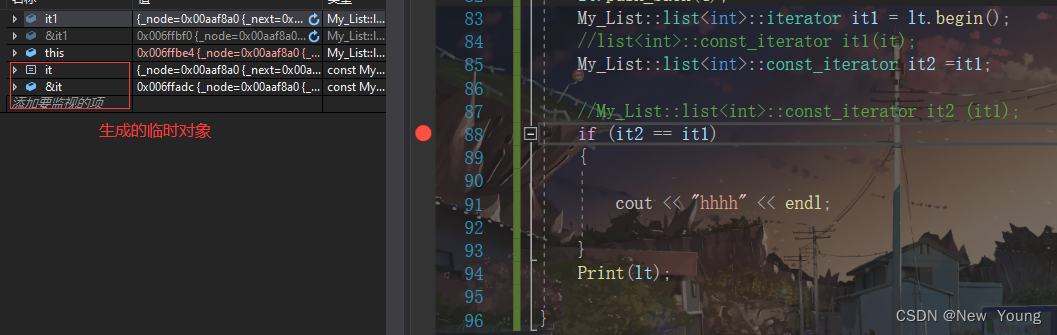
    请添加图片描述

    	
    		bool operator !=(const Self& it)const 
    		{
    			return _node != it._node;
    		}
    		bool operator ==(const Self& it)const
    		{
    			return _node == it._node;
    
    		}
    
    • 1
    • 2
    • 3
    • 4
    • 5
    • 6
    • 7
    • 8
    • 9
    • 10

    反向迭代器

    1. 反向迭代器是对正向迭代器的复用,同时几乎所有的反向迭代器都是正向迭代器的复用,因此这里利用类模板来构造反向迭代器
    2. 反向迭代器的rbegin是正向迭代器的end(),rend()是正向迭代器的begin().
    3. 对于解引用,因为rbegin和rend的特殊性,反向迭代器返回的是迭代器前一个节点的数据

    成员

    	template
    	class reverse_iterator
    	{
    		
    	public:
    		typedef reverse_iterator self;	
         private:
    		Iterator _it;
    
    • 1
    • 2
    • 3
    • 4
    • 5
    • 6
    • 7
    • 8

    构造函数

    template
    	class reverse_iterator
    	{
    		
    	public:
    		typedef reverse_iterator self;
    		//这种形式的形参是最小权限,可以满足任何的拷贝构造
    		reverse_iterator(const Iterator& it)
    			:_it(it)
    		{
    			;
    		}
    
    • 1
    • 2
    • 3
    • 4
    • 5
    • 6
    • 7
    • 8
    • 9
    • 10
    • 11
    • 12

    ++,–

    self& operator++()
    		{
    			--_it;
    			return *this;
    		}
    
    		self operator++(int)
    		{
    			self tmp = _it--;
    			return tmp;
    		}
    
    		self& operator--()
    		{
    			++_it;
    			return *this;
    		}
    
    		self operator--(int)
    		{
    			self tmp = _it++;
    			return tmp;
    		}
    
    • 1
    • 2
    • 3
    • 4
    • 5
    • 6
    • 7
    • 8
    • 9
    • 10
    • 11
    • 12
    • 13
    • 14
    • 15
    • 16
    • 17
    • 18
    • 19
    • 20
    • 21
    • 22
    • 23

    *与->

    Ref operator*()
    		{
    			Iterator tmp = _it;
    			return *(--tmp);
    		}
    		Ptr operator->()
    		{
    			Iterator tmp = _it;
    			return  &(*(--tmp));
    		}
    
    • 1
    • 2
    • 3
    • 4
    • 5
    • 6
    • 7
    • 8
    • 9
    • 10

    !=与==

    	bool operator !=(const self &rit )
    		{
    		
    			return _it != rit._it;
    		}
    
    		bool operator ==(const self& rit)
    		{
    
    			return _it == rit._it;
    		}
    	private:
    Iterator _it;
    
    • 1
    • 2
    • 3
    • 4
    • 5
    • 6
    • 7
    • 8
    • 9
    • 10
    • 11
    • 12
    • 13

    list

    begin()

    iterator begin()
    		{
    			return  iterator (_head->_next);
    		
    		}
     const_iterator begin()const
    		 {
    			 return  const_iterator(_head->_next);
    
    		 }
    
    • 1
    • 2
    • 3
    • 4
    • 5
    • 6
    • 7
    • 8
    • 9
    • 10

    rbegin()

     reverse_iterator rbegin()
    		 {
    			 return  reverse_iterator(end());	
    		 }
     reverse_const_iterator rbegin()const
    		 {
    
    			 return reverse_iterator(end());
    
    		 }
    
    • 1
    • 2
    • 3
    • 4
    • 5
    • 6
    • 7
    • 8
    • 9
    • 10

    end()

     iterator end()
    		{
    			 return iterator(_head);
    		}
    const_iterator end()const
    		 {
    			 return const_iterator(_head);
    
    		 }
    
    
    • 1
    • 2
    • 3
    • 4
    • 5
    • 6
    • 7
    • 8
    • 9
    • 10

    rend()

     reverse_iterator rend()
    		 {
    			 return  reverse_iterator (begin());
    			
    		 } 
    reverse_const_iterator rend()const
    		 {
    
    			 return reverse_iterator(begin());
    
    		 }
    
    • 1
    • 2
    • 3
    • 4
    • 5
    • 6
    • 7
    • 8
    • 9
    • 10
    • 11

    inert()

     //pos位置前插入数据
    		iterator insert(iterator pos, const T& value)
    		 {
    			assert(pos != end());
    			 Node* prevnode = pos._node->_prev;
    			 Node* newnode = new Node(value);
    			 newnode->_next = pos._node;
    			 newnode->_prev = prevnode;
    			 prevnode->_next = newnode;
    
    			 pos._node->_prev = newnode;
    
    			 return iterator(newnode);
    		 }
    
    
    • 1
    • 2
    • 3
    • 4
    • 5
    • 6
    • 7
    • 8
    • 9
    • 10
    • 11
    • 12
    • 13
    • 14
    • 15

    erase()

    //返回删除后下一个节点的迭代器
    		iterator erase(iterator pos)
    		 {
    		 
    			 assert(pos != end());
    			 Node* prevnode = pos._node->_prev;
    			 Node* nextnode = pos._node->_next;
    		
    			 prevnode->_next = nextnode;
    			 nextnode->_prev = prevnode;
    			 delete pos._node;
    			 return iterator(nextnode);
    		 }
    
    
    • 1
    • 2
    • 3
    • 4
    • 5
    • 6
    • 7
    • 8
    • 9
    • 10
    • 11
    • 12
    • 13
    • 14

    全部代码

    Reverse_iterator.h

    #pragma once
    
    
    namespace My_Rev_It
    {
    
    	template
    	class reverse_iterator
    	{
    		
    	public:
    		typedef reverse_iterator self;
    		//这种形式的形参是最小权限,可以满足任何的拷贝构造
    		reverse_iterator(const Iterator& it)
    			:_it(it)
    		{
    			;
    		}
    		self& operator++()
    		{
    			--_it;
    			return *this;
    		}
    
    		self operator++(int)
    		{
    			self tmp = _it--;
    			return tmp;
    		}
    
    		self& operator--()
    		{
    			++_it;
    			return *this;
    		}
    
    		self operator--(int)
    		{
    			self tmp = _it++;
    			return tmp;
    		}
    
    
    		Ref operator*()
    		{
    			Iterator tmp = _it;
    			return *(--tmp);
    		}
    		Ptr operator->()
    		{
    			Iterator tmp = _it;
    			return  &(*(--tmp));
    		}
    
    		bool operator !=(const self &rit )
    		{
    		
    			return _it != rit._it;
    		}
    
    		bool operator ==(const self& rit)
    		{
    
    			return _it == rit._it;
    		}
    	private:
    		Iterator _it;
    	};
    
    }
    
    
    • 1
    • 2
    • 3
    • 4
    • 5
    • 6
    • 7
    • 8
    • 9
    • 10
    • 11
    • 12
    • 13
    • 14
    • 15
    • 16
    • 17
    • 18
    • 19
    • 20
    • 21
    • 22
    • 23
    • 24
    • 25
    • 26
    • 27
    • 28
    • 29
    • 30
    • 31
    • 32
    • 33
    • 34
    • 35
    • 36
    • 37
    • 38
    • 39
    • 40
    • 41
    • 42
    • 43
    • 44
    • 45
    • 46
    • 47
    • 48
    • 49
    • 50
    • 51
    • 52
    • 53
    • 54
    • 55
    • 56
    • 57
    • 58
    • 59
    • 60
    • 61
    • 62
    • 63
    • 64
    • 65
    • 66
    • 67
    • 68
    • 69
    • 70
    • 71

    List.h

    #pragma once
    #include
    #include  
    #include 
    #include 
    #include
    #include
    #include
    #include"Reverse_iterator.h"
    namespace My_List
    {
    	//节点
    	template
    	struct  list_node
    	{
    		list_node(const T &x=T())
    			:_next(nullptr),_prev(nullptr),_data(x)
    		{
    				;
    		}
    		list_node* _next;
    		list_node* _prev;
    		T _data;
    	};
    
    	//迭代器
    	template 
    	struct list_iterator
    	{
    		typedef list_iterator					 iterator;
    		typedef list_iterator   const_iterator;
    		typedef list_node									Node;
    		typedef list_iterator						Self;
    		Node* _node;
    		list_iterator( Node*x)
    			:_node(x)
    		{
    			;
    		}
    		list_iterator() 
    		{}
    		//这种形式的形参是最小权限,可以满足
    		// 权限缩小的拷贝,同时因为计算需要进行提升,生成临时对象时会调用
    		//其它的通过默认的拷贝构造和默认赋值运算符即可
    		list_iterator(const iterator& x) : _node(x._node)
    		{
    
    		}
    		//前置++
    		Self& operator++()
    		{
    			_node = _node->_next;
    			return *this;
    		}
    		//后置++
    		Self  operator++(int)
    		{
    			Self tmp(*this);
    			_node = _node->_next;
    			return tmp;
    		}
    
    		Self& operator--()
    		{
    			_node = _node->_prev;
    			return *this;
    		}
    		//后置++
    		Self  operator--(int)
    		{
    			Self tmp(*this);
    			_node = _node->_prev;
    			return tmp;
    		}
    		//通过返回值的引用,当*时就可以防止const时,进行的写操作
    		Ref operator*()
    		{
    			return _node->_data;
    		}
    
    	/*	对于节点中存放内置类型的数据时,通过*就可以得到数据
    		但是对于自对于类型如果需要访问数据成员时,需要->运算符
    		但是在使用->,为避免出现->->的情况,编译器会进行优化为一个->
    		如日期类
    
    		cout<year<<"" <month<<""<day<) ->year=Date->year,只是编译器优化了一下*/
    		Ptr  operator->()
    		{
    			return &_node->_data;
    		
    		}
    
    		//即使是不同类型的迭代器,这里也会因为生产一个临时的同类型的迭代器
    		bool operator !=(const Self& it)const 
    		{
    			return _node != it._node;
    		}
    		bool operator ==(const Self& it)const
    		{
    			return _node == it._node;
    
    		}
    
    	};
    
    	//带头双向循环链表
    	template
    	class list
    	{
    	public:
    		typedef list_node								 Node;
    		typedef list_iterator					 iterator;
    		typedef list_iterator const_iterator;
    
    		typedef My_Rev_It::reverse_iterator   reverse_iterator;
    
    		typedef My_Rev_It::reverse_iterator  reverse_const_iterator;


    		list(const T&value=T())//头节点
    		{
    			_head = new Node(value);
    			_head->_next = _head;
    			_head->_prev = _head;
    		}
    
    		list(int  n, const T& value = T())
    		{
    
    			_head = new Node(value);
    			_head->_next = _head;
    			_head->_prev = _head;
    
    			for (int  i = 0; i < n; ++i)
    				push_back(value);
    		}
    
    		//:list lt(5, Date(2022, 1, 2));
    		//list lt1(5, 1);
    		//当形参进行对比时,对于Date会准确调用list(size_t n, const T& value = T())
    		//当为int时,编译器更倾向于list(Inputitator first, Inputitator last)
    		//因此重载一份list(int  n, const T& value = T())即可
    		list(size_t n, const T& value = T())
    		{
    
    			_head = new Node(value);
    			_head->_next = _head;
    			_head->_prev = _head;
    			for (size_t i = 0; i < n; ++i)
    				push_back(value);
    		}
    
    		//利用迭代器区别初始化list
    		template
    		list(Inputitator first, Inputitator last)
    		{
    			//构建头节点
    			_head = new Node;
    			_head->_next = _head;
    			_head->_prev = _head;
    			while (first != last)
    			{
    				push_back(*first);
    				++first;
    			}
    		}
    
    		//拷贝构造
    		list(const list <)
    			
    		{
    			_head = new Node;
    			_head->_next = _head;
    			_head->_prev = _head;
    
    			list tmp(lt.begin(), lt.end());
    			//注意 _head可能是随机指针或者nullptr
    			std::swap(_head, tmp._head);
    		}
    
    		//赋值运算符
    		list& operator=(const list lt)
    		{
    			clear();
    			std::swap(_head, lt._head);
    			return *this;
    		}
    
    		void clear()
    		{
    			iterator it = begin();
    			while (it != end())
    			{
    				erase(it++);
    			}
    		}
    		~list()
    		{
    			clear();
    			delete _head;
    			_head = nullptr;
    		}
    		void push_back(const T &x)
    		{
    				
    			insert(end(),x);
    			/*Node* tail = _head->_prev;
    			Node* newnode = new Node(x);
    			tail->_next = newnode;
    			newnode->_next = _head;
    			newnode->_prev = tail;
    			
    			_head->_prev = newnode;	*/
    		}
    		void push_front(const T& x)
    		{
    			insert(begin(), x);
    		}
    		void pop_back()
    		{
    			erase(--end());
    		}
    		void pop_front()
    		{
    			
    			erase(begin());
    		}
    
    		iterator begin()
    		{
    			return  iterator (_head->_next);
    		
    		}
    
    		 iterator end()
    		{
    			 return iterator(_head);
    		}
    
    		 reverse_iterator rbegin()
    		 {
    			 return  reverse_iterator(end());
    				
    		 }
    		 reverse_iterator rend()
    		 {
    			 return  reverse_iterator (begin());
    			
    		 }
    
    
    		 reverse_const_iterator rbegin()const
    		 {
    
    			 return reverse_iterator(end());
    
    		 }
    		 reverse_const_iterator rend()const
    		 {
    
    			 return reverse_iterator(begin());
    
    		 }
    
    
    		 const_iterator begin()const
    		 {
    			 return  const_iterator(_head->_next);
    
    		 }
    		 const_iterator end()const
    		 {
    			 return const_iterator(_head);
    
    		 }
    		 //pos位置前插入数据
    		 //不会出现迭代器失效问题,但是需要返回一个插入位置的迭代器
    		 //很显然,constlist是不需要insert的
    		iterator insert(iterator pos, const T& value)
    		 {
    			 Node* prevnode = pos._node->_prev;
    			 Node* newnode = new Node(value);
    			 newnode->_next = pos._node;
    			 newnode->_prev = prevnode;
    			 prevnode->_next = newnode;
    			 pos._node->_prev = newnode;
    			 return iterator(newnode);
    		 }
    
    		//返回删除后下一个节点的迭代器
    		iterator erase(iterator pos)
    		 {
    		 
    			 assert(pos != end());
    			 Node* prevnode = pos._node->_prev;
    			 Node* nextnode = pos._node->_next;
    		
    			 prevnode->_next = nextnode;
    			 nextnode->_prev = prevnode;
    			 delete pos._node;
    			 return iterator(nextnode);
    		 }
    	private:
    		Node* _head;
    
    	};
    	
    }
    
    • 1
    • 2
    • 3
    • 4
    • 5
    • 6
    • 7
    • 8
    • 9
    • 10
    • 11
    • 12
    • 13
    • 14
    • 15
    • 16
    • 17
    • 18
    • 19
    • 20
    • 21
    • 22
    • 23
    • 24
    • 25
    • 26
    • 27
    • 28
    • 29
    • 30
    • 31
    • 32
    • 33
    • 34
    • 35
    • 36
    • 37
    • 38
    • 39
    • 40
    • 41
    • 42
    • 43
    • 44
    • 45
    • 46
    • 47
    • 48
    • 49
    • 50
    • 51
    • 52
    • 53
    • 54
    • 55
    • 56
    • 57
    • 58
    • 59
    • 60
    • 61
    • 62
    • 63
    • 64
    • 65
    • 66
    • 67
    • 68
    • 69
    • 70
    • 71
    • 72
    • 73
    • 74
    • 75
    • 76
    • 77
    • 78
    • 79
    • 80
    • 81
    • 82
    • 83
    • 84
    • 85
    • 86
    • 87
    • 88
    • 89
    • 90
    • 91
    • 92
    • 93
    • 94
    • 95
    • 96
    • 97
    • 98
    • 99
    • 100
    • 101
    • 102
    • 103
    • 104
    • 105
    • 106
    • 107
    • 108
    • 109
    • 110
    • 111
    • 112
    • 113
    • 114
    • 115
    • 116
    • 117
    • 118
    • 119
    • 120
    • 121
    • 122
    • 123
    • 124
    • 125
    • 126
    • 127
    • 128
    • 129
    • 130
    • 131
    • 132
    • 133
    • 134
    • 135
    • 136
    • 137
    • 138
    • 139
    • 140
    • 141
    • 142
    • 143
    • 144
    • 145
    • 146
    • 147
    • 148
    • 149
    • 150
    • 151
    • 152
    • 153
    • 154
    • 155
    • 156
    • 157
    • 158
    • 159
    • 160
    • 161
    • 162
    • 163
    • 164
    • 165
    • 166
    • 167
    • 168
    • 169
    • 170
    • 171
    • 172
    • 173
    • 174
    • 175
    • 176
    • 177
    • 178
    • 179
    • 180
    • 181
    • 182
    • 183
    • 184
    • 185
    • 186
    • 187
    • 188
    • 189
    • 190
    • 191
    • 192
    • 193
    • 194
    • 195
    • 196
    • 197
    • 198
    • 199
    • 200
    • 201
    • 202
    • 203
    • 204
    • 205
    • 206
    • 207
    • 208
    • 209
    • 210
    • 211
    • 212
    • 213
    • 214
    • 215
    • 216
    • 217
    • 218
    • 219
    • 220
    • 221
    • 222
    • 223
    • 224
    • 225
    • 226
    • 227
    • 228
    • 229
    • 230
    • 231
    • 232
    • 233
    • 234
    • 235
    • 236
    • 237
    • 238
    • 239
    • 240
    • 241
    • 242
    • 243
    • 244
    • 245
    • 246
    • 247
    • 248
    • 249
    • 250
    • 251
    • 252
    • 253
    • 254
    • 255
    • 256
    • 257
    • 258
    • 259
    • 260
    • 261
    • 262
    • 263
    • 264
    • 265
    • 266
    • 267
    • 268
    • 269
    • 270
    • 271
    • 272
    • 273
    • 274
    • 275
    • 276
    • 277
    • 278
    • 279
    • 280
    • 281
    • 282
    • 283
    • 284
    • 285
    • 286
    • 287
    • 288
    • 289
    • 290
    • 291
    • 292
    • 293
    • 294
    • 295
    • 296
    • 297
    • 298
    • 299
    • 300
    • 301
    • 302
    • 303
    • 304
    • 305
    • 306
    • 307
    • 308
    • 309
    • 310
    • 311

    总结

    复写过程经常遇到类型无法转化问题,大概率是因为权限问题或者

  • 相关阅读:
    北大肖臻老师《区块链技术与应用》系列课程学习笔记[3]比特币系统的具体实现
    激光测距用高精度时间测量(TDC)电路MS1005
    部署velero时restic启动异常:CrashLoopBackOff
    计算机组成原理——数据的表示和运算②
    骑士周游算法(Java)
    ElasticSearch - 基于 docker 部署 es、kibana,配置中文分词器、扩展词词典、停用词词典
    Pytorch:Dataset类和DataLoader类
    如何在Excel中实现手写签名?
    DDD/ABP/EF Core :新特性Owned Entity Types ,尝试另外一种值对象的配置方式
    数据可视化——pyecharts库绘图
  • 原文地址:https://blog.csdn.net/qq_55439426/article/details/125751148