参考内容
回调函数
- 回调函数就是一个通过函数指针调用的函数。
- 如果你把函数的指针(地址)作为参数传递给另一个函数,当这个指针被用来调用其所指向的函数时,我们就说这是回调函数
- 把一段可执行的代码像参数传递那样传给其他代码,而这段代码会在某个时刻被调用执行,这就叫做回调。如果代码立即被执行就称为同步回调,如果在之后晚点的某个时间再执行,则称之为异步回调
- C 语言回调函数详解 | 菜鸟教程
printf("Hello, this is Callback_1 \n");
printf("Hello, this is Callback_2 \n");
printf("Hello, this is Callback_3 \n");
int Handle(int (*Callback)())
printf("Entering Handle Function. \n");
printf("Leaving Handle Function. \n");
printf("Entering Main Function. \n");
printf("Leaving Main Function. \n");
/tmp/tmp.BI8jCkdUAx/cmake-build-debug/openssl-demo
Entering Handle Function.
Hello, this is Callback_1
Entering Handle Function.
Hello, this is Callback_2
Entering Handle Function.
Hello, this is Callback_3
例子
- Openssl 中大量用到了回调函数。回调函数一般定义在数据结构中,是一个函数指针。 通过回调函数,客户可以自行编写函数,让 openssl 函数来调用它,即用户调用 openssl 提供 的函数,openssl 函数再回调用户提供的函数。这样方便了用户对 openssl函数操作的控制。 在 openssl 实现函数中,它一般会实现一个默认的函数来进行处理,如果用户不设置回调函数,则采用它默认的函数。
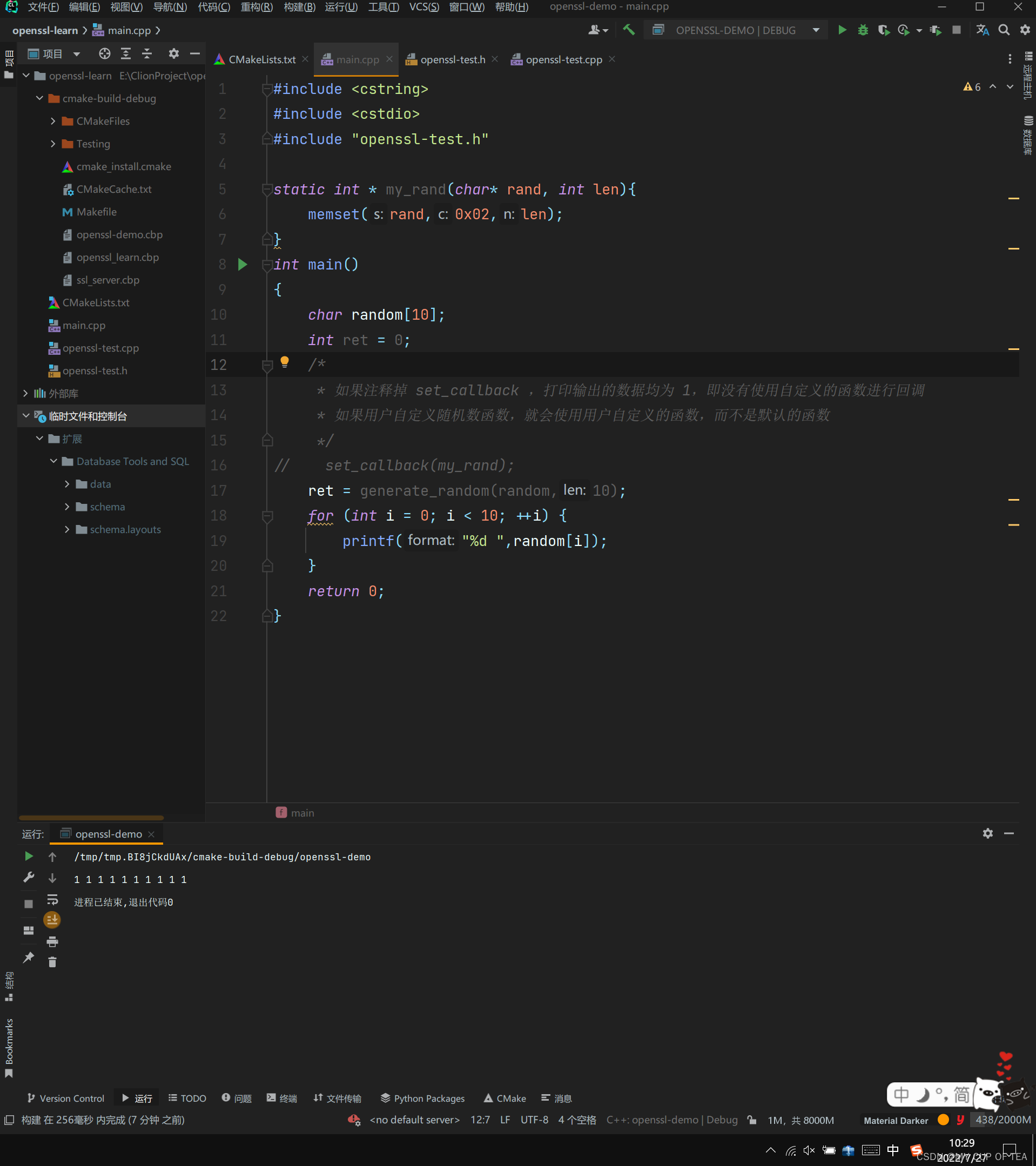
- 本例子用来生产简单的随机数,如果用户提供了生成随机数回调函数,则生成随机数采用用户的方法,否则采用默认的方法
openssl-test.h
#ifndef OPENSSL_DEMO_OPENSSL_TEST_H
#define OPENSSL_DEMO_OPENSSL_TEST_H
typedef int *callback_random(char* random,int len);
void set_callback(callback_random *cb);
int generate_random(char* random,int len);
openssl-test.cpp
#include "openssl-test.h"
callback_random *cb_rand = nullptr;
static int default_random(char* random,int len){
void set_callback(callback_random *cb){
int generate_random(char* random,int len){
return default_random(random,len);
return *cb_rand(random,len);
main.cpp
#include "openssl-test.h"
static int * my_rand(char* rand, int len){
ret = generate_random(random,10);
for (int i = 0; i < 10; ++i) {
CMakeLists.txt
cmake_minimum_required(VERSION 3.15)
set(CMAKE_CXX_STANDARD 11)
set(CMAKE_CXX_FLAGS "-Wno-error=deprecated-declarations -Wno-deprecated-declarations ")
link_directories(/usr/local/gmssl/lib)
include_directories(/usr/local/gmssl/include)
add_executable(${PROJECT_NAME} main.cpp openssl-test.h openssl-test.cpp)
target_link_libraries(${PROJECT_NAME} ssl crypto pthread dl)
执行结果