-
【RT-Thread】nxp rt10xx 设备驱动框架之--pwm搭建和使用
脉冲宽度调制(PWM),全称:Pulse Width Modulation。常用于电机控制,屏幕显示等功能。具体功能网上自行搜索。
开发前准备
- 硬件平台:nxp rt10xx单片机
- IDE: Keil
1.Kconfig 修改和menuconfig配置
在Env环境menuconfig中 RT-Thread Components->Device Drivers 设备驱动默认为n,所以需要开启。

从git下来的drv_pwm.c文件开头宏可知(如果没有,那就自己搭建个这个文件吧),需在Kconfig中添加如下语句,然后在Env环境menuconfig中 Hardware Drivers Config->On-Chip Peripheral Drivers 使能PWM,特别注意下左边配置,BSP_USING_PWM1,由于PWM可用的选择很多PWM1,2,3,4,每个PWM还分很多通道,为了偷懒,也觉得没必要都加上,所以这里只加了PWM1

2.工程添加PWM驱动框架和BSP驱动接口
添加设备驱动的时候笔者发现怎么也找不到pwm.c文件,好家伙官方组件命名怎么又叫 rt_drv_pwm.c 没明白rt命名规范到底是啥规则(全局搜索rt_drv_xxx命名的,也只有它了,希望官方能规范下)
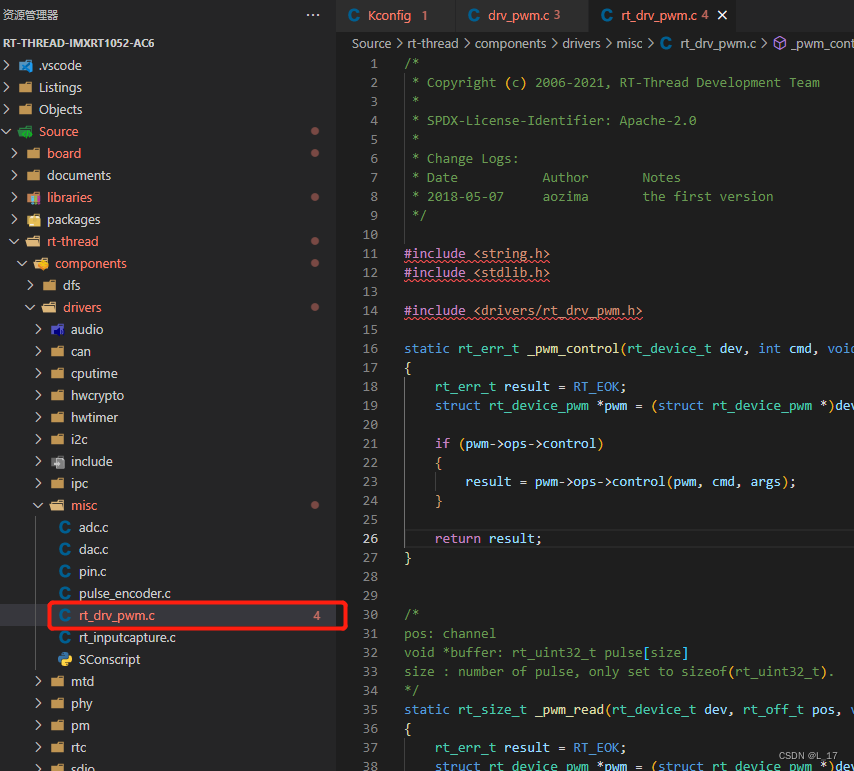
设备驱动框架:rt_drv_pwm.c BSP接口:drv_pwm.c fsl_pwm.c

3.添加或修改drv_pwm.c
笔者查阅了文件,实际没啥要改的
static struct rt_pwm_ops imxrt_drv_ops = { .control = imxrt_drv_pwm_control };- 1
- 2
- 3
- 4
imxrt_pwm1_init 实现了外设初始化(注意IO的初始化,笔者统一放到pin_mux.c);rt_device_pwm_register 实现设备驱动注册
int rt_hw_pwm_init(void) { rt_err_t ret = RT_EOK; // XBARA_Init(XBARA1); // XBARA_SetSignalsConnection(XBARA1,kXBARA1_InputLogicHigh,kXBARA1_OutputFlexpwm1Fault0); // XBARA_SetSignalsConnection(XBARA1,kXBARA1_InputLogicHigh,kXBARA1_OutputFlexpwm1Fault1); // XBARA_SetSignalsConnection(XBARA1,kXBARA1_InputLogicHigh,kXBARA1_OutputFlexpwm1234Fault2); // XBARA_SetSignalsConnection(XBARA1,kXBARA1_InputLogicHigh,kXBARA1_OutputFlexpwm1234Fault3); #ifdef BSP_USING_PWM1 static struct rt_device_pwm pwm1_device; if (imxrt_pwm1_init(PWM1) != RT_EOK) { LOG_E("init pwm1 failed\n"); } ret = rt_device_pwm_register(&pwm1_device, "pwm1", &imxrt_drv_ops, PWM1); if (ret != RT_EOK) { LOG_E("%s register failed", "pwm1"); } #endif /* BSP_USING_PWM1 */ #ifdef BSP_USING_PWM2 static struct rt_device_pwm pwm2_device; if (imxrt_pwm2_init(PWM2) != RT_EOK) { LOG_E("init pwm2 failed\n"); } ret = rt_device_pwm_register(&pwm2_device, "pwm2", &imxrt_drv_ops, PWM2); if (ret != RT_EOK) { LOG_E("%s register failed", "pwm2"); } #endif /* BSP_USING_PWM2 */ #ifdef BSP_USING_PWM3 static struct rt_device_pwm pwm3_device; if (imxrt_pwm3_init(PWM3) != RT_EOK) { LOG_E("init pwm3 failed\n"); } ret = rt_device_pwm_register(&pwm3_device, "pwm3", &imxrt_drv_ops, PWM3); if (ret != RT_EOK) { LOG_E("%s register failed", "pwm3"); } #endif /* BSP_USING_PWM3 */ #ifdef BSP_USING_PWM4 static struct rt_device_pwm pwm4_device; if (imxrt_pwm4_init(PWM4) != RT_EOK) { LOG_E("init pwm4 failed\n"); } ret = rt_device_pwm_register(&pwm4_device, "pwm4", &imxrt_drv_ops, PWM4); if (ret != RT_EOK) { LOG_E("%s register failed", "pwm4"); } #endif /* BSP_USING_PWM4 */ #if defined(BSP_USING_QTMR1) || defined(BSP_USING_QTMR2) || defined(BSP_USING_QTMR3) || defined(BSP_USING_QTMR4) if (imxrt_qtmr_init() != RT_EOK) { LOG_E(LOG_TAG" init qtmr failed"); } #endif #ifdef BSP_USING_QTMR1 static struct rt_device_pwm qtmr1_device; ret = rt_device_pwm_register(&qtmr1_device, "pwm5", &imxrt_drv_qtmr_ops, TMR1); if (ret != RT_EOK) { LOG_E("%s register failed", "pwm5"); } #endif /* BSP_USING_QTMR1 */ #ifdef BSP_USING_QTMR2 static struct rt_device_pwm qtmr2_device; ret = rt_device_pwm_register(&qtmr2_device, "pwm6", &imxrt_drv_qtmr_ops, TMR2); if (ret != RT_EOK) { LOG_E("%s register failed", "pwm6"); } #endif /* BSP_USING_QTMR2 */ #ifdef BSP_USING_QTMR3 static struct rt_device_pwm qtmr3_device; ret = rt_device_pwm_register(&qtmr3_device, "pwm7", &imxrt_drv_qtmr_ops, TMR3); if (ret != RT_EOK) { LOG_E("%s register failed", "pwm7"); } #endif /* BSP_USING_QTMR3 */ #ifdef BSP_USING_QTMR4 static struct rt_device_pwm qtmr4_device; ret = rt_device_pwm_register(&qtmr4_device, "pwm8", &imxrt_drv_qtmr_ops, TMR4); if (ret != RT_EOK) { LOG_E("%s register failed", "pwm8"); } #endif /* BSP_USING_QTMR4 */ return ret; } INIT_BOARD_EXPORT(rt_hw_pwm_init);- 1
- 2
- 3
- 4
- 5
- 6
- 7
- 8
- 9
- 10
- 11
- 12
- 13
- 14
- 15
- 16
- 17
- 18
- 19
- 20
- 21
- 22
- 23
- 24
- 25
- 26
- 27
- 28
- 29
- 30
- 31
- 32
- 33
- 34
- 35
- 36
- 37
- 38
- 39
- 40
- 41
- 42
- 43
- 44
- 45
- 46
- 47
- 48
- 49
- 50
- 51
- 52
- 53
- 54
- 55
- 56
- 57
- 58
- 59
- 60
- 61
- 62
- 63
- 64
- 65
- 66
- 67
- 68
- 69
- 70
- 71
- 72
- 73
- 74
- 75
- 76
- 77
- 78
- 79
- 80
- 81
- 82
- 83
- 84
- 85
- 86
- 87
- 88
- 89
- 90
- 91
- 92
- 93
- 94
- 95
- 96
- 97
- 98
- 99
- 100
- 101
- 102
- 103
- 104
- 105
- 106
- 107
- 108
- 109
- 110
- 111
- 112
- 113
- 114
- 115
- 116
- 117
- 118
- 119
- 120
- 121
- 122
- 123
- 124
- 125
- 126
- 127
内容很简单直接贴代码,不用修改啥
static rt_err_t imxrt_drv_pwm_enable(struct rt_device_pwm *device, struct rt_pwm_configuration *configuration, rt_bool_t enable) { PWM_Type *base; pwm_module_control_t pwm_module_control; base = (PWM_Type *)device->parent.user_data; pwm_module_control = (pwm_module_control_t)(1 << configuration->channel); if (!enable) { PWM_StopTimer(base, pwm_module_control); } else { PWM_StartTimer(base, pwm_module_control); } return RT_EOK; } static rt_err_t imxrt_drv_pwm_get(struct rt_device_pwm *device, struct rt_pwm_configuration *configuration) { uint8_t get_duty; uint16_t pulseCnt = 0, pwmHighPulse = 0; uint32_t get_frequence; uint32_t pwmClock; PWM_Type *base; pwm_submodule_t pwm_submodule; base = (PWM_Type *)device->parent.user_data; pwm_submodule = (pwm_submodule_t)configuration->channel; /* get frequence */ get_frequence = base->SM[pwm_submodule].VAL1; pwmClock = (PWM_SRC_CLK_FREQ / (1U << ((base->SM[pwm_submodule].CTRL & PWM_CTRL_PRSC_MASK) >> PWM_CTRL_PRSC_SHIFT))); get_frequence = pwmClock / get_frequence; /* get dutycycle */ pulseCnt = base->SM[pwm_submodule].VAL1; pwmHighPulse = pulseCnt - (base->SM[pwm_submodule].VAL2) * 2; get_duty = pwmHighPulse * 100 / pulseCnt; /* conversion */ configuration->period = 1000000000 / get_frequence; configuration->pulse = get_duty * configuration->period / 100; return RT_EOK; } static rt_err_t imxrt_drv_pwm_set(struct rt_device_pwm *device, struct rt_pwm_configuration *configuration) { RT_ASSERT(configuration->period > 0); RT_ASSERT(configuration->pulse <= configuration->period); PWM_Type *base; pwm_submodule_t pwm_submodule; pwm_module_control_t pwm_module_control; uint32_t period = 0; uint8_t duty = 0; base = (PWM_Type *)device->parent.user_data; pwm_submodule = (pwm_submodule_t)configuration->channel; pwm_module_control = (pwm_module_control_t)(1 << configuration->channel); duty = configuration->pulse * 100 / configuration->period; Pwm_Signal.dutyCyclePercent = duty; period = (uint32_t)(1000000000 / configuration->period); PWM_SetupPwm(base, pwm_submodule, &Pwm_Signal, 1, kPWM_CenterAligned, period, PWM_SRC_CLK_FREQ); PWM_UpdatePwmDutycycle(base, pwm_submodule, DEFAULT_COMPLEMENTARY_PAIR, kPWM_CenterAligned, duty); PWM_SetPwmLdok(base, pwm_module_control, true); return RT_EOK; } static rt_err_t imxrt_drv_pwm_control(struct rt_device_pwm *device, int cmd, void *arg) { struct rt_pwm_configuration *configuration = (struct rt_pwm_configuration *)arg; switch (cmd) { case PWM_CMD_ENABLE: return imxrt_drv_pwm_enable(device, configuration, RT_TRUE); case PWM_CMD_DISABLE: return imxrt_drv_pwm_enable(device, configuration, RT_FALSE); case PWM_CMD_SET: return imxrt_drv_pwm_set(device, configuration); case PWM_CMD_GET: return imxrt_drv_pwm_get(device, configuration); default: return RT_EINVAL; } } static rt_err_t imxrt_drv_pwm_init(PWM_Type *base, pwm_submodule_t pwm_submodule, uint16_t psc, uint32_t fre, uint8_t duty) { pwm_config_t PwmConfig; uint8_t fault_input; pwm_clock_prescale_t pwm_prescale = (pwm_clock_prescale_t)psc; fault_input = (uint8_t)pwm_submodule; PWM_GetDefaultConfig(&PwmConfig); PwmConfig.prescale = pwm_prescale; PwmConfig.reloadLogic = kPWM_ReloadPwmFullCycle; PwmConfig.pairOperation = kPWM_Independent; PwmConfig.enableDebugMode = true; if (PWM_Init(base, pwm_submodule, &PwmConfig) == kStatus_Fail) { LOG_E("init pwm failed \n"); return -RT_ERROR; } base->SM[fault_input].DISMAP[0] = 0x00; base->SM[fault_input].DISMAP[1] = 0x00; Pwm_Signal.pwmChannel = DEFAULT_COMPLEMENTARY_PAIR; Pwm_Signal.level = DEFAULT_POLARITY; Pwm_Signal.dutyCyclePercent = duty; PWM_SetupPwm(base, pwm_submodule, &Pwm_Signal, 1, kPWM_CenterAligned, fre, PWM_SRC_CLK_FREQ); PWM_SetPwmLdok(base, pwm_submodule, true); return RT_EOK; }- 1
- 2
- 3
- 4
- 5
- 6
- 7
- 8
- 9
- 10
- 11
- 12
- 13
- 14
- 15
- 16
- 17
- 18
- 19
- 20
- 21
- 22
- 23
- 24
- 25
- 26
- 27
- 28
- 29
- 30
- 31
- 32
- 33
- 34
- 35
- 36
- 37
- 38
- 39
- 40
- 41
- 42
- 43
- 44
- 45
- 46
- 47
- 48
- 49
- 50
- 51
- 52
- 53
- 54
- 55
- 56
- 57
- 58
- 59
- 60
- 61
- 62
- 63
- 64
- 65
- 66
- 67
- 68
- 69
- 70
- 71
- 72
- 73
- 74
- 75
- 76
- 77
- 78
- 79
- 80
- 81
- 82
- 83
- 84
- 85
- 86
- 87
- 88
- 89
- 90
- 91
- 92
- 93
- 94
- 95
- 96
- 97
- 98
- 99
- 100
- 101
- 102
- 103
- 104
- 105
- 106
- 107
- 108
- 109
- 110
- 111
- 112
- 113
- 114
- 115
- 116
- 117
- 118
- 119
- 120
- 121
- 122
- 123
- 124
- 125
4.搭建应用层demo
输出1KHz频率,占空比50的波形
#define PWM_DEV_NAME "pwm1" /* PWM设备名称 */ #define PWM_DEV_CHANNEL 0 /* PWM通道 */ /*------------------------------------------------------------------------------------------------------------------ Variables */ struct rt_device_pwm *pwm_dev; /* PWM设备句柄 */ /*------------------------------------------------------------------------------------------------------------------ Functions */ int pwmsample(void) { rt_uint32_t period; period = 1000000; /*单位ns 周期为:1ms (1KHz)*/ /* 查找设备 */ pwm_dev = (struct rt_device_pwm *)rt_device_find(PWM_DEV_NAME); if (pwm_dev == RT_NULL) { rt_kprintf("pwm sample run failed! can't find %s device!\n", PWM_DEV_NAME); return RT_ERROR; } rt_pwm_set(pwm_dev, PWM_DEV_CHANNEL, period, period/2); //rt_device_control(pwm_dev, PWM_CMD_ENABLE, &configuration); rt_pwm_enable(pwm_dev, PWM_DEV_CHANNEL); rt_kprintf("pwm start\r\n"); return 0; } /* 导出到 msh 命令列表中 */ MSH_CMD_EXPORT(pwmsample, pwm sample);- 1
- 2
- 3
- 4
- 5
- 6
- 7
- 8
- 9
- 10
- 11
- 12
- 13
- 14
- 15
- 16
- 17
- 18
- 19
- 20
- 21
- 22
- 23
- 24
- 25
- 26
- 27
- 28
- 29
- 30
- 31
- 32
- 33
- 34
- 35
- 36
输入命令pwmsample运行应用,用虚拟示波器测试波形验证结果


-
相关阅读:
【WEEK15】学习目标及总结【Spring Boot】【中文版】
常用排序算法时间与空间复杂度
基于RHEL 8的Linux发行版的初始服务器设置
前端安全问题——暴破登录
从滑动窗口到YOLO、Transformer:目标检测的技术革新
安全运营中心自动化究竟是好还是坏
【机器学习13】生成对抗网络
10 Minimax估计和Bayes估计
测试管理之一定条件下的测试管理
如何解决Win11系统崩溃的问题?
- 原文地址:https://blog.csdn.net/weixin_38426553/article/details/125600794
