-
go实现分布式锁
简介
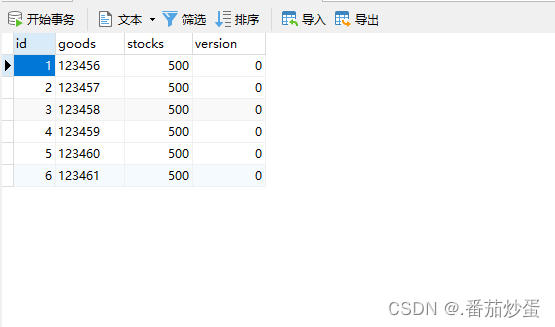
本文以扣减库存为例,分别实现进程锁;mysql的悲观锁;乐观锁以及redis的分布式锁
表
CREATE TABLE `stocks` ( `id` bigint(20) unsigned NOT NULL AUTO_INCREMENT, `goods` varchar(20) DEFAULT NULL COMMENT '商品id', `stocks` int(11) DEFAULT NULL COMMENT '库存', `version` int(11) DEFAULT NULL COMMENT '乐观锁', PRIMARY KEY (`id`), KEY `idx_stocks_goods` (`goods`) ) ENGINE=InnoDB DEFAULT CHARSET=utf8;- 1
- 2
- 3
- 4
- 5
- 6
- 7
- 8
无锁
service
package service import ( context "context" "go-locks/no-lock/db" "go-locks/no-lock/model" "go-locks/no-lock/proto" "google.golang.org/grpc/codes" "google.golang.org/grpc/status" "google.golang.org/protobuf/types/known/emptypb" ) type Server struct{} func (s Server) SellStock(ctx context.Context, request *proto.StockRequest) (*emptypb.Empty, error) { tx := db.DB.Begin() for _, info := range request.StockInfos { var stock model.Stock if result := tx.Where(&model.Stock{Goods: info.GoodsId}).First(&stock); result.RowsAffected == 0 { return nil, status.Error(codes.NotFound, "商品信息不存在") } if stock.Stocks < info.Num { // 库存不足 回滚事务 tx.Rollback() return nil, status.Error(codes.ResourceExhausted, "库存不足") } stock.Stocks -= info.Num tx.Save(stock) } tx.Commit() return &emptypb.Empty{}, nil }- 1
- 2
- 3
- 4
- 5
- 6
- 7
- 8
- 9
- 10
- 11
- 12
- 13
- 14
- 15
- 16
- 17
- 18
- 19
- 20
- 21
- 22
- 23
- 24
- 25
- 26
- 27
- 28
- 29
- 30
- 31
- 32
- 33
client
package main import ( "context" "go-locks/no-lock/proto" "google.golang.org/grpc" "google.golang.org/grpc/credentials/insecure" "sync" ) var client proto.StockClient func main() { conn, err := grpc.Dial("127.0.0.1:8088", grpc.WithTransportCredentials(insecure.NewCredentials())) if err != nil { panic(err) } client = proto.NewStockClient(conn) var wg sync.WaitGroup wg.Add(20) for i := 0; i < 20; i++ { go TestSellStock(&wg) } wg.Wait() } func TestSellStock(wg *sync.WaitGroup) { defer wg.Done() _, err := client.SellStock(context.Background(), &proto.StockRequest{ StockInfos: []*proto.StockInfo{ { GoodsId: "123456", Num: 1, }, }, }) if err != nil { panic(err) } }- 1
- 2
- 3
- 4
- 5
- 6
- 7
- 8
- 9
- 10
- 11
- 12
- 13
- 14
- 15
- 16
- 17
- 18
- 19
- 20
- 21
- 22
- 23
- 24
- 25
- 26
- 27
- 28
- 29
- 30
- 31
- 32
- 33
- 34
- 35
- 36
- 37
- 38
- 39
- 40
测试

开启20gorouinte去扣减123456的库存;正常情况下123456的库存应该剩余480件,但由于我们没有进行加锁,导致库存还剩485件.这种情况在真实场景下是绝对不能接受的进程锁
service
package service import ( context "context" "go-locks/process-lock/db" "go-locks/process-lock/model" "go-locks/process-lock/proto" "google.golang.org/grpc/codes" "google.golang.org/grpc/status" "google.golang.org/protobuf/types/known/emptypb" "sync" ) type Server struct{} var mutex sync.Mutex func (s Server) SellStock(ctx context.Context, request *proto.StockRequest) (*emptypb.Empty, error) { // 加锁 mutex.Lock() tx := db.DB.Begin() for _, info := range request.StockInfos { var stock model.Stock if result := tx.Where(&model.Stock{Goods: info.GoodsId}).First(&stock); result.RowsAffected == 0 { return nil, status.Error(codes.NotFound, "商品信息不存在") } if stock.Stocks < info.Num { // 库存不足 回滚事务 tx.Rollback() return nil, status.Error(codes.ResourceExhausted, "库存不足") } stock.Stocks -= info.Num tx.Save(stock) } tx.Commit() // 解锁 mutex.Unlock() return &emptypb.Empty{}, nil }- 1
- 2
- 3
- 4
- 5
- 6
- 7
- 8
- 9
- 10
- 11
- 12
- 13
- 14
- 15
- 16
- 17
- 18
- 19
- 20
- 21
- 22
- 23
- 24
- 25
- 26
- 27
- 28
- 29
- 30
- 31
- 32
- 33
- 34
- 35
- 36
- 37
- 38
- 39
- 40
client
package main import ( "context" "go-locks/process-lock/proto" "google.golang.org/grpc" "google.golang.org/grpc/credentials/insecure" "sync" ) var client proto.StockClient func main() { conn, err := grpc.Dial("127.0.0.1:8088", grpc.WithTransportCredentials(insecure.NewCredentials())) if err != nil { panic(err) } client = proto.NewStockClient(conn) var wg sync.WaitGroup wg.Add(20) for i := 0; i < 20; i++ { go TestSellStock(&wg) } wg.Wait() } func TestSellStock(wg *sync.WaitGroup) { defer wg.Done() _, err := client.SellStock(context.Background(), &proto.StockRequest{ StockInfos: []*proto.StockInfo{ { GoodsId: "123457", Num: 1, }, }, }) if err != nil { panic(err) } }- 1
- 2
- 3
- 4
- 5
- 6
- 7
- 8
- 9
- 10
- 11
- 12
- 13
- 14
- 15
- 16
- 17
- 18
- 19
- 20
- 21
- 22
- 23
- 24
- 25
- 26
- 27
- 28
- 29
- 30
- 31
- 32
- 33
- 34
- 35
- 36
- 37
- 38
- 39
- 40
- 41
测试

单从这次结果上看是没有什么问题,但其实还是有问题的:- 这里使用的锁,他是锁住的整块代码,不管进来的是那个商品都会要等待释放锁才能去获取锁执行,有很严重的性能问题
- 这里使用到的锁,是进程级别的锁,是go语言提供的锁,但是在真实的场景下都是多实例部署的,在多实例场景下,仍然会出现无锁时的问题
mysql悲观锁
悲观锁总是假设最坏的情况,每次去拿数据的时候都认为别人会修改,所以每次在拿数据的时候都会上锁,这样别人想拿这个数据就会阻塞直到它拿到锁
service
package service import ( context "context" "go-locks/pessimistic-lock/db" "go-locks/pessimistic-lock/model" "go-locks/pessimistic-lock/proto" "google.golang.org/grpc/codes" "google.golang.org/grpc/status" "google.golang.org/protobuf/types/known/emptypb" "gorm.io/gorm/clause" ) type Server struct{} func (s Server) SellStock(ctx context.Context, request *proto.StockRequest) (*emptypb.Empty, error) { tx := db.DB.Begin() for _, info := range request.StockInfos { var stock model.Stock // 通过for update 语句实现mysql的悲观锁 if result := tx.Clauses(clause.Locking{Strength: "UPDATE"}).Where(&model.Stock{Goods: info.GoodsId}).First(&stock); result.RowsAffected == 0 { return nil, status.Error(codes.NotFound, "商品信息不存在") } if stock.Stocks < info.Num { // 库存不足 回滚事务 tx.Rollback() return nil, status.Error(codes.ResourceExhausted, "库存不足") } stock.Stocks -= info.Num tx.Save(stock) } tx.Commit() return &emptypb.Empty{}, nil }- 1
- 2
- 3
- 4
- 5
- 6
- 7
- 8
- 9
- 10
- 11
- 12
- 13
- 14
- 15
- 16
- 17
- 18
- 19
- 20
- 21
- 22
- 23
- 24
- 25
- 26
- 27
- 28
- 29
- 30
- 31
- 32
- 33
- 34
- 35
client
package main import ( "context" "go-locks/pessimistic-lock/proto" "google.golang.org/grpc" "google.golang.org/grpc/credentials/insecure" "sync" ) var client proto.StockClient func main() { conn, err := grpc.Dial("127.0.0.1:8088", grpc.WithTransportCredentials(insecure.NewCredentials())) if err != nil { panic(err) } client = proto.NewStockClient(conn) var wg sync.WaitGroup wg.Add(20) for i := 0; i < 20; i++ { go TestSellStock(&wg) } wg.Wait() } func TestSellStock(wg *sync.WaitGroup) { defer wg.Done() _, err := client.SellStock(context.Background(), &proto.StockRequest{ StockInfos: []*proto.StockInfo{ { GoodsId: "123458", Num: 1, }, }, }) if err != nil { panic(err) } }- 1
- 2
- 3
- 4
- 5
- 6
- 7
- 8
- 9
- 10
- 11
- 12
- 13
- 14
- 15
- 16
- 17
- 18
- 19
- 20
- 21
- 22
- 23
- 24
- 25
- 26
- 27
- 28
- 29
- 30
- 31
- 32
- 33
- 34
- 35
- 36
- 37
- 38
- 39
- 40
测试

mysql乐观锁
乐观锁顾名思义,就是很乐观,每次去拿数据的时候都认为别人不会修改,所以不会上锁,但是在更新的时候会判断一下在此期间别人有没有去更新这个数据,可以使用版本号等机制。乐观锁适用于多读的应用类型,这样可以提高吞吐量,
service
package service import ( context "context" "go-locks/optimistic-lock/db" "go-locks/optimistic-lock/model" "go-locks/optimistic-lock/proto" "google.golang.org/grpc/codes" "google.golang.org/grpc/status" "google.golang.org/protobuf/types/known/emptypb" "log" ) type Server struct{} func (s Server) SellStock(ctx context.Context, request *proto.StockRequest) (*emptypb.Empty, error) { tx := db.DB.Begin() for _, info := range request.StockInfos { var stock model.Stock for { if result := db.DB.Where(&model.Stock{Goods: info.GoodsId}).First(&stock); result.RowsAffected == 0 { return nil, status.Error(codes.NotFound, "商品信息不存在") } if stock.Stocks < info.Num { // 库存不足 回滚事务 tx.Rollback() return nil, status.Error(codes.ResourceExhausted, "库存不足") } stock.Stocks -= info.Num if result := tx.Model(&model.Stock{}).Select("Stocks", "Version"). Where("goods = ? AND version = ?", info.GoodsId, stock.Version).Updates(&model.Stock{Stocks: stock.Stocks, Version: stock.Version + 1}); result.RowsAffected == 0 { // version 字段冲突;扣减失败 log.Println("库存扣减失败;重试") } else { // 库存扣减成功 log.Println("库存扣减成功") break } } } tx.Commit() return &emptypb.Empty{}, nil }- 1
- 2
- 3
- 4
- 5
- 6
- 7
- 8
- 9
- 10
- 11
- 12
- 13
- 14
- 15
- 16
- 17
- 18
- 19
- 20
- 21
- 22
- 23
- 24
- 25
- 26
- 27
- 28
- 29
- 30
- 31
- 32
- 33
- 34
- 35
- 36
- 37
- 38
- 39
- 40
- 41
- 42
- 43
client
package main import ( "context" "go-locks/optimistic-lock/proto" "google.golang.org/grpc" "google.golang.org/grpc/credentials/insecure" "sync" ) var client proto.StockClient func main() { conn, err := grpc.Dial("127.0.0.1:8088", grpc.WithTransportCredentials(insecure.NewCredentials())) if err != nil { panic(err) } client = proto.NewStockClient(conn) var wg sync.WaitGroup wg.Add(20) for i := 0; i < 20; i++ { go TestSellStock(&wg) } wg.Wait() } func TestSellStock(wg *sync.WaitGroup) { defer wg.Done() _, err := client.SellStock(context.Background(), &proto.StockRequest{ StockInfos: []*proto.StockInfo{ { GoodsId: "123459", Num: 1, }, }, }) if err != nil { panic(err) } }- 1
- 2
- 3
- 4
- 5
- 6
- 7
- 8
- 9
- 10
- 11
- 12
- 13
- 14
- 15
- 16
- 17
- 18
- 19
- 20
- 21
- 22
- 23
- 24
- 25
- 26
- 27
- 28
- 29
- 30
- 31
- 32
- 33
- 34
- 35
- 36
- 37
- 38
- 39
- 40
- 41
测试

redis分布式锁
service
package service import ( context "context" "fmt" "go-locks/redis-lock/db" "go-locks/redis-lock/model" "go-locks/redis-lock/proto" "go-locks/redis-lock/redis" "google.golang.org/grpc/codes" "google.golang.org/grpc/status" "google.golang.org/protobuf/types/known/emptypb" ) type Server struct{} func (s Server) SellStock(ctx context.Context, request *proto.StockRequest) (*emptypb.Empty, error) { tx := db.DB.Begin() for _, info := range request.StockInfos { var stock model.Stock // 使用redis分布式锁,仅对当前商品进行加锁,不会影响其他商品 mutex := redis.Redsy.NewMutex(fmt.Sprintf("goods_%s", info.GoodsId)) if err := mutex.Lock(); err != nil { return nil, status.Error(codes.Internal, "获取redis分布式锁异常") } if result := tx.Where(&model.Stock{Goods: info.GoodsId}).First(&stock); result.RowsAffected == 0 { return nil, status.Error(codes.NotFound, "商品信息不存在") } if stock.Stocks < info.Num { // 库存不足 回滚事务 tx.Rollback() return nil, status.Error(codes.ResourceExhausted, "库存不足") } stock.Stocks -= info.Num tx.Save(stock) if ok, err := mutex.Unlock(); !ok || err != nil { return nil, status.Error(codes.Internal, "释放redis分布式锁异常") } } tx.Commit() return &emptypb.Empty{}, nil }- 1
- 2
- 3
- 4
- 5
- 6
- 7
- 8
- 9
- 10
- 11
- 12
- 13
- 14
- 15
- 16
- 17
- 18
- 19
- 20
- 21
- 22
- 23
- 24
- 25
- 26
- 27
- 28
- 29
- 30
- 31
- 32
- 33
- 34
- 35
- 36
- 37
- 38
- 39
- 40
- 41
- 42
- 43
client
package main import ( "context" "go-locks/redis-lock/proto" "google.golang.org/grpc" "google.golang.org/grpc/credentials/insecure" "sync" ) var client proto.StockClient func main() { conn, err := grpc.Dial("127.0.0.1:8088", grpc.WithTransportCredentials(insecure.NewCredentials())) if err != nil { panic(err) } client = proto.NewStockClient(conn) var wg sync.WaitGroup wg.Add(20) for i := 0; i < 20; i++ { go TestSellStock(&wg) } wg.Wait() } func TestSellStock(wg *sync.WaitGroup) { defer wg.Done() _, err := client.SellStock(context.Background(), &proto.StockRequest{ StockInfos: []*proto.StockInfo{ { GoodsId: "123460", Num: 1, }, }, }) if err != nil { panic(err) } }- 1
- 2
- 3
- 4
- 5
- 6
- 7
- 8
- 9
- 10
- 11
- 12
- 13
- 14
- 15
- 16
- 17
- 18
- 19
- 20
- 21
- 22
- 23
- 24
- 25
- 26
- 27
- 28
- 29
- 30
- 31
- 32
- 33
- 34
- 35
- 36
- 37
- 38
- 39
- 40
测试

总结
- 无锁: 无锁即使在单机情况下也会出问题,不建议使用
- 进程锁: 进程锁仅在单机情况下安全,性能存在瓶颈
- mysql悲观锁: 分布式环境下安全.比较适合写入操作比较频繁的场景,如果出现大量的读取操作,每次读取的时候都会进行加锁,这样会增加大量的锁的开销,降低了系统的吞吐量.在特殊情况下还会升级成表锁,分布式环境下安全,但是性能依然存在瓶颈
- mysql乐观锁: 分布式环境下安全,比较适合读取操作比较频繁的场景,如果出现大量的写入操作,数据发生冲突的可能性就会增大,为了保证数据的一致性,应用层需要不断的重新获取数据,这样会增加大量的查询操作,降低了系统的吞吐量.
- redis分布式锁: 分布式环境下安全,并且redis有很好的性能,而且可以对单个商品进行加锁,只会阻塞住对同一商品的请求,并不会阻塞所有请求,大大提升了吞吐量
-
相关阅读:
Layui快速入门之第九节 表格事件的使用
前端(二十七)——封装指南:Axios接口、常用功能、Vue和React中的封装技术
Sui基金会与沙迦美国大学宣布合作开设区块链学院
docker部署springboot项目到服务器
Davinci Developer Classic SWC新建port并连接非complete port方式
k8s--基础--23.6--认证-授权-准入控制--通过kubeconfig登陆dashboard
前端周刊第十八期
如何保证Redis的HA高可用
GB28181的主动、被动的含义
Vidmore Screen Recorder 1.1.62 学习
- 原文地址:https://blog.csdn.net/qq_43135259/article/details/125508990
