-
Small Tools(3) 集成Knife4j3.0.3接口文档
一、前言
本文将集成
knife4j-spring-boot-starter3.0.3接口文档 & gateway聚合各服务接口文档 & 集成oauth2的密码模式进行授权认证登录
<spring-boot.version>2.6.7</spring-boot.version> <spring-cloud.version>2021.0.1</spring-cloud.version> <spring-cloud-alibaba.version>2021.0.1.0</spring-cloud-alibaba.version>- 1
- 2
- 3
这里将swagger文档单独抽取了一个公共模块统一管理

二、swagger公共模块抽取
1、引入依赖
<!-- knife4j --> <!-- https://mvnrepository.com/artifact/com.github.xiaoymin/knife4j-spring-boot-starter --> <dependency> <groupId>com.github.xiaoymin</groupId> <artifactId>knife4j-spring-boot-starter</artifactId> <version>3.0.3</version> </dependency>- 1
- 2
- 3
- 4
- 5
- 6
- 7
2、Knife4j配置类
tips: 这里使用的是swagger2.0的api文档方式,因为在3里面集成oauth2认证发现没有表单认证登录了,不太友好,也没看见官方文档有说明,如果之后有发现,再更新到小编的demo源码中吧
^_^

@Slf4j @Configuration @EnableSwagger2WebMvc // 对JSR303提供支持 @Import(BeanValidatorPluginsConfiguration.class) public class Knife4jConfig { @Value("${spring.application.name}") private String applicationName; @Value("${small-tools.ip}") private String ip; @Value("${server.port}") private String port; @Value("${knife4j.passwordTokenUrl}") private String passwordTokenUrl; @Resource private OpenApiExtensionResolver openApiExtensionResolver; @Bean public Docket defaultApi() { Docket docket = new Docket(DocumentationType.SWAGGER_2) .apiInfo(this.apiInfo()) .groupName(this.applicationName) .select() // 添加@Api注解才显示 .apis(RequestHandlerSelectors.withClassAnnotation(Api.class)) // .apis(RequestHandlerSelectors.basePackage("com.zhengqing")) .paths(PathSelectors.any()) .build() // 插件扩展 -- ex:自定义md文档 .extensions(this.openApiExtensionResolver.buildExtensions(this.applicationName)) // 默认全局参数 .globalRequestParameters( Lists.newArrayList( new RequestParameterBuilder() .name(SwaggerConstant.TENANT_ID) .description("租户ID") .in(ParameterType.HEADER) .required(true) .build() ) ); // context List<SecurityContext> securityContexts = Lists.newArrayList( SecurityContext.builder() .securityReferences( CollectionUtil.newArrayList( new SecurityReference("oauth2", Lists.newArrayList( new AuthorizationScope("read", "read resources"), new AuthorizationScope("write", "write resources"), new AuthorizationScope("reads", "read all resources"), new AuthorizationScope("writes", "write all resources") ).toArray(new AuthorizationScope[]{}) ) ) ) .forPaths(PathSelectors.ant("/**")) .build() ); // 密码模式 List<SecurityScheme> securitySchemes = Lists.newArrayList( new OAuthBuilder() .name("oauth2") .grantTypes(Lists.newArrayList(new ResourceOwnerPasswordCredentialsGrant(this.passwordTokenUrl))) .build() ); docket.securityContexts(securityContexts).securitySchemes(securitySchemes); return docket; } /** * swagger-api接口描述信息 */ private ApiInfo apiInfo() { return new ApiInfoBuilder() .title("API文档") .description("API文档") .termsOfServiceUrl(String.format("%s:%s/", this.ip, this.port)) .contact( new Contact( "zhengqingya", "https://gitee.com/zhengqingya", "960869719@qq.com" ) ) .version("1.0.0") .build(); } /** * 解决Spring Boot 2.6.x以上 与 Swagger 3.0.0 不兼容问题 * 参考 https://github.com/springfox/springfox/issues/3462 */ @Bean public WebMvcEndpointHandlerMapping webEndpointServletHandlerMapping(WebEndpointsSupplier webEndpointsSupplier, ServletEndpointsSupplier servletEndpointsSupplier, ControllerEndpointsSupplier controllerEndpointsSupplier, EndpointMediaTypes endpointMediaTypes, CorsEndpointProperties corsProperties, WebEndpointProperties webEndpointProperties, Environment environment) { List<ExposableEndpoint<?>> allEndpoints = new ArrayList(); Collection<ExposableWebEndpoint> webEndpoints = webEndpointsSupplier.getEndpoints(); allEndpoints.addAll(webEndpoints); allEndpoints.addAll(servletEndpointsSupplier.getEndpoints()); allEndpoints.addAll(controllerEndpointsSupplier.getEndpoints()); String basePath = webEndpointProperties.getBasePath(); EndpointMapping endpointMapping = new EndpointMapping(basePath); boolean shouldRegisterLinksMapping = this.shouldRegisterLinksMapping(webEndpointProperties, environment, basePath); return new WebMvcEndpointHandlerMapping(endpointMapping, webEndpoints, endpointMediaTypes, corsProperties.toCorsConfiguration(), new EndpointLinksResolver(allEndpoints, basePath), shouldRegisterLinksMapping, null); } private boolean shouldRegisterLinksMapping(WebEndpointProperties webEndpointProperties, Environment environment, String basePath) { return webEndpointProperties.getDiscovery().isEnabled() && (StringUtils.hasText(basePath) || ManagementPortType.get(environment).equals(ManagementPortType.DIFFERENT)); } }- 1
- 2
- 3
- 4
- 5
- 6
- 7
- 8
- 9
- 10
- 11
- 12
- 13
- 14
- 15
- 16
- 17
- 18
- 19
- 20
- 21
- 22
- 23
- 24
- 25
- 26
- 27
- 28
- 29
- 30
- 31
- 32
- 33
- 34
- 35
- 36
- 37
- 38
- 39
- 40
- 41
- 42
- 43
- 44
- 45
- 46
- 47
- 48
- 49
- 50
- 51
- 52
- 53
- 54
- 55
- 56
- 57
- 58
- 59
- 60
- 61
- 62
- 63
- 64
- 65
- 66
- 67
- 68
- 69
- 70
- 71
- 72
- 73
- 74
- 75
- 76
- 77
- 78
- 79
- 80
- 81
- 82
- 83
- 84
- 85
- 86
- 87
- 88
- 89
- 90
- 91
- 92
- 93
- 94
- 95
- 96
- 97
- 98
- 99
- 100
- 101
- 102
- 103
- 104
- 105
- 106
- 107
- 108
- 109
- 110
- 111
- 112
- 113
- 114
- 115
- 116
- 117
- 118
- 119
- 120
- 121
- 122
- 123
3、application-swagger.yml
spring: mvc: pathmatch: matching-strategy: ANT_PATH_MATCHER # 解决springboot高版本Knife4j报错问题 # https://doc.xiaominfo.com/knife4j knife4j: # 开启增强配置 enable: true # 是否开启生产环境屏蔽 true:关闭swagger,false:开启swagger production: false # 自定义文档 documents: - group: demo name: 测试自定义标题分组 # 某一个文件夹下所有的.md文件 locations: classpath:markdown/* # 开启Swagger的Basic认证功能,默认是false basic: # 是否开启认证 enable: false # Basic认证用户名 username: admin # Basic认证密码 password: 123456 passwordTokenUrl: http://127.0.0.1:1218/auth/oauth/token # 网关服务api # passwordTokenUrl: http://127.0.0.1:1219/oauth/token # 授权服务api- 1
- 2
- 3
- 4
- 5
- 6
- 7
- 8
- 9
- 10
- 11
- 12
- 13
- 14
- 15
- 16
- 17
- 18
- 19
- 20
- 21
- 22
- 23
- 24
- 25
- 26
- 27
三、各微服务接口文档
1、引入swagger公共模块

2、服务模块
bootstrap.yml填写各服务的基本信息即可(端口、应用名…)

3、公共基础配置
bootstrap.yaml这里小编将各服务所需的公共配置都抽取到
bootstrap.yaml方便之后统一管理各微服务配置tips: yml配置文件优先级从高到低
bootstrap.yml>bootstrap.yaml>application.yml
在本项目中
基础公共配置:small-tools-api/common/web/src/main/resources/bootstrap.yaml=> 基础组件配置
其它模块配置:small-tools-api/service/system/src/main/resources/bootstrap.yml=> 各模块端口、应用名称等
四、Gateway聚合接口文档
1、引入依赖
<!-- knife4j --> <!-- https://mvnrepository.com/artifact/com.github.xiaoymin/knife4j-spring-boot-starter --> <dependency> <groupId>com.github.xiaoymin</groupId> <artifactId>knife4j-spring-boot-starter</artifactId> <version>3.0.3</version> </dependency>- 1
- 2
- 3
- 4
- 5
- 6
- 7
2、动态聚合各个服务的swagger接口
@Primary @Component public class MySwaggerResourcesProvider implements SwaggerResourcesProvider { /** * swagger默认的url后缀 * {@link com.zhengqing.common.swagger.config.Knife4jConfig} */ private static final String SWAGGER_URL = "/v2/api-docs?group="; /** * nacos注册中心 */ @Resource private DiscoveryClient discoveryClient; /** * 网关应用名称 */ @Value("${spring.application.name}") private String gatewayServiceName; @Override public List<SwaggerResource> get() { // swagger下拉列表服务资源 List<SwaggerResource> resourceList = new ArrayList<>(); // 动态获取nacos注册中心上的服务实例名 List<String> nacosServiceNameList = this.discoveryClient.getServices(); for (String instance : nacosServiceNameList) { String instanceName = instance.toLowerCase(); if (this.gatewayServiceName.equals(instanceName)) { continue; } // 拼接swagger访问url,样式为`/demo/v2/api-info?group=demo`,当网关调用这个接口时,会自动通过负载均衡寻找对应的主机 String url = "/" + instanceName + SWAGGER_URL + instanceName; SwaggerResource swaggerResource = new SwaggerResource(); swaggerResource.setUrl(url); swaggerResource.setName(instance); resourceList.add(swaggerResource); } return resourceList; } }- 1
- 2
- 3
- 4
- 5
- 6
- 7
- 8
- 9
- 10
- 11
- 12
- 13
- 14
- 15
- 16
- 17
- 18
- 19
- 20
- 21
- 22
- 23
- 24
- 25
- 26
- 27
- 28
- 29
- 30
- 31
- 32
- 33
- 34
- 35
- 36
- 37
- 38
- 39
- 40
- 41
- 42
- 43
- 44
swagger-ui.html需要访问的接口
@RestController @RequiredArgsConstructor @RequestMapping("/swagger-resources") public class SwaggerHandler { private final MySwaggerResourcesProvider mySwaggerResourcesProvider; /** * 权限处理器 */ @GetMapping("/configuration/security") public ResponseEntity<SecurityConfiguration> securityConfiguration() { return new ResponseEntity<>(SecurityConfigurationBuilder.builder().build(), HttpStatus.OK); } /** * UI处理器 */ @GetMapping("/configuration/ui") public ResponseEntity<UiConfiguration> uiConfiguration() { return new ResponseEntity<>(UiConfigurationBuilder.builder().build(), HttpStatus.OK); } /** * 聚合各个服务的swagger接口 */ @GetMapping("") public ResponseEntity swaggerResources() { return new ResponseEntity<>(mySwaggerResourcesProvider.get(), HttpStatus.OK); } }- 1
- 2
- 3
- 4
- 5
- 6
- 7
- 8
- 9
- 10
- 11
- 12
- 13
- 14
- 15
- 16
- 17
- 18
- 19
- 20
- 21
- 22
- 23
- 24
- 25
- 26
- 27
- 28
- 29
- 30
- 31
- 32
此方式会动态拉取我们nacos上面已注册的服务名进行拼接访问我们各微服务的接口文档
ex:/demo/v2/api-info?group=demo


五、swagger集成oauth2密码模式进行授权认证
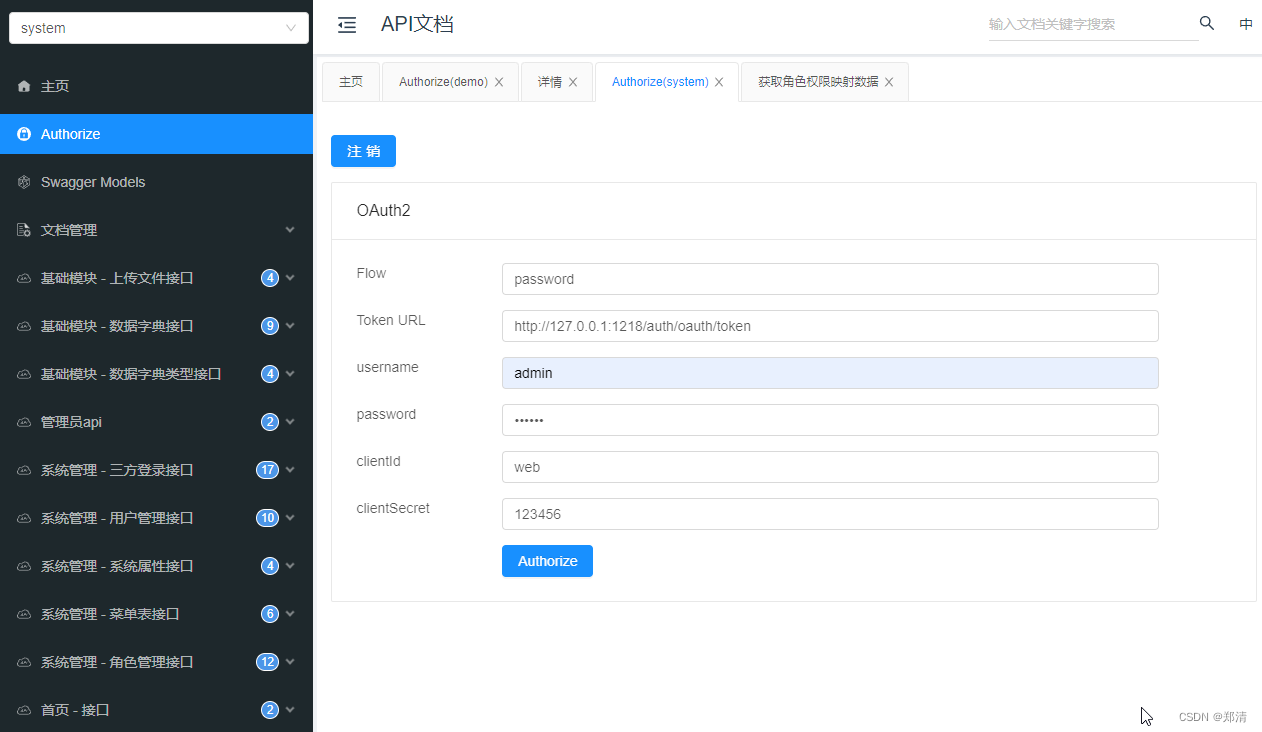
在swagger公共模块中已经引入了oauth2的认证

一旦认证成功后,刷新页面会自动刷新Authorization的值方便我们去测试api

这里需要说明的是认证接口授权成功后Authorization取值问题
一般后端都会有统一响应体{ "code": 200, "data": [], "msg": "OK" }- 1
- 2
- 3
- 4
- 5
当我们有了统一响应体之后
Authorization值便会出现undefined undefined的问题

我们可以打开浏览器查看前端UI缓存值发现取值tokenType&accessToken

再去Knife4j的前端UI源码中搜索相关值,可以看见取值逻辑为$.post(url,params,function(data){ if(data!=null&&data!=undefined) { that.cacheValue.accessToken=data.token_type+" "+data.access_token; that.cacheValue.tokenType=data.token_type; that.cacheValue.granted=true; window.localStorage.setItem(that.state,JSON.stringify(that.cacheValue)) window.close(); } })- 1
- 2
- 3
- 4
- 5
- 6
- 7
- 8
- 9

于是乎在我们的授权认证成功后修改返回所需字段

再次认证后Authorization取值恢复正常^_^

六、源码
tips: 最近项目在重构,最新代码放在dev分支上了
https://gitee.com/zhengqingya/small-tools
今日分享语句:
无论何时,不管怎样,我也绝不允许自己有一点点心丧气。 -
相关阅读:
小白学Python:提取Word中的所有图片,只需要1行代码
鸿蒙HarmonyOS实战-Web组件(请求响应和页面调试)
王道书P149 T3(二叉树链式存储实现)
Docker部署ruoyi前后端分离项目 补充
使用netty实现WebSocket协议通信
一文搞懂 OTP 双因素认证
Excel-VBA 快速上手(三、数组和字典)
《设计模式:可复用面向对象软件的基础》——行为模式(2)(笔记)
springboot异步注解@Async使用自定义线程池执行异步任务
蔚来杯2022牛客暑期多校训练营1
- 原文地址:https://blog.csdn.net/qq_38225558/article/details/125496669