Spring 最重要的方法refresh方法
根据上一篇文章 https://www.cnblogs.com/redwinter/p/16141285.html Spring Bean IOC 的创建流程继续解读Spring源码,本篇文章解读Spring 源码最重要的方法refresh方法。
这个方法位于:AbstractApplicationContext#refresh,这个方法中总共有15个方法,Spring源码的精髓就是这15个方法中。
@Override
	public void refresh() throws BeansException, IllegalStateException {
		synchronized (this.startupShutdownMonitor) {
			// Prepare this context for refreshing.
			// 准备工作,加载环境变量等操作
			// 1、设置容器启动时间
			// 2、设置停止状态为false
			// 3、设置活跃状态为true
			// 4、获取Environment对象,并设置属性值
			// 5、设置监听器和事件的集合,模式为空的集合
			prepareRefresh();

			// Tell the subclass to refresh the internal bean factory.
			// 告诉子类刷新内部 bean 工厂, 获取刷新bean的工厂: DefaultListableBeanFactory
			// 并且加载BeanDefinition
			ConfigurableListableBeanFactory beanFactory = obtainFreshBeanFactory();

			// Prepare the bean factory for use in this context.
			// 准备BeanFactory 设置一些属性
			prepareBeanFactory(beanFactory);

			try {
				// Allows post-processing of the bean factory in context subclasses.
                 // 允许子类进行扩展BeanFactoryPostProcessor
				postProcessBeanFactory(beanFactory);

				// Invoke factory processors registered as beans in the context.
				// 实例化并执行BeanFactoryPostProcessor
				invokeBeanFactoryPostProcessors(beanFactory);

				// Register bean processors that intercept bean creation.
				// 实例化并注册BeanPostProcessor
				registerBeanPostProcessors(beanFactory);

				// Initialize message source for this context.
				// 国际化设置
				initMessageSource();

				// Initialize event multicaster for this context.
				// 实例化事件多播器
				initApplicationEventMulticaster();

				// Initialize other special beans in specific context subclasses.
				// 初始化特定上下文子类中的其他特殊bean,web容器
				onRefresh();

				// Check for listener beans and register them.
				// 检查listener bean 并注册它们
				// 注册监听器
				registerListeners();

				// Instantiate all remaining (non-lazy-init) singletons.
				// 实例化所有剩余的(非惰性初始化)单例。
				finishBeanFactoryInitialization(beanFactory);

				// Last step: publish corresponding event.
				// 发布相应的事件
				finishRefresh();
			}

			catch (BeansException ex) {
				if (logger.isWarnEnabled()) {
					logger.warn("Exception encountered during context initialization - " +
							"cancelling refresh attempt: " + ex);
				}

				// Destroy already created singletons to avoid dangling resources.
				// 销毁Bean
				destroyBeans();

				// Reset 'active' flag.
				// 重置 active 标志
				cancelRefresh(ex);

				// Propagate exception to caller.
				throw ex;
			}

			finally {
				// Reset common introspection caches in Spring's core, since we
				// might not ever need metadata for singleton beans anymore...
				resetCommonCaches();
			}
		}
	}
前戏准备 prepareRefresh 方法
Spring的前戏准备大概就是做了以下几件事:
- 设置容器的启动时间
- 设置容器的停止状态为false
- 设置容器的激活状态为true
- 获取环境信息并验证必要的属性
- 准备监听器和事件的容器
protected void prepareRefresh() {
		// Switch to active.
		// 设置启动时间 设置标识位
		this.startupDate = System.currentTimeMillis();
		// 设置容器停止标识为false
		this.closed.set(false);
		// 设置容器激活标识为true
		this.active.set(true);
		// Initialize any placeholder property sources in the context environment.
		// 初始化上下文环境中的任何占位符属性源
		// 留给子类进行扩展,比如添加必须的属性值验证
		initPropertySources();

		// Validate that all properties marked as required are resolvable:
		// see ConfigurablePropertyResolver#setRequiredProperties
		// 获取环境对象,并验证需要的属性
		getEnvironment().validateRequiredProperties();

		// Store pre-refresh ApplicationListeners...
		// 准备应用监听器和实践的容器初始化
		if (this.earlyApplicationListeners == null) {
			this.earlyApplicationListeners = new LinkedHashSet<>(this.applicationListeners);
		}
		else {
			// Reset local application listeners to pre-refresh state.
			// 如果不为空,那么就清空掉,并设置新的早期的监听器进去
			this.applicationListeners.clear();
			this.applicationListeners.addAll(this.earlyApplicationListeners);
		}
		// Allow for the collection of early ApplicationEvents,
		// to be published once the multicaster is available...
		this.earlyApplicationEvents = new LinkedHashSet<>();
	}
这里有个问题就是他的环境信息是何时设置进去的呢?
实际上是在容器启动时调用了父类构造函数时设置进去的,Environment他是一个接口,他有个重要的实现类叫StandardEnvironment ,在Spring启动的时候就会使用这个类进行环境信息的加载,最终他会调用到System#getProperties 和System#getenv方法,然后将加载到属性放在Map中进行保存。
大概的流程如下:
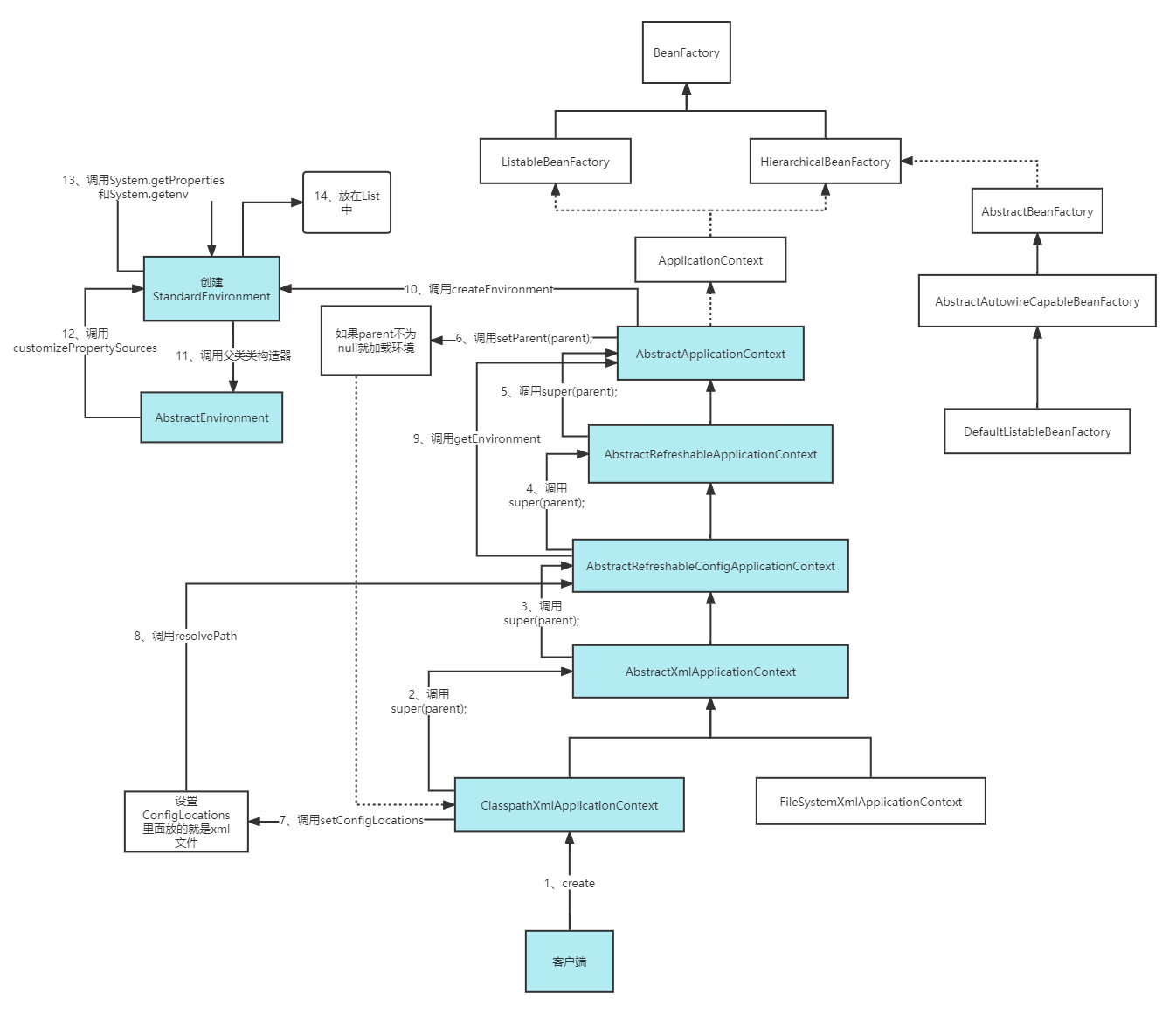
标记的类就是Environment环境信息的加载过程调用的类,最终会调用到System#getProperties 和System#getenv方法,然后完成环境信息的加载,主要加载的信息就是系统的环境变量,比如在Windows中配置的环境变量或者启动类中使用-D参数配置的启动参数都会进行加载到StandardEnvironment 这个类中,类似于使用-Dxxx.name=123这种参数会加载到systemProperties中,配置的windows环境变量会加载systemEnvironment中。
这个就是Spring IOC 创建的第一个方法的前戏准备工作,接下来解读默认的BeanFactory实现类DefaultListableBeanFactory的创建过程。