-
Spring系统学习 -Spring IOC 的XML管理Bean之类类型属性赋值、数组类型属性赋值、集合类属性赋值
-
类类型属性赋值: 在XML配置中,可以使用
-
数组类型属性赋值: XML配置中,可以使用
-
集合类型属性赋值: 在XML配置中,可以使用
或
类类型属性赋值
类类型属性赋值是指将一个类的实例赋值给另一个类的属性。在Java中,类类型属性是指一个类中的属性的类型是另一个类。
我们创建如下类:
public class Clazz {
    private Integer clazzId;
    private String clazzName;
    public Integer getClazzId() {
        return clazzId;
    }
    public void setClazzId(Integer clazzId) {
        this.clazzId = clazzId;
    }
    public String getClazzName() {
        return clazzName;
    }
    public void setClazzName(String clazzName) {
        this.clazzName = clazzName;
    }
    @Override
    public String toString() {
        return "Clazz{" +
            "clazzId=" + clazzId +
            ", clazzName='" + clazzName + '\'' +
            '}';
    }
    public Clazz() {
    }
    public Clazz(Integer clazzId, String clazzName) {
        this.clazzId = clazzId;
        this.clazzName = clazzName;
    }
}
然后创建一个Student类
public class student{
    private Integer stundentId;
    private String studentName;
	private Clazz clazz;

    public Integer getStundentId() {
        return stundentId;
    }
    public void setStundentId(Integer stundentId) {
        this.stundentId= stundentId;
    }
    public String getStudentName() {
        return clazzName;
    }
    public void setClazzName(String studentName) {
        this.studentName= studentName;
    }
	public Clazz getClazz() {
	    return clazz;
	}
	public void setClazz(Clazz clazz) {
	    this.clazz = clazz;
	}
}
方式一: 引用外部已经声明的bean
这个是在我们的spring的applicationContext.xml文件中配置的
配置Clazz类型的bean:
<bean id="clazzOne" class="com.miaow.spring.bean.Clazz">
    <property name="clazzId" value="1111">property>
    <property name="clazzName" value="财源滚滚班">property>
bean>
为Student中的Clazz属性赋值:
<bean id="studentFour" class="com.miaow.spring.bean.Student">
    <property name="studentId" value="1004">property>
    <property name="studentName" value="赵六">property>

    <property name="clazz" ref="clazzOne">property>
bean>
错误演示
<bean id="studentFour" class="com.miaow.spring.bean.Student">
    <property name="studentId" value="1004"></property>
    <property name="studentName" value="赵六"></property>
    <property name="clazz" value="clazzOne"></property>
</bean>
如果错把ref属性写成了value属性,会抛出异常: Caused by: java.lang.IllegalStateException:Cannot convert value of type ‘java.lang.String’ to required type ‘com.miaow.spring.bean.Clazz’ for property ‘clazz’: no matching editors or conversion strategy found
意思是不能把String类型转换成我们要的Clazz类型,说明我们使用value属性时,Spring只把这个属性看做一个普通的字符串,不会认为这是一个bean的id,更不会根据它去找到bean来赋值内部bean的方式
同样的在applicationContext.xml文件中配置如下代码:
<bean id="studentFour" class="com.miaow.spring.bean.Student">
    <property name="studentId" value="1004">property>
    <property name="studentName" value="赵六">property>
    <property name="clazz">


        <bean id="clazzInner" class="com.miaow.spring.bean.Clazz">
            <property name="clazzId" value="2222">property>
            <property name="clazzName" value="远大前程班">property>
        bean>
    property>
bean>
首先,通过
在
在
在
级联属性赋值
在Spring中,级联属性赋值是指在给一个对象的属性赋值时,同时给该对象的属性的属性(即子属性)赋值。这样可以方便地一次性设置多层嵌套属性的值。
<bean id="studentFour" class="com.miaow.spring.bean.Student">
    <property name="studentId" value="1004">property>
    <property name="studentName" value="赵六">property>

    <property name="clazz" ref="clazzOne">property>
    <property name="clazz.clazzId" value="3333">property>
    <property name="clazz.clazzName" value="最强王者班">property>
bean>
首先,通过
然后,使用
接下来,通过
最后,使用级联属性赋值的方式,通过在联机属性测试方法:
    @Test
    public void CascadeValueTest(){
        ApplicationContext context = new ClassPathXmlApplicationContext("applicationContext.xml");
        Student student = (Student) context.getBean("studentFive");
        System.out.println(student);
        System.out.println(student.getClassz().toString());
    }
数组类型属性赋值的方式
在Spring的XML配置文件中,可以使用 或 元素为数组类型属性赋值。以下是两种常见的方式:
使用
在Student中添加了如下代码:
private String[] hobbies;
public String[] getHobbies() {
    return hobbies;
}
public void setHobbies(String[] hobbies) {
    this.hobbies = hobbies;
}
在XML文件中新增如下
<property name="hobbies">
        <array>
            <value>吃饭value>
            <value>玩游戏value>
            <value>打麻将value>
        array>
    property>
使用
<property name="hobbies">
        <list>
            <value>吃饭value>
            <value>玩游戏value>
            <value>打麻将value>
        list>
    property>
在上述示例中,通过
无论是使用
为集合类型属性赋值
为List集合类型属性赋值
在Clazz中添加如下代码:
private List<Student> students;
public List<Student> getStudents() {
    return students;
}
public void setStudents(List<Student> students) {
    this.students = students;
}
配置bean:
<bean id="clazzTwo" class="com.miaow.spring.bean.Clazz">
    <property name="clazzId" value="4444">property>
    <property name="clazzName" value="Javaee0222">property>
    <property name="students">
        <list>
            <ref bean="studentOne">ref>
            <ref bean="studentTwo">ref>
            <ref bean="studentThree">ref>
        list>
    property>
bean>

<bean id="studentOne" class="com.miaow.spring.bean.Student">
    <property name="studentId" value="1004">property>
    <property name="studentName" value="赵六">property>
bean>
<bean id="studentTwo" class="com.miaow.spring.bean.Student">
    <property name="studentId" value="1005">property>
    <property name="studentName" value="赵七">property>
bean>
<bean id="studentThree" class="com.miaow.spring.bean.Student">
    <property name="studentId" value="1006">property>
    <property name="studentName" value="王五">property>
bean>
若为Set集合类型属性赋值,只需要将其中的list标签改为set标签即可
为Map集合类型属性赋值
我们创建一个新类Teacher
public class Teacher {
    private Integer teacherId;
    private String teacherName;
    public Integer getTeacherId() {
        return teacherId;
    }
    public void setTeacherId(Integer teacherId) {
        this.teacherId = teacherId;
    }
    public String getTeacherName() {
        return teacherName;
    }
    public void setTeacherName(String teacherName) {
        this.teacherName = teacherName;
    }
    public Teacher(Integer teacherId, String teacherName) {
        this.teacherId = teacherId;
        this.teacherName = teacherName;
    }
    public Teacher() {
    }
    @Override
    public String toString() {
        return "Teacher{" +
            "teacherId=" + teacherId +
            ", teacherName='" + teacherName + '\'' +
            '}';
    }
}
在Student类中添加如下代码:
private Map<String, Teacher> teacherMap;
public Map<String, Teacher> getTeacherMap() {
    return teacherMap;
}
public void setTeacherMap(Map<String, Teacher> teacherMap) {
    this.teacherMap = teacherMap;
}
在bean中配置
<bean id="teacherOne" class="com.miaow.spring.bean.Teacher">
    <property name="teacherId" value="10010">property>
    <property name="teacherName" value="大宝">property>
bean>
<bean id="teacherTwo" class="com.miaow.spring.bean.Teacher">
    <property name="teacherId" value="10086">property>
    <property name="teacherName" value="二宝">property>
bean>
<bean id="studentFour" class="com.miaow.spring.bean.Student">
    <property name="studentId" value="1004">property>
    <property name="studentName" value="赵六">property>

    <property name="clazz" ref="clazzOne">property>
    <property name="hobbies">
        <array>
            <value>吃饭value>
            <value>玩游戏value>
            <value>打麻将value>
        array>
    property>
    <property name="teacherMap">
        <map>
            <entry>
                <key>
                    <value>10010value>
                key>
                <ref bean="teacherOne">ref>
            entry>
            <entry>
                <key>
                    <value>10086value>
                key>
                <ref bean="teacherTwo">ref>
            entry>
        map>
    property>
bean>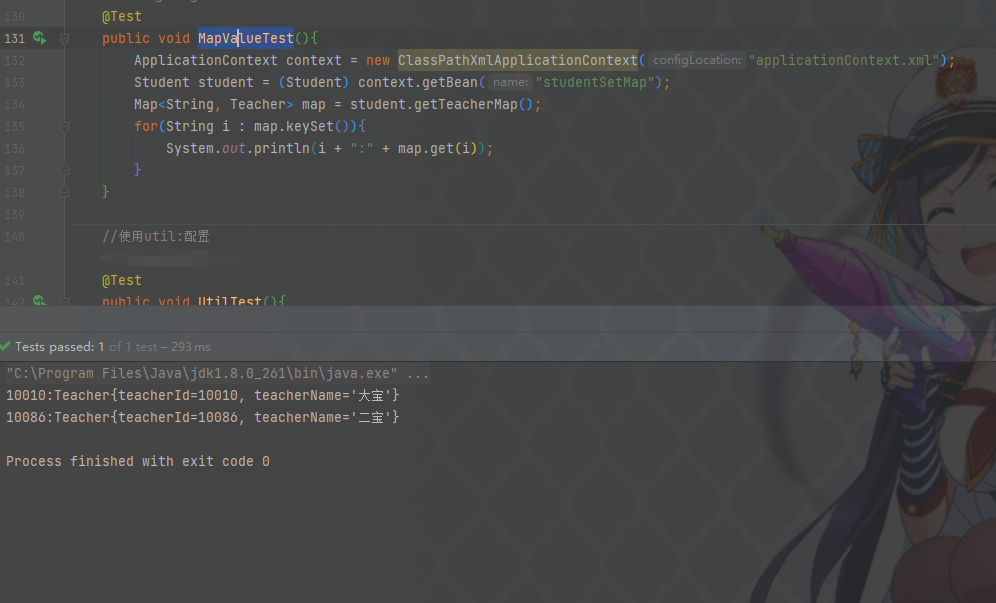
引用集合类型的bean
<util:list id="students">
    <ref bean="studentOne">ref>
    <ref bean="studentTwo">ref>
    <ref bean="studentThree">ref>
util:list>

<util:map id="teacherMap">
    <entry>
        <key>
            <value>10010value>
        key>
        <ref bean="teacherOne">ref>
    entry>
    <entry>
        <key>
            <value>10086value>
        key>
        <ref bean="teacherTwo">ref>
    entry>
util:map>
<bean id="clazzTwo" class="com.miaow.spring.bean.Clazz">
    <property name="clazzId" value="4444">property>
    <property name="clazzName" value="Javaee0222">property>
    <property name="students" ref="students">property>
bean>
<bean id="studentFour" class="com.miaow.spring.bean.Student">
    <property name="studentId" value="1004">property>
    <property name="studentName" value="赵六">property>

    <property name="clazz" ref="clazzOne">property>
    <property name="hobbies">
        <array>
            <value>抽烟value>
            <value>喝酒value>
            <value>烫头value>
        array>
    property>
    <property name="teacherMap" ref="teacherMap">property>
bean>
使用util:list、util:map标签必须引入相应的命名空间,可以通过idea的提示功能选择
- 引用顺序: 在使用
- 集合类型Bean的命名: 当使用
- 集合类型Bean的作用域: 集合类型的Bean的作用域通常是单例(singleton)。确保在引用集合类型的Bean时,了解其作用域,并确保在适当的范围内引用。
-
-
相关阅读:
椭圆曲线聚合签名原理 & PBFT 算法改进
元宇宙社交下,VR全景营销C位出道
疫情可视化part3
工作流实战之Activiti7
记一次clickhouse手动更改分片数异常
企业微信hook接口协议,标签变动回调
1.16 - 校验码
算法训练营第一天 704 .二分查找、27.移除元素
Grafana设置默认主页
【Python机器学习】零基础掌握QuadraticDiscriminantAnalysis判别分析
- 原文地址:https://blog.csdn.net/qq_45922256/article/details/139607046