-
JUC笔记
我的相关文章:
JavaSE 学习记录-CSDN博客
多线程笔记-CSDN博客
单例模式(Java实现)-CSDN博客
JUC笔记-CSDN博客
注解与反射(Java,类加载机制,双亲委派机制)-CSDN博客1、什么是 JUC
JUC就是
java.util下的工具包、包、分类等。
普通的线程代码:
- Thread
- Runnable 没有返回值、效率相比入 Callable 相对较低!
- Callable 有返回值!
2、线程和进程
线程、进程,如果不能使用一句话说出来的技术,不扎实!
- 进程:一个程序,QQ.exe Music.exe 程序的集合;
- 一个进程往往可以包含多个线程,至少包含一个!
- Java默认有2个线程? mian、GC
- 线程:开了一个进程 Typora,写字,自动保存(线程负责的)
- 对于Java而言提供了:
Thread、Runnable、Callable操作线程。
Java 真的可以开启线程吗? 答案是:开不了的!
public synchronized void start() {
    /**
     * This method is not invoked for the main method thread
     * or "system" group threads created/set up by the VM. Any new
     * functionality added to this method in the future may have to
     * also be added to the VM.A zero status value corresponds to
     * state "NEW".
     */
    if (threadStatus != 0)
        throw new IllegalThreadStateException();
    /*
     * Notify the group that this thread is about to be started
     * so that it can be added to the group's list of threads
     * and the group's unstarted count can be decremented.
     */
    group.add(this);
    boolean started = false;
    try {
        start0();
        started = true;
    } finally {
        try {
            if (!started) {
                group.threadStartFailed(this);
            }
        } catch (Throwable ignore) {
            /* do nothing. If start0 threw a Throwable then
              it will be passed up the call stack */
        }
    }
}
// 本地方法,底层操作的是C++ ,Java 无法直接操作硬件
private native void start0();
并发、并行
并发编程:并发、并行
并发(多线程操作同一个资源)
- 一核CPU,模拟出来多条线程,快速交替。
并行(多个人一起行走)
- 多核CPU ,多个线程可以同时执行; eg: 线程池!
public class Test1 { public static void main(String[] args) { // 获取cpu的核数 // CPU 密集型,IO密集型 System.out.println(Runtime.getRuntime().availableProcessors()); // 如果电脑是8核,则结果输出8 } }并发编程的本质:充分利用CPU的资源
线程有几个状态(6个)
public enum State { /** * Thread state for a thread which has not yet started. * 线程新生状态 */ NEW, /** * Thread state for a runnable thread. A thread in the runnable * state is executing in the Java virtual machine but it may * be waiting for other resources from the operating system * such as processor. * 线程运行中 */ RUNNABLE, /** * Thread state for a thread blocked waiting for a monitor lock. * A thread in the blocked state is waiting for a monitor lock * to enter a synchronized block/method or * reenter a synchronized block/method after calling * {@link Object#wait() Object.wait}. * 线程阻塞状态 */ BLOCKED, /** * Thread state for a waiting thread. * A thread is in the waiting state due to calling one of the * following methods: *-
*
- {@link Object#wait() Object.wait} with no timeout *
- {@link #join() Thread.join} with no timeout *
- {@link LockSupport#park() LockSupport.park} *
A thread in the waiting state is waiting for another thread to * perform a particular action. * * For example, a thread that has called Object.wait() * on an object is waiting for another thread to call * Object.notify() or Object.notifyAll() on * that object. A thread that has called Thread.join() * is waiting for a specified thread to terminate. * 线程等待状态,死等 */
WAITING, /** * Thread state for a waiting thread with a specified waiting time. * A thread is in the timed waiting state due to calling one of * the following methods with a specified positive waiting time: *-
*
- {@link #sleep Thread.sleep} *
- {@link Object#wait(long) Object.wait} with timeout *
- {@link #join(long) Thread.join} with timeout *
- {@link LockSupport#parkNanos LockSupport.parkNanos} *
- {@link LockSupport#parkUntil LockSupport.parkUntil} *
wait/sleep 区别
1、二者来自不同的类
- wait => Object
- sleep => Thread
2、关于锁的释放
- wait 会释放锁
- sleep 睡觉了,抱着锁睡觉,不会释放!
3、使用的范围是不同的
- wait 必须在同步代码块中使用
- sleep 可以再任何地方睡眠
3、Synchronized锁
传统 Synchronized锁
来看一个多线程卖票例子
package com.haust.juc01;
/*
 * @Auther: csp1999
 * @Date: 2020/07/21/13:59
 * @Description: 卖票例子
 */
public class SaleTicketTDemo01 {
    /*
     * 真正的多线程开发,公司中的开发,降低耦合性
     * 线程就是一个单独的资源类,没有任何附属的操作!
     * 1、 属性、方法
     */
    public static void main(String[] args) {
        //并发:多个线程同时操作一个资源类,把资源类丢入线程
        Ticket ticket = new Ticket();
        // @FunctionalInterface 函数式接口,jdk1.8 lambada表达式
        new Thread(() -> {
            for (int i = 1; i < 50; i++) {
                ticket.sale();
            }
        }, "A").start();
        new Thread(() -> {
            for (int i = 1; i < 50; i++) {
                ticket.sale();
            }
        }, "B").start();
        new Thread(() -> {
            for (int i = 1; i < 50; i++) {
                ticket.sale();
            }
        }, "C").start();
    }
}
//资源类 OOP
class Ticket {
    //属性、方法
    private int number = 50;
    // 卖票的方式
    // synchronized 本质: 队列,锁
    public synchronized void sale() {
        if (number > 0) {
            System.out.println(Thread.currentThread().getName() + "卖出了" +
                    (50-(--number)) + "张票,剩余:" + number + "张票");
        }
    }
}
4、Lock锁(重点)
Lock 接口


- 公平锁:十分公平,线程执行顺序按照先来后到顺序
- 非公平锁:十分不公平:可以插队 (默认锁)
将上面的卖票例子用lock锁 替换synchronized:
package com.haust.juc01;
import java.util.concurrent.locks.Lock;
import java.util.concurrent.locks.ReentrantLock;
/*
 * @Auther: csp1999
 * @Date: 2020/07/21/13:59
 * @Description: 卖票例子2
 */
public class SaleTicketTDemo02 {
    public static void main(String[] args) {
        //并发:多个线程同时操作一个资源类,把资源类丢入线程
        Ticket2 ticket = new Ticket2();
        // @FunctionalInterface 函数式接口,jdk1.8 lambada表达式
        new Thread(() -> {
            for (int i = 1; i < 50; i++) {
                ticket.sale();
            }
        }, "A").start();
        new Thread(() -> {
            for (int i = 1; i < 50; i++) {
                ticket.sale();
            }
        }, "B").start();
        new Thread(() -> {
            for (int i = 1; i < 50; i++) {
                ticket.sale();
            }
        }, "C").start();
    }
}
//Lock 3步骤
// 1. new ReentrantLock();
// 2. lock.lock()  加锁
// 3. lock.unlock() 解锁
class Ticket2 {
    //属性、方法
    private int number = 50;
    Lock lock = new ReentrantLock();
    // 卖票方式
    public void sale() {
        lock.lock();// 加锁
        try {
            // 业务代码
            if (number > 0) {
                System.out.println(Thread.currentThread().getName() + "卖出了" +
                        (50 - (--number)) + "张票,剩余:" + number + "张票");
            }
        } catch (Exception e) {
            e.printStackTrace();
        } finally {
            lock.unlock();// 解锁
        }
    }
}
Synchronized 和 Lock 区别:
- 1、Synchronized 内置的Java关键字, Lock 是一个Java类
- 2、Synchronized 无法判断获取锁的状态,Lock 可以判断是否获取到了锁
- 3、Synchronized 会自动释放锁,lock 必须要手动释放锁!如果不释放锁,死锁
- 4、Synchronized 线程 1(获得锁,如果线程1阻塞)、线程2(等待,傻傻的等);Lock锁就不一定会等待下去;
- 5、Synchronized 可重入锁,不可以中断的,非公平;Lock ,可重入锁,可以判断锁,非公平(可以自己设置);
- 6、Synchronized 适合锁少量的代码同步问题,Lock 适合锁大量的同步代码!
锁是什么,如何判断锁的是什么!
这个问题在之后会举例分析。
5、生产者和消费者问题
面试常考的问题:单例模式、排序算法、生产者和消费者、死锁
生产者和消费者问题 Synchronized 版
package com.haust.pc;
/**
 * 线程之间的通信问题:生产者和消费者问题!  等待唤醒,通知唤醒
 * 线程交替执行  A   B 操作同一个变量   num = 0
 * A num+1
 * B num-1
 */
public class A {
    public static void main(String[] args) {
        Data data = new Data();
        new Thread(() -> {
            for (int i = 0; i < 10; i++) {
                try {
                    data.increment();
                } catch (InterruptedException e) {
                    e.printStackTrace();
                }
            }
        }, "A").start();
        new Thread(() -> {
            for (int i = 0; i < 10; i++) {
                try {
                    data.decrement();
                } catch (InterruptedException e) {
                    e.printStackTrace();
                }
            }
        }, "B").start();
        new Thread(() -> {
            for (int i = 0; i < 10; i++) {
                try {
                    data.increment();
                } catch (InterruptedException e) {
                    e.printStackTrace();
                }
            }
        }, "C").start();
        new Thread(() -> {
            for (int i = 0; i < 10; i++) {
                try {
                    data.decrement();
                } catch (InterruptedException e) {
                    e.printStackTrace();
                }
            }
        }, "D").start();
    }
}
// 判断等待,业务,通知
class Data {
     // 数字 资源类
    private int number = 0;
    //+1
    public synchronized void increment() throws InterruptedException {
        /*
        假设 number此时等于1,即已经被生产了产品
        如果这里用的是if判断,如果此时A,C两个生产者线程争夺increment()方法执行权
        假设A拿到执行权,经过判断number!=0成立,则A.wait()开始等待(wait()会释放锁),然后C试图去执行
        生产方法,但依然判断number!=0成立,则B.wait()开始等待(wait()会释放锁)
        碰巧这时候消费者线程线程B/D去消费了一个产品,使number=0然后,B/D消费完后调用this.notifyAll();
        这时候2个等待中的生产者线程继续生产产品,而此时number++ 执行了2次
        同理,重复上述过程,生产者线程继续wait()等待,消费者调用this.notifyAll();
        然后生产者继续超前生产,最终导致‘产能过剩’,即number大于1
        if(number != 0){
            // 等待
            this.wait();
        }*/
        while (number != 0) {
     // 注意这里不可以用if 否则会出现虚假唤醒问题,解决方法将if换成while
            // 等待
            this.wait();
        }
        number++;
        System.out.println(Thread.currentThread().getName() + "=>" + number);
        // 通知其他线程,我+1完毕了
        this.notifyAll();
    }
    //-1
    public synchronized void decrement() throws InterruptedException {
        while (number == 0) {
            // 等待
            this.wait();
        }
        number--;
        System.out.println(Thread.currentThread().getName() + "=>" + number);
        // 通知其他线程,我-1完毕了
        this.notifyAll();
    }
}
问题存在,A B C D 4 个线程! 虚假唤醒
首先到CHM 官方文档 java.lang包下 找到Object ,然后找到wait()方法:

因此上述代码中必须使用while判断,而不能使用if
JUC版的生产者和消费者问题

官方文档中通过Lock 找到 Condition

点入Condition 查看


代码实现:
package com.haust.pc;
import java.util.concurrent.locks.Condition;
import java.util.concurrent.locks.Lock;
import java.util.concurrent.locks.ReentrantLock;
/**
 * 线程之间的通信问题:生产者和消费者问题!  等待唤醒,通知唤醒
 * 线程交替执行  A   B 操作同一个变量   num = 0
 * A num+1
 * B num-1
 */
public class B {
    public static void main(String[] args) {
        Data2 data = new Data2();
        new Thread(() -> {
            for (int i = 0; i < 10; i++) {
                try {
                    data.increment();
                } catch (InterruptedException e) {
                    e.printStackTrace();
                }
            }
        }, "A").start();
        new Thread(() -> {
            for (int i = 0; i < 10; i++) {
                try {
                    data.decrement();
                } catch (InterruptedException e) {
                    e.printStackTrace();
                }
            }
        }, "B").start();
        new Thread(() -> {
            for (int i = 0; i < 10; i++) {
                try {
                    data.increment();
                } catch (InterruptedException e) {
                    e.printStackTrace();
                }
            }
        }, "C").start();
        new Thread(() -> {
            for (int i = 0; i < 10; i++) {
                try {
                    data.decrement();
                } catch (InterruptedException e) {
                    e.printStackTrace();
                }
            }
        }, "D").start();
    }
}
// 判断等待,业务,通知
class Data2 {
     // 数字 资源类
    private int number = 0;
    Lock lock = new ReentrantLock();
    Condition condition = lock.newCondition();
    //condition.await(); // 等待
    //condition.signalAll(); // 唤醒全部
    //+1
    public  void increment() throws InterruptedException {
        lock.lock();
        try {
            // 业务代码
            while (number != 0) {
                // 等待
                condition.await();
            }
            number++;
            System.out.println(Thread.currentThread().getName() + "=>" + number);
            // 通知其他线程,我+1完毕了
            condition.signal();
        }catch (Exception e){
            e.printStackTrace();
        }finally {
            lock.unlock();
        }
    }
    //-1
    public  void decrement() throws InterruptedException {
        lock.lock();
        try {
            while (number == 0) {
                // 等待
                condition.await();
            }
            number--;
            System.out.println(Thread.currentThread().getName() + "=>" + number);
            // 通知其他线程,我-1完毕了
            condition.signal();
        }catch (Exception e){
            e.printStackTrace();
        }finally {
            lock.unlock();
        }
    }
}
任何一个新的技术,绝对不是仅仅只是覆盖了原来的技术,是有其对旧技术的优势和补充!
Condition 精准的通知和唤醒线程
上述代码运行结果如图:

问题:ABCD线程 抢占执行的顺序是随机的,如果想让ABCD线程有序执行,该如何改进代码?
代码实现:
package com.haust.pc;
import java.util.concurrent.locks.Condition;
import java.util.concurrent.locks.Lock;
import java.util.concurrent.locks.ReentrantLock;
/*
 * A 执行完调用B,B执行完调用C,C执行完调用A
 */
public class C {
    public static void main(String[] args) {
        Data3 data = new Data3();
        new Thread(() -> {
            for (int i = 0; i < 10; i++) {
                data.printA();
            }
        }, "A").start();
        new Thread(() -> {
            for (int i = 0; i < 10; i++) {
                data.printB();
            }
        }, "B").start();
        new Thread(() -> {
            for (int i = 0; i < 10; i++) {
                data.printC();
            }
        }, "C").start();
    }
}
class Data3 {
     // 资源类 Lock
    private Lock lock = new ReentrantLock();
    private Condition condition1 = lock.newCondition();
    private Condition condition2 = lock.newCondition();
    private Condition condition3 = lock.newCondition();
    private int number = 1;
    // number=1 A执行  number=2 B执行 number=3 C执行
    public void printA() {
        lock.lock();
        try {
            // 业务,判断-> 执行-> 通知
            while (number != 1) {
                // A等待
                condition1.await();
            }
            System.out.println(Thread.currentThread().getName() + "=>AAAAAAA");
            // 唤醒,唤醒指定的人,B
            number = 2;
            condition2.signal();
        } catch (Exception e) {
            e.printStackTrace();
        } finally {
            lock.unlock();
        }
    }
    public void printB() {
        lock.lock();
        try {
            // 业务,判断-> 执行-> 通知
            while (number != 2) {
                // B等待
                condition2.await();
            }
            System.out.println(Thread.currentThread().getName() + "=>BBBBBBBBB");
            // 唤醒,唤醒指定的人,c
            number = 3;
            condition3.signal();
        } catch (Exception e) {
            e.printStackTrace();
        } finally {
            lock.unlock();
        }
    }
    public void printC() {
        lock.lock();
        try {
            // 业务,判断-> 执行-> 通知
            // 业务,判断-> 执行-> 通知
            while (number != 3) {
                // C等待
                condition3.await();
            }
            System.out.println(Thread.currentThread().getName() + "=>CCCCC ");
            // 唤醒,唤醒指定的人,A
            number = 1;
            condition1.signal();
        } catch (Exception e) {
            e.printStackTrace();
        } finally {
            lock.unlock();
        }
    }
}
测试结果:

6、8锁现象
前面提出一个问题:如何判断锁的是谁!知道什么是锁,锁到底锁的是谁!
深刻理解我们的锁
synchronized 锁的对象是方法的调用者
代码举例1:
package com.haust.lock8;
import java.util.concurrent.TimeUnit;
/**
 * 8锁,就是关于锁的8个问题
 * 1、标准情况下,两个线程先打印 发短信还是 先打印 打电话? 1/发短信  2/打电话
 * 1、sendSms延迟4秒,两个线程先打印 发短信还是 打电话? 1/发短信  2/打电话
 */.
public class Test1 {
    public static void main(String[] args) {
        Phone phone = new Phone();
        // 锁的存在
        new Thread(()->{
            phone.sendSms();
        },"A").start();
        // 捕获
        try {
            TimeUnit.SECONDS.sleep(1);
        } catch (InterruptedException e) {
            e.printStackTrace();
        }
        new Thread(()->{
            phone.call();
        },"B").start();
    }
}
class Phone{
    // synchronized 锁的对象是方法的调用者!、
    // 两个方法用的是同一个对象调用(同一个锁),谁先拿到锁谁执行!
    public synchronized void sendSms(){
        try {
            TimeUnit.SECONDS.sleep(4);// 抱着锁睡眠
        } catch (InterruptedException e) {
            e.printStackTrace();
        }
        System.out.println("发短信");
    }
    public synchronized void call(){
        System.out.println("打电话");
    }
}
// 先执行 发短信,后执行打电话
普通方法没有锁!不是同步方法,就不受锁的影响,正常执行
代码举例2:
package com.haust.lock8;
import java.util.concurrent.TimeUnit;
/**
 * 3、 增加了一个普通方法后!先执行发短信还是Hello?// 普通方法
 * 4、 两个对象,两个同步方法, 发短信还是 打电话? // 打电话
 */
public class Test2  {
    public static void main(String[] args) {
        // 两个对象,两个调用者,两把锁!
        Phone2 phone1 = new Phone2();
        Phone2 phone2 = new Phone2();
        //锁的存在
        new Thread(()->{
            phone1.sendSms();
        },"A").start();
        // 捕获
        try {
            TimeUnit.SECONDS.sleep(1);
        } catch (InterruptedException e) {
            e.printStackTrace();
        }
        new Thread(()->{
            phone2.call();
        },"B").start();
        new Thread(()->{
            phone2.hello();
        },"C").start();
    }
}
class Phone2{
    // synchronized 锁的对象是方法的调用者!
    public synchronized void sendSms(){
        try {
            TimeUnit.SECONDS.sleep(4);
        } catch (InterruptedException e) {
            e.printStackTrace();
        }
        System.out.println("发短信");
    }
    public synchronized void call(){
        System.out.println("打电话");
    }
    // 这里没有锁!不是同步方法,不受锁的影响
    public void hello(){
        System.out.println("hello");
    }
}
// 先执行打电话,接着执行hello,最后执行发短信
不同实例对象的Class类模板只有一个,static静态的同步方法,锁的是Class
代码举例3:
package com.haust.lock8;
import java.util.concurrent.TimeUnit;
/**
 * 5、增加两个静态的同步方法,只有一个对象,先打印 发短信?打电话?
 * 6、两个对象!增加两个静态的同步方法, 先打印 发短信?打电话?
 */
public class Test3  {
    public static void main(String[] args) {
        // 两个对象的Class类模板只有一个,static,锁的是Class
        Phone3 phone1 = new Phone3();
        Phone3 phone2 = new Phone3();
        //锁的存在
        new Thread(()->{
            phone1.sendSms();
        },"A").start();
        // 捕获
        try {
            TimeUnit.SECONDS.sleep(1);
        } catch (InterruptedException e) {
            e.printStackTrace();
        }
        new Thread(()->{
            phone2.call();
        },"B").start();
    }
}
// Phone3唯一的一个 Class 对象
class Phone3{
    // synchronized 锁的对象是方法的调用者!
    // static 静态方法
    // 类一加载就有了!锁的是Class
    public static synchronized void sendSms(){
        try {
            TimeUnit.SECONDS.sleep(4);
        } catch (InterruptedException e) {
            e.printStackTrace();
        }
        System.out.println("发短信");
    }
    public static synchronized void call(){
        System.out.println("打电话");
    }
}
// 先执行发短信,后执行打电话
代码举例4:
package com.haust.lock8;
import java.util.concurrent.TimeUnit;
/**
 * 7、1个静态的同步方法,1个普通的同步方法 ,一个对象,先打印 发短信?打电话?
 * 8、1个静态的同步方法,1个普通的同步方法 ,两个对象,先打印 发短信?打电话?
 */
public class Test4  {
    public static void main(String[] args) {
        // 两个对象的Class类模板只有一个,static,锁的是Class
        Phone4 phone1 = new Phone4();
        Phone4 phone2 = new Phone4();
        //锁的存在
        new Thread(()->{
            phone1.sendSms();
        },"A").start();
        // 捕获
        try {
            TimeUnit.SECONDS.sleep(1);
        } catch (InterruptedException e) {
            e.printStackTrace();
        }
        new Thread(()->{
            phone2.call();
        },"B").start();
    }
}
// Phone3唯一的一个 Class 对象
class Phone4{
    // 静态的同步方法 锁的是 Class 类模板
    public static synchronized void sendSms(){
        try {
            TimeUnit.SECONDS.sleep(4);
        } catch (InterruptedException e) {
            e.printStackTrace();
        }
        System.out.println("发短信");
    }
    // 普通的同步方法  锁的调用者(对象),二者锁的对象不同,所以不需要等待
    public synchronized void call(){
        System.out.println("打电话");
    }
}
// 7/8 两种情况下,都是先执行打电话,后执行发短信,因为二者锁的对象不同,
// 静态同步方法锁的是Class类模板,普通同步方法锁的是实例化的对象,
// 所以不用等待前者解锁后 后者才能执行,而是两者并行执行,因为发短信休眠4s
// 所以打电话先执行。
小结
- new this 具体的一个手机
- static Class 唯一的一个模板
7、集合类不安全
List 不安全
List、ArrayList 等在并发多线程条件下,不能实现数据共享,多个线程同时调用一个list对象时候就会出现并发修改异常
ConcurrentModificationException。代码举例:
package com.haust.unsafe; import java.util.*; import java.util.concurrent.CopyOnWriteArrayList; // java.util.ConcurrentModificationException 并发修改异常! public class ListTest { public static void main(String[] args) { // 并发下 ArrayList 不安全的吗,Synchronized; /* * 解决方案; * 方案1、Listlist = new Vector<>(); * 方案2、List /* CopyOnWrite 写入时复制 COW 计算机程序设计领域的一种优化策略; * 多个线程调用的时候,list,读取的时候,固定的,写入(覆盖) * 在写入的时候避免覆盖,造成数据问题! * 读写分离 * CopyOnWriteArrayList 比 Vector Nb 在哪里? */ List<String> list = new CopyOnWriteArrayList<>(); for (int i = 1; i <= 10; i++) { new Thread(()->{ list.add(UUID.randomUUID().toString().substring(0,5)); System.out.println(list); },String.valueOf(i)).start(); } } }list = * Collections.synchronizedList(new ArrayList<>()); * 方案3、List list = new CopyOnWriteArrayList<>(); */ add() 时,使用了ReentrantLock,加上底层数组使用volatile保证可见性
private transient volatile Object[] array;
......
    final Object[] getArray() {
        return array;
    }
......
    /**
     * Appends the specified element to the end of this list.
     *
     * @param e element to be appended to this list
     * @return {@code true} (as specified by {@link Collection#add})
     */
    public boolean add(E e) {
        final ReentrantLock lock = this.lock;
        lock.lock();
        try {
            Object[] elements = getArray();
            int len = elements.length;
            Object[] newElements = Arrays.copyOf(elements, len + 1);
            newElements[len] = e;
            setArray(newElements);
            return true;
        } finally {
            lock.unlock();
        }
    }
Set 不安全
Set、Hash 等在并发多线程条件下,不能实现数据共享,多个线程同时调用一个set对象时候就会出现并发修改异常ConcurrentModificationException。
代码举例:
package com.haust.unsafe; import java.util.HashSet; import java.util.Set; import java.util.UUID; /** * 同理可证 : ConcurrentModificationException 并发修改异常 * 1、Setset = * Collections.synchronizedSet(new HashSet<>()); * 2、 */ public class SetTest { public static void main(String[] args) { //Setset = new HashSet<>();//不安全 // Setset = Collections.synchronizedSet(new HashSet<>());//安全 Set<String> set = new CopyOnWriteArraySet<>();//安全 for (int i = 1; i <=30 ; i++) { new Thread(()->{ set.add(UUID.randomUUID().toString().substring(0,5)); System.out.println(set); },String.valueOf(i)).start(); } } }扩展:hashSet 底层是什么?


可以看出 HashSet 的底层就是一个HashMap

Map 不安全
回顾Map基本操作:

代码举例:
package com.haust.unsafe; import java.util.Map; import java.util.UUID; import java.util.concurrent.ConcurrentHashMap; // ConcurrentModificationException public class MapTest { public static void main(String[] args) { // map 是这样用的吗? 不是,工作中不用 HashMap // 默认等价于什么? new HashMap<>(16,0.75); // Map8、Callable (简单)

Callable 和 Runable 对比:
举例:比如Callable 是你自己,你想通过你的女朋友 **Runable **认识她的闺蜜 Thread


- Callable 是 java.util 包下 concurrent 下的接口,有返回值,可以抛出被检查的异常
- Runable 是 java.lang 包下的接口,没有返回值,不可以抛出被检查的异常
- 二者调用的方法不同,run()/ call()
同样的 Lock 和 Synchronized 二者的区别,前者是java.util 下的接口 后者是 java.lang 下的关键字。
代码举例
package com.haust.callable;
import java.util.concurrent.Callable;
import java.util.concurrent.ExecutionException;
import java.util.concurrent.FutureTask;
/**
 * 1、探究原理
 * 2、觉自己会用
 */
public class CallableTest {
    public static void main(String[] args) throws ExecutionException, InterruptedException {
        // new Thread(new Runnable()).start();// 启动Runnable
        // new Thread(new FutureTask()).start();
        // new Thread(new FutureTask( Callable )).start();
        new Thread().start(); // 怎么启动Callable?
        // new 一个MyThread实例
        MyThread thread = new MyThread();
        // MyThread实例放入FutureTask
        FutureTask futureTask = new FutureTask(thread); // 适配类
        new Thread(futureTask,"A").start();
        new Thread(futureTask,"B").start(); // call()方法结果会被缓存,提高效率,因此只打印1个call
        // 这个get 方法可能会产生阻塞!把他放到最后
        Integer o = (Integer) futureTask.get();
        // 或者使用异步通信来处理!
        System.out.println(o);// 1024
    }
}
class MyThread implements Callable<Integer> {
    @Override
    public Integer call() {
        System.out.println("call()"); // A,B两个线程会打印几个call?(1个)
        // 耗时的操作
        return 1024;
    }
}
//class MyThread implements Runnable {
//
//    @Override
//    public void run() {
//        System.out.println("run()"); // 会打印几个run
//    }
//}
细节:
1、有缓存
2、结果可能需要等待,会阻塞!
9、常用的辅助类(必会)
9.1、CountDownLatch

减法计数器: 实现调用几次线程后 再触发某一个任务
代码举例:
package com.haust.add;
import java.util.concurrent.CountDownLatch;
// 计数器
public class CountDownLatchDemo {
    public static void main(String[] args) throws InterruptedException {
        // 总数是6,必须要执行任务的时候,再使用!
        CountDownLatch countDownLatch = new CountDownLatch(6);
        for (int i = 1; i <=6 ; i++) {
            new Thread(()->{
                System.out.println(Thread.currentThread().getName()
                                                           +" Go out");
                countDownLatch.countDown(); // 数量-1
            },String.valueOf(i)).start();
        }
        countDownLatch.await(); // 等待计数器归零,然后再向下执行
        System.out.println("Close Door");
    }
}
原理:
countDownLatch.countDown();// 数量-1countDownLatch.await();// 等待计数器归零,然后再向下执行每次有线程调用 countDown() 数量-1,假设计数器变为0,countDownLatch.await() 就会被唤醒,继续执行!
9.2、CyclicBarrier

加法计数器:集齐7颗龙珠召唤神龙
代码举例:
package com.haust.add;
import java.util.concurrent.BrokenBarrierException;
import java.util.concurrent.CyclicBarrier;
public class  CyclicBarrierDemo {
    public static void main(String[] args) {
        /*
         * 集齐7颗龙珠召唤神龙
         */
        // 召唤龙珠的线程
        CyclicBarrier cyclicBarrier = new CyclicBarrier(7,()->{
            System.out.println("召唤神龙成功!");
        });
        for (int i = 1; i <=7 ; i++) {
            final int temp = i;
            // lambda能操作到 i 吗
            new Thread(()->{
                System.out.println(Thread.currentThread().getName()
                                                 +"收集"+temp+"个龙珠");
                try {
                    cyclicBarrier.await(); // 等待, count--
                } catch (InterruptedException e) {
                    e.printStackTrace();
                } catch (BrokenBarrierException e) {
                    e.printStackTrace();
                }
            }).start();
        }
    }
}
9.3、Semaphore
Semaphore:信号量

限流/抢车位!6车—3个停车位置
代码举例:
package com.haust.add;
import java.util.concurrent.Semaphore;
import java.util.concurrent.TimeUnit;
public class SemaphoreDemo {
    public static void main(String[] args) {
        // 线程数量:停车位! 限流!、
        // 如果已有3个线程执行(3个车位已满),则其他线程需要等待‘车位’释放后,才能执行!
        Semaphore semaphore = new Semaphore(3);
        for (int i = 1; i <=6 ; i++) {
            new Thread(()->{
                // acquire() 得到
                try {
                    semaphore.acquire();
                    System.out.println(Thread.currentThread()
                                               .getName()+"抢到车位");
                    TimeUnit.SECONDS.sleep(2);
                    System.out.println(Thread.currentThread()
                                               .getName()+"离开车位");
                } catch (InterruptedException e) {
                    e.printStackTrace();
                } finally {
                    semaphore.release(); // release() 释放
                }
            },String.valueOf(i)).start();
        }
    }
}
只有三个车位,只有当某辆车离开车位,车位空出来后,下一辆车才能在此停放。
输出结果如图:

原理:
semaphore.acquire();获得,假设如果已经满了,等待,等待被释放为止!semaphore.release();释放,会将当前的信号量释放 + 1,然后唤醒等待的线程!作用: 多个共享资源互斥的使用!并发限流,控制最大的线程数!
10、读写锁 ReadWriteLock
ReadWriteLock

代码举例:
package com.haust.rw;
import java.util.HashMap;
import java.util.Map;
import java.util.concurrent.locks.Lock;
import java.util.concurrent.locks.ReadWriteLock;
import java.util.concurrent.locks.ReentrantLock;
import java.util.concurrent.locks.ReentrantReadWriteLock;
/**
 * 独占锁(写锁) 一次只能被一个线程占有
 * 共享锁(读锁) 多个线程可以同时占有
 * ReadWriteLock
 * 读-读  可以共存!
 * 读-写  不能共存!
 * 写-写  不能共存!
 */
public class ReadWriteLockDemo {
    public static void main(String[] args) {
        //MyCache myCache = new MyCache();
        MyCacheLock myCacheLock = new MyCacheLock();
        // 写入
        for (int i = 1; i <= 5 ; i++) {
            final int temp = i;
            new Thread(()->{
                myCacheLock.put(temp+"",temp+"");
            },String.valueOf(i)).start();
        }
        // 读取
        for (int i = 1; i <= 5 ; i++) {
            final int temp = i;
            new Thread(()->{
                myCacheLock.get(temp+"");
            },String.valueOf(i)).start();
        }
    }
}
/**
 * 自定义缓存
 * 加锁的
 */
class MyCacheLock{
    private volatile Map<String,Object> map = new HashMap<>();
    // 读写锁: 更加细粒度的控制
    private ReadWriteLock readWriteLock = new
                                    ReentrantReadWriteLock();
    // private Lock lock = new ReentrantLock();
    // 存,写入的时候,只希望同时只有一个线程写
    public void put(String key,Object value){
        readWriteLock.writeLock().lock();
        try {
            System.out.println(Thread.currentThread().getName()
                                                       +"写入"+key);
            map.put(key,value);
            System.out.println(Thread.currentThread().getName()
                                                       +"写入OK");
        } catch (Exception e) {
            e.printStackTrace();
        } finally {
            readWriteLock.writeLock().unlock();
        }
    }
    // 取,读,所有人都可以读!
    public void get(String key){
        readWriteLock.readLock().lock();
        try {
            System.out.println(Thread.currentThread().getName()
                                                       +"读取"+key);
            Object o = map.get(key);
            System.out.println(Thread.currentThread().getName()
                                                       +"读取OK");
        } catch (Exception e) {
            e.printStackTrace();
        } finally {
            readWriteLock.readLock().unlock();
        }
    }
}
/**
 * 自定义缓存
 * 不加锁的
 */
class MyCache{
    private volatile Map<String,Object> map = new HashMap<>();
    // 存,写
    public void put(String key,Object value){
        System.out.println(Thread.currentThread().getName()
                                                       +"写入"+key);
        map.put(key,value);
        System.out.println(Thread.currentThread().getName()
                                                       +"写入OK");
    }
    // 取,读
    public void get(String key){
        System.out.println(Thread.currentThread().getName()
                                                       +"读取"+key);
        Object o = map.get(key);
        System.out.println(Thread.currentThread().getName()
                                                       +"读取OK");
    }
}
执行效果如图:


11、阻塞队列

阻塞队列:


BlockingQueue
BlockingQueue 不是新的东西

什么情况下我们会使用 阻塞队列?:多线程并发处理,线程池用的较多 !
学会使用队列
添加、移除
四组API
方式 抛出异常 有返回值,不抛出异常 阻塞 等待(reentrantlock) 超时等待(reentrantlock) 添加 add offer() put() offer() 移除 remove poll() take() poll() 检测队首元素 element peek() - - package com.kuang.bq; import java.util.Collection; import java.util.concurrent.ArrayBlockingQueue; import java.util.concurrent.TimeUnit; public class Test { public static void main(String[] args) throws InterruptedException { test4(); } /** * 1. 无返回值,抛出异常的方式 */ public static void test1(){ // 队列的大小 ArrayBlockingQueue blockingQueue = new ArrayBlockingQueue<>(3); System.out.println(blockingQueue.add("a"));// true System.out.println(blockingQueue.add("b"));// true System.out.println(blockingQueue.add("c"));// true // System.out.println(blockingQueue.add("d")); // IllegalStateException: Queue full 抛出异常---队列已满! System.out.println("==========================="); System.out.println(blockingQueue.element());// // 查看队首元素是谁 System.out.println(blockingQueue.remove());// System.out.println(blockingQueue.remove());// System.out.println(blockingQueue.remove());// // System.out.println(blockingQueue.remove()); // java.util.NoSuchElementException 抛出异常---队列已为空! } /** * 2. 有返回值,不抛出异常的方式 */ public static void test2(){ // 队列的大小 ArrayBlockingQueue blockingQueue = new ArrayBlockingQueue<>(3); System.out.println(blockingQueue.offer("a")); System.out.println(blockingQueue.offer("b")); System.out.println(blockingQueue.offer("c")); System.out.println(blockingQueue.peek()); // System.out.println(blockingQueue.offer("d")); // false 不抛出异常! System.out.println("==========================="); System.out.println(blockingQueue.poll()); System.out.println(blockingQueue.poll()); System.out.println(blockingQueue.poll()); System.out.println(blockingQueue.poll()); // null 不抛出异常! } /** * 3. 等待,阻塞(一直阻塞) */ public static void test3() throws InterruptedException { // 队列的大小 ArrayBlockingQueue blockingQueue = new ArrayBlockingQueue<>(3); // 一直阻塞 blockingQueue.put("a"); blockingQueue.put("b"); blockingQueue.put("c"); // blockingQueue.put("d"); // 队列没有位置了,一直阻塞等待 System.out.println(blockingQueue.take()); System.out.println(blockingQueue.take()); System.out.println(blockingQueue.take()); System.out.println(blockingQueue.take()); // 没有这个元素,一直阻塞等待 } /** * 4. 等待,阻塞(等待超时) */ public static void test4() throws InterruptedException { // 队列的大小 ArrayBlockingQueue blockingQueue = new ArrayBlockingQueue<>(3); blockingQueue.offer("a"); blockingQueue.offer("b"); blockingQueue.offer("c"); // blockingQueue.offer("d",2,TimeUnit.SECONDS); // 等待超过2秒就退出 System.out.println("==============="); System.out.println(blockingQueue.poll()); System.out.println(blockingQueue.poll()); System.out.println(blockingQueue.poll()); blockingQueue.poll(2,TimeUnit.SECONDS); // 等待超过2秒就退出 } }SynchronousQueue
SynchronousQueue 同步队列
没有容量,进去一个元素,必须等待取出来之后,才能再往里面放一个元素!
put、take
代码举例:
package com.haust.bq;
import java.util.concurrent.BlockingQueue;
import java.util.concurrent.SynchronousQueue;
import java.util.concurrent.TimeUnit;
/**
 * 同步队列:
 * 和其他的BlockingQueue 不一样, SynchronousQueue 不存储元素
 * put了一个元素,必须从里面先take取出来,否则不能在put进去值!
 */
public class SynchronousQueueDemo {
    public static void main(String[] args) {
        BlockingQueue<String> blockingQueue =
                                new SynchronousQueue<>(); // 同步队列
        new Thread(()->{
            try {
                System.out.println(Thread.currentThread().getName()
                                                           +" put 1");
                // put进入一个元素
                blockingQueue.put("1");
                System.out.println(Thread.currentThread().getName()
                                                           +" put 2");
                blockingQueue.put("2");
                System.out.println(Thread.currentThread().getName()
                                                           +" put 3");
                blockingQueue.put("3");
            } catch (InterruptedException e) {
                e.printStackTrace();
            }
        },"T1").start();
        new Thread(()->{
            try {
                // 睡眠3s取出一个元素
                TimeUnit.SECONDS.sleep(3);
                System.out.println(Thread.currentThread().getName()
                                           +"=>"+blockingQueue.take());
                TimeUnit.SECONDS.sleep(3);
                System.out.println(Thread.currentThread().getName()
                                           +"=>"+blockingQueue.take());
                TimeUnit.SECONDS.sleep(3);
                System.out.println(Thread.currentThread().getName()
                                           +"=>"+blockingQueue.take());
            } catch (InterruptedException e) {
                e.printStackTrace();
            }
        },"T2").start();
    }
}
执行结果如图所示:

12、线程池(重点)
线程池:3大方法、7大参数、4种拒绝策略
池化技术
程序的运行,本质:占用系统的资源! (优化资源的使用 => 池化技术)
线程池、连接池、内存池、对象池///… 创建、销毁。十分浪费资源
池化技术:事先准备好一些资源,有人要用,就来我这里拿,用完之后还给我。
线程池的好处:
- 1、降低系统资源的消耗
- 2、提高响应的速度
- 3、方便管理
线程复用、可以控制最大并发数、管理线程
线程池:3大方法
线程池:3大方法

示例代码:
package com.haust.pool;
import java.util.concurrent.ExecutorService;
import java.util.List;
import java.util.concurrent.Executors;
public class Demo01 {
    public static void main(String[] args) {
        // Executors 工具类、3大方法
        // Executors.newSingleThreadExecutor();// 创建单个线程的线程池
        // Executors.newFixedThreadPool(5);// 创建一个固定大小的线程池
        // Executors.newCachedThreadPool();// 创建一个可伸缩的线程池
        // 单个线程的线程池
        ExecutorService threadPool =
                                Executors.newSingleThreadExecutor();
        try {
            for (int i = 1; i < 100; i++) {
                // 使用了线程池之后,使用线程池来创建线程
                threadPool.execute(()->{
                    System.out.println(
                        Thread.currentThread().getName()+" ok");
                });
            }
        } catch (Exception e) {
            e.printStackTrace();
        } finally {
            // 线程池用完,程序结束,关闭线程池
            threadPool.shutdown();
        }
    }
}
线程池:7大参数
7大参数
源码分析:
public static ExecutorService newSingleThreadExecutor() {
    return new FinalizableDelegatedExecutorService (
        new ThreadPoolExecutor(
            1,
            1,
            0L,
            TimeUnit.MILLISECONDS,
            new LinkedBlockingQueue<Runnable>()));
}
public static ExecutorService newFixedThreadPool(int nThreads) {
    return new ThreadPoolExecutor(
        5,
        5,
        0L,
        TimeUnit.MILLISECONDS,
        new LinkedBlockingQueue<Runnable>());
}
public static ExecutorService newCachedThreadPool() {
    return new ThreadPoolExecutor(
        0,
        Integer.MAX_VALUE,
        60L,
        TimeUnit.SECONDS,
        new SynchronousQueue<Runnable>());
}
// 本质ThreadPoolExecutor()
public ThreadPoolExecutor(int corePoolSize, // 核心线程池大小
                          int maximumPoolSize, // 最大核心线程池大小
                          long keepAliveTime, // 超时没有人调用就会释放
                          TimeUnit unit, // 超时单位
                          // 阻塞队列
                          BlockingQueue<Runnable> workQueue,
                          // 线程工厂:创建线程的,一般 不用动
                          ThreadFactory threadFactory,
                          // 拒绝策略
                          RejectedExecutionHandler handle ) {
    if (corePoolSize < 0
        || maximumPoolSize <= 0
        || maximumPoolSize < corePoolSize
        || keepAliveTime < 0)
        throw new IllegalArgumentException();
    if (workQueue == null
        || threadFactory == null
        || handler == null)
        throw new NullPointerException();
    this.acc = System.getSecurityManager() == null
        ? null : AccessController.getContext();
    this.corePoolSize = corePoolSize;
    this.maximumPoolSize = maximumPoolSize;
    this.workQueue = workQueue;
    this.keepAliveTime = unit.toNanos(keepAliveTime);
    this.threadFactory = threadFactory;
    this.handler = handler;
}

手动创建一个线程池
因为实际开发中工具类Executors 不安全,所以需要手动创建线程池,自定义7个参数。
示例代码:
package com.haust.pool;
import java.util.ArrayList;
import java.util.List;
import java.util.concurrent.*;
// Executors 工具类、3大方法
// Executors.newSingleThreadExecutor();// 创建一个单个线程的线程池
// Executors.newFixedThreadPool(5);// 创建一个固定大小的线程池
// Executors.newCachedThreadPool();// 创建一个可伸缩的线程池
/**
 * 四种拒绝策略:
 *
 * new ThreadPoolExecutor.AbortPolicy()
 * 银行满了,还有人进来,不处理这个人的,抛出异常
 *
 * new ThreadPoolExecutor.CallerRunsPolicy()
 * 哪来的去哪里!比如你爸爸 让你去通知妈妈洗衣服,妈妈拒绝,让你回去通知爸爸洗
 *
 * new ThreadPoolExecutor.DiscardPolicy()
 * 队列满了,丢掉任务,不会抛出异常!
 *
 * new ThreadPoolExecutor.DiscardOldestPolicy()
 * 队列满了,尝试去和最早的竞争,也不会抛出异常!
 */
public class Demo01 {
    public static void main(String[] args) {
        // 自定义线程池!工作 ThreadPoolExecutor
        ExecutorService threadPool = new ThreadPoolExecutor(
                2,// int corePoolSize, 核心线程池大小(候客区窗口2个)
                5,// int maximumPoolSize, 最大核心线程池大小(总共5个窗口)
                3,// long keepAliveTime, 超时3秒没有人调用就会释,放关闭窗口
                TimeUnit.SECONDS,// TimeUnit unit, 超时单位 秒
                new LinkedBlockingDeque<>(3),// 阻塞队列(候客区最多3人)
                Executors.defaultThreadFactory(),// 默认线程工厂
                // 4种拒绝策略之一:
                // 队列满了,尝试去和 最早的竞争,也不会抛出异常!
                new ThreadPoolExecutor.DiscardOldestPolicy());
        //队列满了,尝试去和最早的竞争,也不会抛出异常!
        try {
            // 最大承载:Deque + max
            // 超过 RejectedExecutionException
            for (int i = 1; i <= 9; i++) {
                // 使用了线程池之后,使用线程池来创建线程
                threadPool.execute(()->{
                    System.out.println(
                        Thread.currentThread().getName()+" ok");
                });
            }
        } catch (Exception e) {
            e.printStackTrace();
        } finally {
            // 线程池用完,程序结束,关闭线程池
            threadPool.shutdown();
        }
    }
}
线程池:4种拒绝策略
4种拒绝策略

/**
 * 四种拒绝策略:
 *
 * new ThreadPoolExecutor.AbortPolicy()
 * 银行满了,还有人进来,不处理这个人的,抛出异常
 *
 * new ThreadPoolExecutor.CallerRunsPolicy()
 * 哪来的去哪里!比如你爸爸 让你去通知妈妈洗衣服,妈妈拒绝,让你回去通知爸爸洗
 *
 * new ThreadPoolExecutor.DiscardPolicy()
 * 队列满了,丢掉任务,不会抛出异常!
 *
 * new ThreadPoolExecutor.DiscardOldestPolicy()
 * 队列满了,尝试去和最早的竞争,也不会抛出异常!
 */
小结和拓展
池的最大容量如何去设置!
了解:IO密集型,CPU密集型:(调优)
直接上代码:
package com.haust.pool;
import java.util.ArrayList;
import java.util.List;
import java.util.concurrent.*;
public class Demo01 {
    public static void main(String[] args) {
        // 自定义线程池!工作 ThreadPoolExecutor
        // 最大线程到底该如何定义
        // 1、CPU 密集型,几核,就是几,可以保持CPu的效率最高!
        // 2、IO 密集型 > 判断你程序中十分耗IO的线程,
        // 比如程序 15个大型任务 io十分占用资源!
        // IO密集型参数(最大线程数)就设置为大于15即可,一般选择两倍
        // 获取CPU的核数
        System.out.println(
            Runtime.getRuntime().availableProcessors());// 8核
        ExecutorService threadPool = new ThreadPoolExecutor(
                2,// int corePoolSize, 核心线程池大小
                // int maximumPoolSize, 最大核心线程池大小 8核电脑就是8
                Runtime.getRuntime().availableProcessors(),
                3,// long keepAliveTime, 超时3秒没有人调用就会释放
                TimeUnit.SECONDS,// TimeUnit unit, 超时单位 秒
                new LinkedBlockingDeque<>(3),// 阻塞队列(候客区最多3人)
                Executors.defaultThreadFactory(),// 默认线程工厂
                // 4种拒绝策略之一:
                // 队列满了,尝试去和 最早的竞争,也不会抛出异常!
                new ThreadPoolExecutor.DiscardOldestPolicy());
        //队列满了,尝试去和最早的竞争,也不会抛出异常!
        try {
            // 最大承载:Deque + max
            // 超过 RejectedExecutionException
            for (int i = 1; i <= 9; i++) {
                // 使用了线程池之后,使用线程池来创建线程
                threadPool.execute(()->{
                    System.out.println(
                        Thread.currentThread().getName()+" ok");
                });
            }
        } catch (Exception e) {
            e.printStackTrace();
        } finally {
            // 线程池用完,程序结束,关闭线程池
            threadPool.shutdown();
        }
    }
}
13、四大函数式接口(必需掌握)
新时代的程序员:lambda表达式、链式编程、函数式接口、Stream流式计算
函数式接口: 只有一个方法的接口
@FunctionalInterface
public interface Runnable {
    public abstract void run();
}
// 泛型、枚举、反射
// lambda表达式、链式编程、函数式接口、Stream流式计算
// 超级多FunctionalInterface
// 简化编程模型,在新版本的框架底层大量应用!
// foreach(消费者类的函数式接口)
四大函数式接口:

[外链图片转存失败,源站可能有防盗链机制,建议将图片保存下来直接上传(img-JgJ4DgrY-1612153143956)(D:\Note\笔记\JUC并发编程\JUC笔记(下)].assets\image-20200726184704772.png)
Function 函数式接口
Function函数式接口

package com.haust.function; import java.util.function.Function; /** * Function 函数型接口, 有一个输入参数,有一个输出参数 * 只要是 函数型接口 可以 用 lambda表达式简化 */ public class Demo01 { public static void main(String[] args) { /*Function等价于:
    Function<String, String> function = new Function<String, String>() {
        @Override
        public String apply(String s) {
            return s;
        }
    };
Predicate 断定型接口
断定型接口:有一个输入参数,返回值只能是 布尔值!

package com.haust.function; import java.util.function.Predicate; /* * 断定型接口:有一个输入参数,返回值只能是 布尔值! */ public class Demo02 { public static void main(String[] args) { // 判断字符串是否为空 /*Predicatepredicate = new Predicate Predicate<String> predicate = (str)->{ return str.isEmpty(); }; System.out.println(predicate.test(""));//true } }(){ @Override public boolean test(String str) { return str.isEmpty();//true或false } };*/ Consumer 消费型接口
Consumer 消费型接口

package com.haust.function; import java.util.function.Consumer; /** * Consumer 消费型接口: 只有输入,没有返回值 */ public class Demo03 { public static void main(String[] args) { /*Consumerconsumer = new Consumer Consumer<String> consumer = (str)->{ System.out.println(str);}; consumer.accept("sdadasd"); } }() { @Override public void accept(String str) { System.out.println(str); } };*/ Supplier 供给型接口
Supplier 供给型接口

package com.haust.function;
import java.util.function.Supplier;
/**
 * Supplier 供给型接口 没有参数,只有返回值
 */
public class Demo04 {
    public static void main(String[] args) {
        /*Supplier supplier = new Supplier() {
            @Override
            public Integer get() {
                System.out.println("get()");
                return 1024;
            }
        };*/
        Supplier supplier = ()->{
     return 1024; };
        System.out.println(supplier.get());
    }
}
14、Stream 流式计算
什么是Stream流式计算
大数据:存储 + 计算
集合、MySQL 本质就是存储东西的;
计算都应该交给流来操作!

/**
 * 题目要求:一分钟内完成此题,只能用一行代码实现!
 * 现在有5个用户!筛选:
 * 1、ID 必须是偶数
 * 2、年龄必须大于23岁
 * 3、用户名转为大写字母
 * 4、用户名字母倒着排序
 * 5、只输出一个用户!
 */
public class Test {
    public static void main(String[] args) throws InterruptedException {
        User user1 = new User(2, "zhangsan", 12);
        User user2 = new User(3, "lisi", 32);
        User user3 = new User(4, "wangwu", 52);
        User user4 = new User(5, "zhaoliu", 62);
        User user5 = new User(6, "qianqi", 72);

        List<User> list = Arrays.asList(user1, user2, user3, user4, user5);

        list.stream().filter(user -> user.getId() % 2 == 0)
                .filter(user -> user.getAge() > 23)
                .map(user -> user.getUsername().toUpperCase())
                .sorted((u1, u2) -> u2.compareTo(u1))
                .limit(1)
                .forEach(System.out::println);
    }

}
15、ForkJoin
什么是 ForkJoin
ForkJoin 在 JDK 1.7 , 并行执行任务!提高效率。大数据量!
大数据:Map Reduce (把大任务拆分为小任务)

ForkJoin 特点:工作窃取
这个里面维护的都是双端队列

ForkJoin


Fork-Join 是一种并行计算模式,用于处理任务的分解与合并。在Java中,
java.util.concurrent包提供了ForkJoinPool和ForkJoinTask来实现 Fork-Join 框架。-
ForkJoinPool:
ForkJoinPool是一个线程池,专门用于执行ForkJoinTask。它通常会创建与处理器数量相等的工作线程,并且这些线程可以执行提交的ForkJoinTask。 -
ForkJoinTask:
ForkJoinTask是一个抽象类,用于表示可以被ForkJoinPool执行的任务。它有两个主要的子类:RecursiveAction和RecursiveTask。
-
RecursiveAction:用于表示没有返回值的任务。通常用于执行一些操作而不需要返回结果。
-
RecursiveTask:用于表示有返回值的任务。通常用于执行一些计算并返回结果。
package com.fatfish.forkjoin;

import java.util.concurrent.ExecutionException;
import java.util.concurrent.ForkJoinPool;
import java.util.concurrent.ForkJoinTask;
import java.util.concurrent.RecursiveTask;
import java.util.stream.LongStream;

public class ForkJoinDemo extends RecursiveTask<Long> {
    private Long start;
    private Long end;
    private static final Long THRESHOLD = 1000L;

    public ForkJoinDemo(Long start, Long end) {
        this.start = start;
        this.end = end;
    }

    @Override
    protected Long compute() {
        if (end - start < THRESHOLD) {
            long sum = 0L;
            for (long i = start; i <= end; i++) sum += i;
            return sum;
        } else {
            long mid = start + (end - start) / 2;
            ForkJoinDemo task1 = new ForkJoinDemo(start, mid);
            ForkJoinDemo task2 = new ForkJoinDemo(mid + 1, end);
            task1.fork();
            task2.fork();
            return task1.join() + task2.join();
        }
    }

    public static void main(String[] args) throws ExecutionException, InterruptedException {
        long start = 0L, end = 100_000_000_000L;
        System.out.println("================================串行执行================================");
        sequencialRun(start, end);
        System.out.println("================================forkJoin执行================================");
        forkJoinRun(start, end);
        System.out.println("================================并行流parallel执行================================");
        streamParallelRun(start, end);
    }

    private static void streamParallelRun(long start, long end) {
        long sum = 0L;
        long startTime = System.currentTimeMillis();

        sum = LongStream.rangeClosed(start, end)
                .parallel()
                .reduce(0, Long::sum);

        long endTime = System.currentTimeMillis();
        System.out.println("结果为:" + sum + ", 用时:" + (endTime - startTime) + "ms");
    }

    private static void forkJoinRun(long start, long end) throws ExecutionException, InterruptedException {
        long sum = 0L;
        long startTime = System.currentTimeMillis();

        ForkJoinPool forkJoinPool = new ForkJoinPool();
        ForkJoinTask<Long> task = new ForkJoinDemo(start, end);
        ForkJoinTask<Long> submit = forkJoinPool.submit(task);
        sum = submit.get();

        long endTime = System.currentTimeMillis();
        System.out.println("结果为:" + sum + ", 用时:" + (endTime - startTime) + "ms");
    }

    private static void sequencialRun(long start, long end) {
        long sum = 0L;
        long startTime = System.currentTimeMillis();

        for (long i = start; i <= end; i++) sum += i;

        long endTime = System.currentTimeMillis();
        System.out.println("结果为:" + sum + ", 用时:" + (endTime - startTime) + "ms");
    }
}
执行结果:
================================串行执行================================
结果为:932356074711512064, 用时:22882ms
================================forkJoin执行================================
结果为:932356074711512064, 用时:9793ms
================================并行流parallel执行================================
结果为:932356074711512064, 用时:3987ms
16、异步回调
Future 设计的初衷: 对将来的某个事件的结果进行建模

没有返回值的 runAsync 异步回调:
public class Test {
    public static void main(String[] args) throws InterruptedException, ExecutionException {
        // 没有返回值的 runAsync 异步回调
        CompletableFuture<Void> completableFuture =
                CompletableFuture.runAsync(() -> {
                    try {
                        TimeUnit.SECONDS.sleep(2);
                    } catch (InterruptedException e) {
                        e.printStackTrace();
                    }
                    System.out.println(Thread.currentThread().getName() + "runAsync=>Void");
                });

        System.out.println("1111");

        completableFuture.get(); // 执行异步任务,获取阻塞执行结果
    }
}
有返回值的 supplyAsync 异步回调:
public class Test {
    public static void main(String[] args) throws InterruptedException, ExecutionException {
        // 有返回值的 supplyAsync 异步回调
        // ajax,成功和失败的回调
        // 返回的是错误信息;
        CompletableFuture<Integer> completableFuture = CompletableFuture.supplyAsync(
                () -> {
                    System.out.println(Thread.currentThread().getName() + ",supplyAsync=>Integer");
                    int i = 10 / 0;
                    return 1024;
                });
        System.out.println(completableFuture.whenComplete(
                (t, u) -> {
                    System.out.println("t=>" + t); // 正常的返回结果
                    System.out.println("u=>" + u);
                    // 错误信息:
                    // java.util.concurrent.CompletionException:
                    // java.lang.ArithmeticException: / by zero
                })
                .exceptionally((e) -> {
                    System.out.println(e.getMessage());
                    return 233; // 可以获取到错误的返回结果
                }).get());
    }
}
17、JMM
请你谈谈你对 Volatile 的理解
Volatile 是 Java 虚拟机提供轻量级的同步机制,类似于synchronized 但是没有其强大。
1、保证可见性
2、不保证原子性
3、防止指令重排
-
可见性: 当一个变量被声明为
volatile后,当一个线程修改了这个变量的值后,其他线程能够立即看到这个变量的最新值。这是因为volatile修饰的变量会被存储在主内存中,而不是线程的本地缓存中,所以当一个线程修改了volatile变量的值后,其他线程可以立即从主内存中读取到这个最新的值,从而实现了可见性。 -
防止指令重排序: 当一个变量被声明为
volatile后,在读取和写入这个变量时会禁止指令重排序。这意味着在一个线程写入一个volatile变量之后,后续的读操作不能被重排序到这个写操作之前。这样可以确保其他线程能够看到最新的值。因为编译器和处理器知道volatile变量可能会被其他线程修改,所以会避免对volatile变量进行优化,从而防止了指令重排序。 -
不保证原子性: 尽管
volatile变量可以确保可见性和禁止指令重排序,但它并不保证操作的原子性。原子性是指一个操作是不可分割的,要么全部执行成功,要么全部不执行,不会出现中间状态。volatile只保证了对变量的读取和写入是原子的,但对于复合操作,如count++这样的自增操作,volatile是无法保证原子性的,因为这是一个复合操作,包括读取、自增和写回这三个步骤,其中任意一步都可能被其他线程打断,从而导致最终结果不是预期的。(在多线程环境下,如果需要保证原子性的操作,需要使用synchronized或者java.util.concurrent.atomic包中提供的原子类。)
什么是JMM
JMM : Java内存模型,不存在的东西,概念!约定!
关于JMM的一些同步的约定:
1、线程解锁前,必须把共享变量立刻刷回主存。
2、线程加锁前,必须读取主存中的最新值到工作内存中!
3、加锁和解锁是同一把锁。
线程 工作内存 、主内存
8 种操作:


内存交互操作有8种,虚拟机实现必须保证每一个操作都是原子的,不可在分的(对于double和long类型的变量来说,load、store、read和writ操作在某些平台上允许例外)
- lock (锁定):作用于主内存的变量,把一个变量标识为线程独占状态
- unlock (解锁):作用于主内存的变量,它把一个处于锁定状态的变量释放出来,释放后的变量才可以被其他线程锁定
- read (读取):作用于主内存变量,它把一个变量的值从主内存传输到线程的工作内存中,以便随后的load动作使用
- load (载入):作用于工作内存的变量,它把read操作从主存中变量放入工作内存中
- use (使用):作用于工作内存中的变量,它把工作内存中的变量传输给执行引擎,每当虚拟机遇到一个需要使用到变量的值,就会使用到这个指令
- assign (赋值):作用于工作内存中的变量,它把一个从执行引擎中接受到的值放入工作内存的变量副本中
- store (存储):作用于主内存中的变量,它把一个从工作内存中一个变量的值传送到主内存中,以便后续的write使用
- write (写入):作用于主内存中的变量,它把store操作从工作内存中得到的变量的值放入主内存的变量中
JMM 对这八种指令的使用,制定了如下规则:
- 不允许read和load、store和write操作之一单独出现。即使用了read必须load,使用了store必须write
- 不允许线程丢弃他最近的assign操作,即工作变量的数据改变了之后,必须告知主存
- 不允许一个线程将没有assign的数据从工作内存同步回主内存
- 一个新的变量必须在主内存中诞生,不允许工作内存直接使用一个未被初始化的变量。就是怼变量实施use、store操作之前,必须经过assign和load操作
- 一个变量同一时间只有一个线程能对其进行lock。多次lock后,必须执行相同次数的unlock才能解锁
- 如果对一个变量进行lock操作,会清空所有工作内存中此变量的值,在执行引擎使用这个变量前,必须重新load或assign操作初始化变量的值
- 如果一个变量没有被lock,就不能对其进行unlock操作。也不能unlock一个被其他线程锁住的变量
- 对一个变量进行unlock操作之前,必须把此变量同步回主内存
问题: 程序不知道主内存的值已经被修改过了

18、Volatile
1、保证可见性
package com.haust.tvolatile;
import java.util.concurrent.TimeUnit;
public class JMMDemo {
    // 不加 volatile 程序就会死循环!
    // 加 volatile 可以保证可见性
    private volatile static int num = 0;
    public static void main(String[] args) {
     // main
        new Thread(()->{
     // 线程 1 对主内存的变化不知道的
            while (num==0){
            }
        }).start();
        try {
            TimeUnit.SECONDS.sleep(1);
        } catch (InterruptedException e) {
            e.printStackTrace();
        }
        num = 1;
        System.out.println(num);
    }
}
不保证原子性
原子性 : 不可分割
线程A在执行任务的时候,不能被打扰的,也不能被分割。要么同时成功,要么同时失败。
package com.haust.tvolatile;
import java.util.concurrent.atomic.AtomicInteger;
// volatile 不保证原子性
public class VDemo02 {
    // volatile 不保证原子性
    // 原子类的 Integer
    private volatile static AtomicInteger num = new AtomicInteger();
    public static void add(){
        // num++; // 不是一个原子性操作
        num.getAndIncrement(); // AtomicInteger + 1 方法, CAS
    }
    public static void main(String[] args) {
        //理论上num结果应该为 2 万
        for (int i = 1; i <= 20; i++) {
            new Thread(()->{
                for (int j = 0; j < 1000 ; j++) {
                    add();
                }
            }).start();
        }
        // 判断只要剩下的线程不大于2个,就说明20个创建的线程已经执行结束
        while (Thread.activeCount()>2){
     // Java 默认有 main gc 2个线程
            Thread.yield();
        }
        System.out.println(Thread.currentThread().getName()
                                                       + " " + num);
    }
}
如果不加 lock 和 synchronized ,怎么样保证原子性

使用原子类,解决原子性问题。

// volatile 不保证原子性
 // 原子类的 Integer
 private volatile static AtomicInteger num = new AtomicInteger();
 public static void add(){
    // num++; // 不是一个原子性操作
    num.getAndIncrement(); // AtomicInteger + 1 方法, CAS
 }
这些类的底层都直接和操作系统挂钩!在内存中修改值!Unsafe类是一个很特殊的存在!
指令重排
什么是指令重排?:我们写的程序,计算机并不是按照你写的那样去执行的。
源代码 —> 编译器优化的重排 —> 指令并行也可能会重排 —> 内存系统也会重排 ——> 执行
处理器在执行指令重排的时候,会考虑:数据之间的依赖性
int x = 1; // 1
int y = 2; // 2
x = x + 5; // 3
y = x * x; // 4
我们所期望的:1234 但是可能执行的时候会变成 2134 或者 1324
但是不可能是 4123!
前提:a b x y 这四个值默认都是 0:
可能造成影响得到不同的结果:
线程A 线程B x = a y = b b =1 a = 2 正常的结果:x = 0; y = 0; 但是可能由于指令重排出现以下结果:
线程A 线程B b = 1 a = 2 x = a y = b 指令重排导致的诡异结果: x = 2; y = 1;
非计算机专业
volatile 可以避免指令重排:
内存屏障。CPU指令。作用:
- 保证特定操作的执行顺序!
- 可以保证某些变量的内存可见性 (利用这些特性volatile 实现了可见性)

volatile 是可以保证可见性。不能保证原子性,由于内存屏障,可以保证避免指令重排的现象产生!
volatile 内存屏障在单例模式中使用的最多!
19、彻底玩转单例模式
DCL懒汉式:
package com.haust.single; import java.lang.reflect.Constructor; import java.lang.reflect.Field; // 懒汉式单例 // 道高一尺,魔高一丈! public class LazyMan { private static boolean csp = false;// 标志位 // 单例不安全,因为反射可以破坏单例,如下解决这个问题: private LazyMan(){ synchronized (LazyMan.class){ if (csp == false){ csp = true; }else { throw new RuntimeException("不要试图使用反射破坏异常"); } } } /** * 计算机指令执行顺序: * 1. 分配内存空间 * 2、执行构造方法,初始化对象 * 3、把这个对象指向这个空间 * * 期望顺序是:123 * 特殊情况下实际执行:132 ===> 此时 A 线程没有问题 * 若额外加一个 B 线程 * 此时lazyMan还没有完成构造 */ // 原子性操作:避免指令重排 private volatile static LazyMan lazyMan; // 双重检测锁模式的 懒汉式单例 DCL懒汉式 public static LazyMan getInstance(){ if (lazyMan==null){ synchronized (LazyMan.class){ if (lazyMan==null){ lazyMan = new LazyMan(); // 不是一个原子性操作 } } } return lazyMan; } // 反射! public static void main(String[] args) throws Exception { //LazyMan instance = LazyMan.getInstance(); Field qinjiang = LazyMan.class.getDeclaredField("csp"); csp.setAccessible(true); Constructor<LazyMan> declaredConstructor = LazyMan.class.getDeclaredConstructor(null); declaredConstructor.setAccessible(true); LazyMan instance = declaredConstructor.newInstance(); qinjiang.set(instance,false); LazyMan instance2 = declaredConstructor.newInstance(); System.out.println(instance); System.out.println(instance2); } }20、深入理解CAS
什么是 CAS
大厂你必须要深入研究底层!有所突破! 修内功,操作系统,计算机网络原理
package com.kuang.cas;
import java.util.concurrent.atomic.AtomicInteger;
public class CASDemo {
    // CAS compareAndSet : 比较并交换!
    public static void main(String[] args) {
        AtomicInteger atomicInteger = new AtomicInteger(2020);
        // 期望、更新
        // public final boolean compareAndSet(int expect, int update)
        // 如果我期望的值达到了,那么就更新,否则,就不更新, CAS 是CPU的并发原语!
        System.out.println(atomicInteger.compareAndSet(2020, 2021));
        System.out.println(atomicInteger.get());
        atomicInteger.getAndIncrement() // 看底层如何实现 ++
        System.out.println(atomicInteger.compareAndSet(2020, 2021));
        System.out.println(atomicInteger.get());
    }
}
执行结果如图:

Unsafe 类


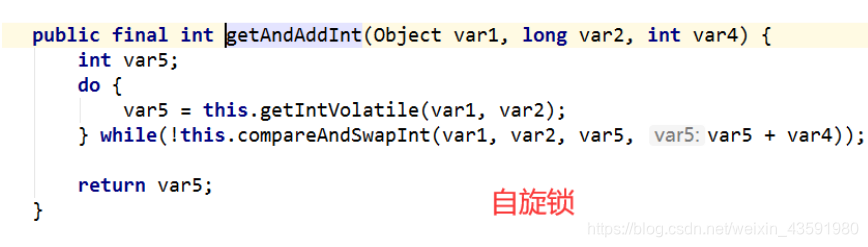
CAS : 比较当前工作内存中的值和主内存中的值,如果这个值是期望的,那么则执行操作!如果不是就
一直循环!
CAS : ABA 问题(狸猫换太子)

package com.haust.cas;
import java.util.concurrent.atomic.AtomicInteger;
public class CASDemo {
    // CAS compareAndSet : 比较并交换!
    public static void main(String[] args) {
        AtomicInteger atomicInteger = new AtomicInteger(2020);
        /*
         * 类似于我们平时写的SQL:乐观锁
         *
         * 如果某个线程在执行操作某个对象的时候,其他线程若操作了该对象,
         * 即使对象内容未发生变化,也需要告诉我。
         *
         * 期望、更新:
         * public final boolean compareAndSet(int expect, int update)
         * 如果我期望的值达到了,那么就更新,否则,就不更新, CAS 是CPU的并发原语!
         */
        // ============== 捣乱的线程 ==================
        System.out.println(atomicInteger.compareAndSet(2020, 2021));
        System.out.println(atomicInteger.get());
        System.out.println(atomicInteger.compareAndSet(2021, 2020));
        System.out.println(atomicInteger.get());
        // ============== 期望的线程 ==================
        System.out.println(atomicInteger.compareAndSet(2020, 6666));
        System.out.println(atomicInteger.get());
    }
}
输出结果如图:
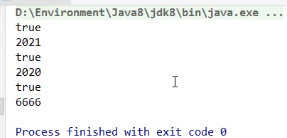
21、原子引用
解决ABA 问题,引入原子引用! 对应的思想:乐观锁!
带版本号 的原子操作!
package com.haust.cas;
import java.util.concurrent.TimeUnit;
import java.util.concurrent.atomic.AtomicStampedReference;
    public class CASDemo {
        /*
         * AtomicStampedReference 注意,
         * 如果泛型是一个包装类,注意对象的引用问题
         * 正常在业务操作,这里面比较的都是一个个对象
         */
        // 可以有一个初始对应的版本号 1
        static AtomicStampedReference<Integer>
                        atomicStampedReference =
                            new AtomicStampedReference<>(2020,1);
        // CAS compareAndSet : 比较并交换!
        public static void main(String[] args) {
            new Thread(()->{
                // 获得版本号
                int stamp = atomicStampedReference.getStamp();
                System.out.println("a1=>"+stamp);
                try {
                    TimeUnit.SECONDS.sleep(2);
                } catch (InterruptedException e) {
                    e.printStackTrace();
                }
                atomicStampedReference.compareAndSet(
                    2020,
                    2022,
                    atomicStampedReference.getStamp(), // 最新版本号
                    // 更新版本号
                    atomicStampedReference.getStamp() + 1);
                      System.out.println("a2=>"
                                 +atomicStampedReference.getStamp());
                     System.out.println(
                        atomicStampedReference.compareAndSet(
                            2022,
                            2020,
                            atomicStampedReference.getStamp(),
                            atomicStampedReference.getStamp() + 1));
                    System.out.println("a3=>"
                                 +atomicStampedReference.getStamp());
                },"a").start();
            // 乐观锁的原理相同!
            new Thread(()->{
                // 获得版本号
                int stamp = atomicStampedReference.getStamp();
                System.out.println("b1=>"+stamp);
                try {
                    TimeUnit.SECONDS.sleep(2);
                } catch (InterruptedException e) {
                    e.printStackTrace();
                }
                System.out.println(
                    atomicStampedReference.compareAndSet(
                                    2020, 6666, stamp, stamp + 1));
                System.out.println("b2=>"
                +atomicStampedReference.getStamp());
            },"b").start();
        }
}
结果如图:

参考:AtomicStampedReference是怎样解决CAS的ABA问题-腾讯云开发者社区-腾讯云
    // CAS compareAndSet : 比较并交换!
    public static void main(String[] args) {
        final AtomicStampedReference<Integer> count = new AtomicStampedReference<>(5, 1);

        for (int i = 0; i < 2; i++) {
            Thread thread = new Thread(() -> {
                try {
                    Thread.sleep(10);
                } catch (Exception ignore) {
                }

                boolean re = count.compareAndSet(5, 10, 1, 2);
                System.out.println(Thread.currentThread().getName() + "[recharge] compareAndSet " + re);
            });
            thread.start();
        }

        Thread thread = new Thread(() -> {
            try {
                Thread.sleep(10);
            } catch (Exception ignore) {
            }
            boolean re = count.compareAndSet(10, 5, count.getStamp(), count.getStamp() + 1);
            System.out.println(Thread.currentThread().getName() + "[consume] compareAndSet " + re);
        });
        thread.start();
    }
结果:
Thread-1[recharge] compareAndSet true
Thread-2[consume] compareAndSet true
Thread-0[recharge] compareAndSet false
注意:
Integer 使用了对象缓存机制,默认范围是 -128 ~ 127 ,推荐使用静态工厂方法 valueOf 获取对象实例,而不是 new,因为 valueOf 使用缓存,而 new 一定会创建新的对象分配新的内存空间;
下面是阿里巴巴开发手册的规范点:

22、各种锁的理解
1、公平锁、非公平锁
公平锁: 非常公平, 不能够插队,必须先来后到!
非公平锁:非常不公平,可以插队 (默认都是非公平)
public ReentrantLock() {
    sync = new NonfairSync();
}
public ReentrantLock(boolean fair) {
    sync = fair ? new FairSync() : new NonfairSync();
}
2、可重入锁
可重入锁(递归锁)

Synchronized 版
public class Test {
    public static void main(String[] args) {
        Phone phone = new Phone();
        // 这里的锁定对象是 Phone 类的实例 phone
        new Thread(phone::sms, "A").start();
        new Thread(phone::sms, "B").start();
        new Thread(phone::sms, "C").start();
        new Thread(phone::sms, "D").start();
    }

    static class Phone {
        public synchronized void sms() {
            System.out.println(Thread.currentThread().getName() + "sms");
            try {
                Thread.sleep(1000);
            } catch (InterruptedException e) {
                e.printStackTrace();
            }
            call(); // 这里也有锁(sms锁 里面的call锁)
        }

        public synchronized void call() {
            System.out.println(Thread.currentThread().getName() + "call");
        }
    }
}
Lock 版
package com.haust.lock;
import java.util.concurrent.locks.Lock;
import java.util.concurrent.locks.ReentrantLock;
public class Demo02 {
    public static void main(String[] args) {
        Phone2 phone = new Phone2();
        new Thread(()->{
            phone.sms();
        },"A").start();
        new Thread(()->{
            phone.sms();
        },"B").start();
    }
}
class Phone2{
    Lock lock = new ReentrantLock();
    public void sms(){
        lock.lock();
        // 细节问题:lock.lock(); lock.unlock();
        // lock 锁必须配对,否则就会死在里面
        // 两个lock() 就需要两次解锁
        lock.lock();
        try {
            System.out.println(Thread.currentThread().getName()
                                                           + "sms");
            call(); // 这里也有锁
        } catch (Exception e) {
            e.printStackTrace();
        } finally {
            lock.unlock();
            lock.unlock();
        }
    }
    public void call(){
        lock.lock();
        try {
            System.out.println(Thread.currentThread().getName()
                                                           + "call");
        } catch (Exception e) {
            e.printStackTrace();
        } finally {
            lock.unlock();
        }
    }
}
3、自旋锁
spinlock

我们来自定义一个锁测试:
package com.haust.lock;
import java.util.concurrent.atomic.AtomicReference;
/**
 * 自旋锁
 */
public class SpinlockDemo {
    // int   0
    // Thread  null
    // 原子引用
    AtomicReference<Thread> atomicReference =
                                            new AtomicReference<>();
    // 加锁
    public void myLock(){
        Thread thread = Thread.currentThread();
        System.out.println(Thread.currentThread().getName()
                                                       + "==> mylock");
        // 自旋锁
        while (!atomicReference.compareAndSet(null,thread)){
        }
    }
    // 解锁
    // 加锁
    public void myUnLock(){
        Thread thread = Thread.currentThread();
        System.out.println(Thread.currentThread().getName()
                                                   + "==> myUnlock");
        atomicReference.compareAndSet(thread,null);// 解锁
    }
}
测试
package com.haust.lock;
import java.util.concurrent.TimeUnit;
public class TestSpinLock {
    public static void main(String[] args) throws
                                            InterruptedException {
//        ReentrantLock reentrantLock = new ReentrantLock();
//        reentrantLock.lock();
//        reentrantLock.unlock();
        // 底层使用的自旋锁CAS
        SpinlockDemo lock = new SpinlockDemo();// 定义锁
        new Thread(()-> {
            lock.myLock();// 加锁
            try {
                TimeUnit.SECONDS.sleep(5);
            } catch (Exception e) {
                e.printStackTrace();
            } finally {
                lock.myUnLock();// 解锁
            }
        },"T1").start();
        TimeUnit.SECONDS.sleep(1);
        new Thread(()-> {
            lock.myLock();
            try {
                TimeUnit.SECONDS.sleep(1);
            } catch (Exception e) {
                e.printStackTrace();
            } finally {
                lock.myUnLock();
            }
        },"T2").start();
    }
}
结果如图:

补充:AtomicReference
AtomicReference是 Java 中的一个原子引用类,它提供了一种线程安全地操作对象引用的机制。它可以确保在多线程环境中对对象引用的操作是原子的,不会出现竞态条件。AtomicReference类提供了一系列原子操作方法,包括设置值、获取当前值、比较并设置等。这些方法能够保证在执行操作时,不会被其他线程中断,从而确保了线程安全。以下是
AtomicReference类的主要方法:get():获取当前存储的对象引用。set(T newValue):设置存储的对象引用为指定的新值。getAndSet(T newValue):设置存储的对象引用为指定的新值,并返回之前的值。compareAndSet(T expect, T update):如果当前存储的对象引用与期望值(expect)相等,则将其设置为新值(update),返回true;否则不修改,并返回false。weakCompareAndSet(T expect, T update):与compareAndSet类似,但是使用了更弱的原子保证。lazySet(T newValue):最终将存储的对象引用设置为指定的新值,但是可能对其他操作不具有立即可见性。
AtomicReference可以用于各种情况,例如在单例模式中保证单例对象的唯一性,或者在数据结构中保证对引用对象的并发访问安全。4、死锁
死锁是什么?

参考
-
相关阅读:
用于光波导系统的均匀性探测器
qps、tps、吞吐量
RestEasy入门小程序
云原生下基于K8S声明式GitOps持续部署工具ArgoCD实战-上
Linux内核设计与实现(九)| 进程地址空间(虚拟内存、页表)
第13届蓝桥杯Scratch省赛真题集锦
matplotlib与django如何集成? matplotlib生成的图可以嵌入到网页吗?
LeetCode——1455.检查单词是否为句中其他单词的前缀
Linux系统中rpm命令用法详解
云计算与 openstack
- 原文地址:https://blog.csdn.net/weixin_44553952/article/details/139270739