-
系列二、为什么要使用ThreadLocal?
一、为什么要使用ThreadLocal?
1.1、概述
并发场景下,会存在多个线程同时修改一个共享变量的场景,这就有可能会出现线程安全的问题。为了解决线程安全问题,可以用加锁的方式,比如对核心代码使用synchronized或者Lock进行加锁,从而起到线程隔离的效果。但是加锁的方式,在高并发下会导致系统变慢,加锁示意图如下:

还有另外一种方案,就是使用空间换时间的方式,即:使用ThreadLocal,使用ThreadLocal访问共享变量时,会在每个线程本地保存一份共享变量的副本。多线程对共享变量修改时,实际上每个线程操作的是自己的变量副本,从而保证线程安全。示意图如下:

1.2、线程不安全案例
- /**
- * @Author : 一叶浮萍归大海
- * @Date: 2023/11/21 11:50
- * @Description: 需求:线程隔离(线程不安全案例代码)
- */
- public class SetAndGetThreadVariableDemo1MainApp {
- /**
- * 共享变量
- */
- private String content;
- public String getContent() {
- return content;
- }
- public void setContent(String content) {
- this.content = content;
- }
- public static void main(String[] args) {
- SetAndGetThreadVariableDemo1MainApp app = new SetAndGetThreadVariableDemo1MainApp();
- for (int i = 1; i <= 5; i++) {
- new Thread(() -> {
- try {
- app.setContent(Thread.currentThread().getName() + "的数据");
- System.out.println("=======================");
- System.out.println(Thread.currentThread().getName() + "===>" + app.getContent());
- } catch (Exception e) {
- e.printStackTrace();
- }
- }, "线程" + i).start();
- }
- }
- }

1.3、线程不安全案例(ThreadLocal解决)
- /**
- * @Author : 一叶浮萍归大海
- * @Date: 2023/11/21 11:50
- * @Description: 需求:线程隔离(ThreadLocal实现)
- * 在多线程并发的场景下,每个线程中的变量都是互相独立的
- * 线程A: 设置(变量1) 获取(变量1)
- * 线程B: 设置(变量2) 获取(变量2)
- *
- * ThreadLocal:
- * 1、set():将变量绑定到当前线程中
- * 2、get():获取当前线程绑定的变量
- */
- public class SetAndGetThreadVariableDemo2MainApp {
- private String content;
- ThreadLocal
threadLocal = new ThreadLocal<>(); - public String getContent() {
- return threadLocal.get();
- }
- public void setContent(String content) {
- threadLocal.set(content);
- }
- public static void main(String[] args) {
- SetAndGetThreadVariableDemo2MainApp app = new SetAndGetThreadVariableDemo2MainApp();
- for (int i = 1; i <= 5; i++) {
- new Thread(() -> {
- try {
- app.setContent(Thread.currentThread().getName() + "的数据");
- System.out.println("=======================");
- System.out.println(Thread.currentThread().getName() + "===>" + app.getContent());
- } catch (Exception e) {
- e.printStackTrace();
- }
- }, "线程" + i).start();
- }
- }
- }

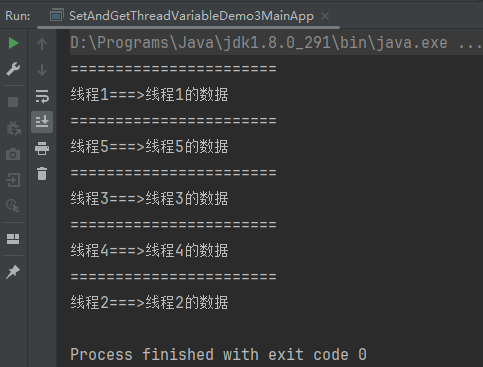
1.4、线程不安全案例(synchronized解决)
- /**
- * @Author : 一叶浮萍归大海
- * @Date: 2023/11/21 11:50
- * @Description: 需求:线程隔离(synchronized实现)
- *
- */
- public class SetAndGetThreadVariableDemo3MainApp {
- private String content;
- public String getContent() {
- return content;
- }
- public void setContent(String content) {
- this.content = content;
- }
- public static void main(String[] args) {
- SetAndGetThreadVariableDemo3MainApp app = new SetAndGetThreadVariableDemo3MainApp();
- for (int i = 1; i <= 5; i++) {
- new Thread(() -> {
- try {
- synchronized (SetAndGetThreadVariableDemo3MainApp.class) {
- app.setContent(Thread.currentThread().getName() + "的数据");
- System.out.println("=======================");
- System.out.println(Thread.currentThread().getName() + "===>" + app.getContent());
- }
- } catch (Exception e) {
- e.printStackTrace();
- }
- }, "线程" + i).start();
- }
- }
- }
-
相关阅读:
MATLAB神经网络和优化算法
FireFox火狐浏览器电脑端安装到D盘
java计算机毕业设计瀚绅睿茨二人二轮车租赁管理MyBatis+系统+LW文档+源码+调试部署
MySQL尾部空格处理与哪些设置有关? 字符集PAD SPACE与NO PAD属性的区别、MySQL字段尾部有空格为什么也能查询出来?
线程的生命周期以及其中的方法
APP上架需要的准备和流程
使用Python的Flask框架开发验证码登录功能
开源 SPL 消灭数以万计的数据库中间表
PHP分类信息网站源码系统 电脑+手机+微信端三合一 带完整前后端部署教程
恭喜元宇宙产业委秘书长何超、执行秘书长武艳芳成为南京河西CBD发展大使
- 原文地址:https://blog.csdn.net/HelloWorld20161112/article/details/134545106
