-
分布式缓存Spring Cache
一、缓存里的数据如何和数据库的数据保持一致?
如果实时性、一致性要求高的,不是读多写少的,就直接去数据库查,不必缓存到redis中,不必过度设计
1、缓存数据一致性-双写模式

伪代码如下:public boolean saveToDb() { //1.更新数据库 baseMapper.insert(category); //2.更新缓存数据 stringRedisTemplate.opsForValue().set("key","value"); }- 1
- 2
- 3
- 4
- 5
- 6
2、 缓存数据一致性-失效模式

伪代码如下:public boolean saveToDb() { //1.更新数据库 baseMapper.insert(category); //2.删除缓存数据 stringRedisTemplate.delete("key"); } //3.需要用到缓存数据的另一方法再去查询数据库,再保存到缓存中- 1
- 2
- 3
- 4
- 5
- 6
- 7
- 8
3、能容忍暂时性脏数据的存在,只要能实现最终一致性,可将缓存数据添加过期时间,能够解决大部分业务问题
#spring.cache.cache-names=qq,毫秒为单位 spring.cache.redis.time-to-live=3600000- 1
- 2
4、读写锁+删除或更新缓存数据/过期时间(我们系统的一致性解决方案)
缓存的所有数据都有过期时间,数据过期下一次查询触发主动更新
读写数据的时候,加上分布式的读写锁。经常读写对此会有很大的影响#spring.cache.cache-names=qq,毫秒为单位 spring.cache.redis.time-to-live=3600000- 1
- 2
/** * 写数据用写锁 * 级联更新所有关联的数据 */ @CacheEvict(value = "category", allEntries = true)//删除某个分区下的所有数据 @Override public void updateCascade(CategoryEntity category) { RReadWriteLock readWriteLock = redissonClient.getReadWriteLock("catalogJson-lock"); //创建写锁 RLock rLock = readWriteLock.writeLock(); try { rLock.lock(); this.baseMapper.updateById(category); categoryBrandRelationService.updateCategory(category.getCatId(), category.getName()); //删除或更新缓存数据 } catch (Exception e) { e.printStackTrace(); } finally { rLock.unlock(); } } /** * 读数据用读锁 * 级联更新所有关联的数据 */ public Map<String, List<Catelog2Vo>> getCatalogJsonFromDbWithRedissonLock() { //1、占分布式锁。去redis占坑 //(锁的粒度,越细越快:具体缓存的是某个数据,11号商品) product-11-lock //RLock catalogJsonLock = redissonClient.getLock("catalogJson-lock"); //创建读锁 RReadWriteLock readWriteLock = redissonClient.getReadWriteLock("catalogJson-lock"); RLock rLock = readWriteLock.readLock(); Map<String, List<Catelog2Vo>> dataFromDb = null; try { rLock.lock(); //加锁成功...执行业务 dataFromDb = getDataFromDb(); } finally { rLock.unlock(); } return dataFromDb; }- 1
- 2
- 3
- 4
- 5
- 6
- 7
- 8
- 9
- 10
- 11
- 12
- 13
- 14
- 15
- 16
- 17
- 18
- 19
- 20
- 21
- 22
- 23
- 24
- 25
- 26
- 27
- 28
- 29
- 30
- 31
- 32
- 33
- 34
- 35
- 36
- 37
- 38
- 39
- 40
- 41
- 42
- 43
- 44
- 45
- 46
- 47
- 48
- 49
总结:缓存数据一致性-解决方案
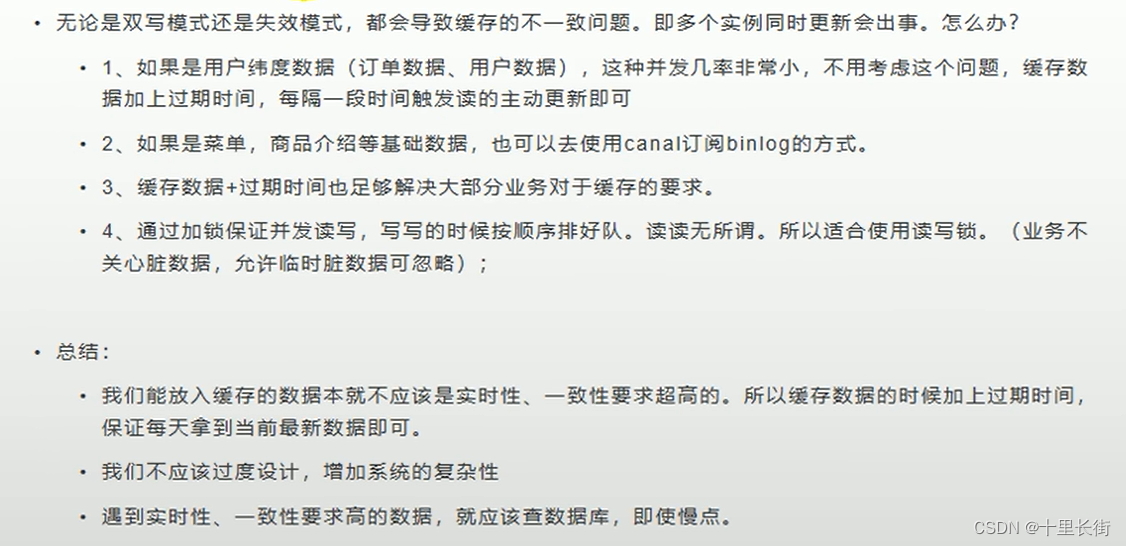
5、缓存数据一致性-解决-Canal

二、Spring Cache简介
1、 Spring 从 3.1 开始定义了org.springframework.cache.Cache和 org.springframework.cache.CacheManager 接口来统一不同的缓存技术;并支持使用 JCache(JSR-107)注解简化我们开发;
2、Cache 接口为缓存的组件规范定义,包含缓存的各种操作集合;Cache 接 口 下 Spring 提 供 了 各 种 xxxCache 的 实 现 ; 如 RedisCache , EhCacheCache , ConcurrentMapCache 等;
3、 每次调用需要缓存功能的方法时,Spring 会检查检查指定参数的指定的目标方法是否已经被调用过;如果有就直接从缓存中获取方法调用后的结果,如果没有就调用方法并缓存结果后返回给用户。下次调用直接从缓存中获取。
4、 使用 Spring 缓存抽象时我们需要关注以下两点;
(1)、确定方法需要被缓存以及他们的缓存策略
(2)、从缓存中读取之前缓存存储的数据三、Spring Cache基础概念

四、Spring Cache注解
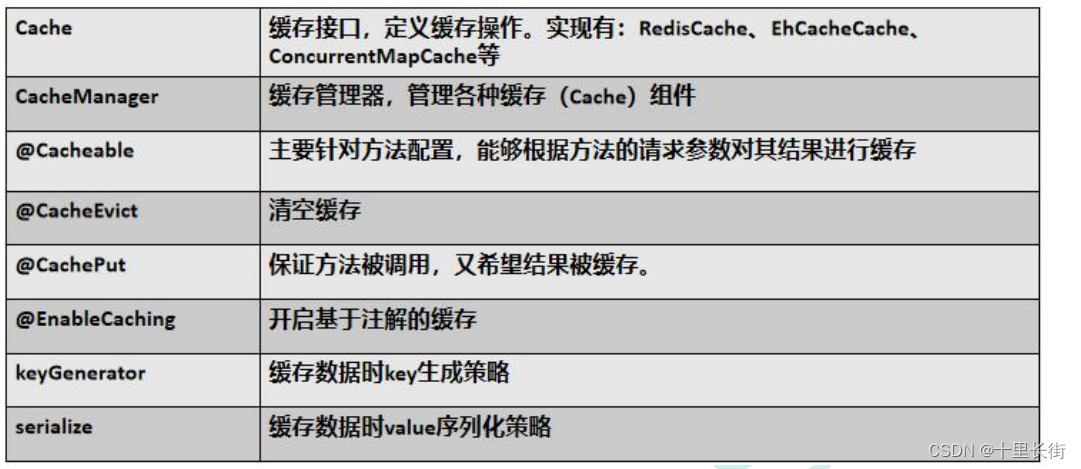
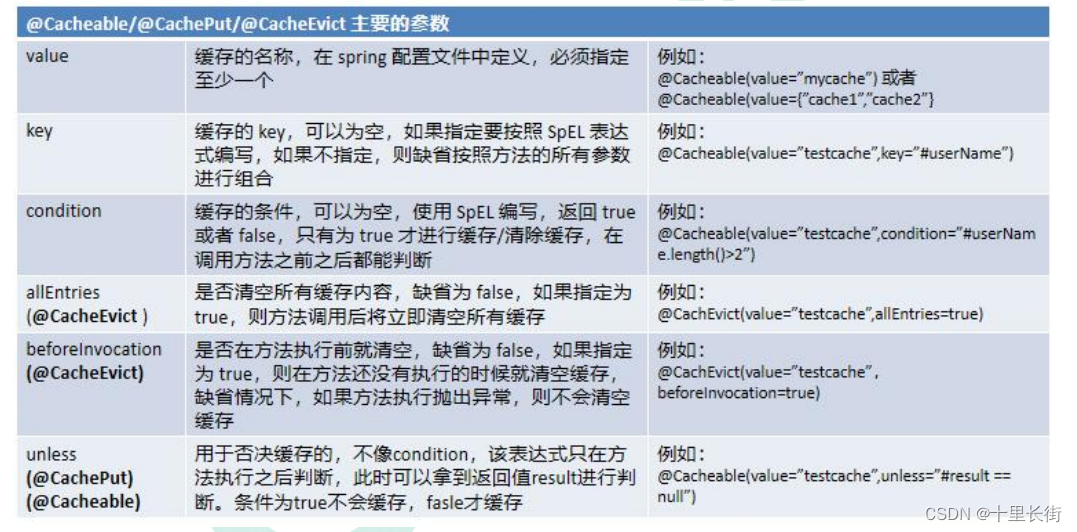
五、Spring Cache表达式语法
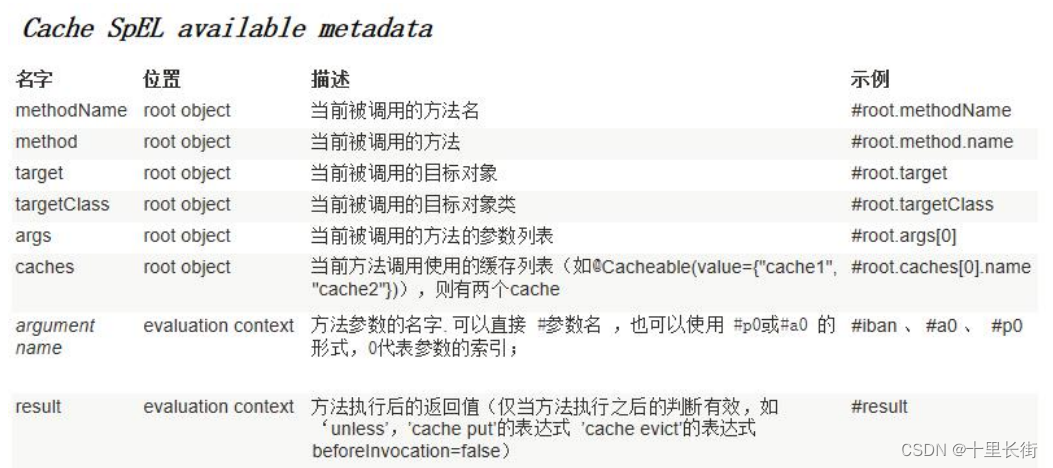
六、整合SpringCache简化缓存开发
1)、引入依赖
<dependency> <groupId>org.springframework.boot</groupId> <artifactId>spring-boot-starter-data-redis</artifactId> </dependency> <dependency> <groupId>org.springframework.boot</groupId> <artifactId>spring-boot-starter-cache</artifactId> </dependency>- 1
- 2
- 3
- 4
- 5
- 6
- 7
- 8
2)、写配置
(1)、自动配置了哪些?
CacheAutoConfiguration会导入 RedisCacheConfiguration;
自动配好了缓存管理器RedisCacheManager(2)、配置使用redis作为缓存,配置文件:
spring.cache.type=redis #spring.cache.cache-names=qq,毫秒为单位 spring.cache.redis.time-to-live=3600000 #生产一般不写,如果指定了前缀就用我们指定的前缀,如果没有就默认使用缓存的名字作为前缀 spring.cache.redis.key-prefix=CACHE_ #是否使用key前缀 spring.cache.redis.use-key-prefix=true #是否缓存空值。防止缓存穿透 spring.cache.redis.cache-nul1-values=true- 1
- 2
- 3
- 4
- 5
- 6
- 7
- 8
- 9
- 10
3)、配置类
原理:CacheAutoConfiguration -> RedisCacheConfiguration ->自动配置了RedisCacheManager->初始化所有的缓存->每个缓存决定使用什么配置->如果redisCacheConfiguration有就用已有的,没有就用默认配置package com.product.config; import org.springframework.boot.autoconfigure.cache.CacheProperties; import org.springframework.boot.context.properties.EnableConfigurationProperties; import org.springframework.cache.annotation.EnableCaching; import org.springframework.context.annotation.Bean; import org.springframework.context.annotation.Configuration; import org.springframework.data.redis.cache.RedisCacheConfiguration; import org.springframework.data.redis.serializer.GenericJackson2JsonRedisSerializer; import org.springframework.data.redis.serializer.RedisSerializationContext; import org.springframework.data.redis.serializer.StringRedisSerializer; @EnableConfigurationProperties(CacheProperties.class) @Configuration //如果启动类有可将其去除,开启缓存功能 @EnableCaching public class MyCacheConfig { // @Autowired // public CacheProperties cacheProperties; /** * 配置文件的配置没有用上 * 1、原来和配置文件绑定的配置类是这样子的 * @ConfigurationProperties(prefix = “spring.cache") * public class CacheProperties 2、要让他生效 @EnableConfigurationProperties(CacheProperties.class) * @return */ @Bean public RedisCacheConfiguration redisCacheConfiguration(CacheProperties cacheProperties) { RedisCacheConfiguration config = RedisCacheConfiguration.defaultCacheConfig(); // config = config.entryTtl(); //key指定序列化 config = config.serializeKeysWith(RedisSerializationContext.SerializationPair.fromSerializer(new StringRedisSerializer())); //value指定序列化 config = config.serializeValuesWith(RedisSerializationContext.SerializationPair.fromSerializer(new GenericJackson2JsonRedisSerializer())); CacheProperties.Redis redisProperties = cacheProperties.getRedis(); //将配置文件中所有的配置都生效 if (redisProperties.getTimeToLive() != null) { config = config.entryTtl(redisProperties.getTimeToLive()); } if (redisProperties.getKeyPrefix() != null) { config = config.prefixKeysWith(redisProperties.getKeyPrefix()); } if (!redisProperties.isCacheNullValues()) { config = config.disableCachingNullValues(); } if (!redisProperties.isUseKeyPrefix()) { config = config.disableKeyPrefix(); } return config; } }- 1
- 2
- 3
- 4
- 5
- 6
- 7
- 8
- 9
- 10
- 11
- 12
- 13
- 14
- 15
- 16
- 17
- 18
- 19
- 20
- 21
- 22
- 23
- 24
- 25
- 26
- 27
- 28
- 29
- 30
- 31
- 32
- 33
- 34
- 35
- 36
- 37
- 38
- 39
- 40
- 41
- 42
- 43
- 44
- 45
- 46
- 47
- 48
- 49
- 50
- 51
- 52
- 53
- 54
- 55
- 56
- 57
4)、测试使用缓存
@Cacheable: 触发将数据保存到缓存的操作
@CacheEvict: 触发将数据从缓存删除的操作
@CachePut: 不影响方法执行更新缓存
@Caching:组合以上多个操作
@CacheConfig: 在类级别共享缓存的相同配置4.1)、只需要使用注解就能完成缓存操作
/** * 1.缓存key指定:每一个需要缓存的数据,我们都来指定要放到那个名字的缓存。【缓存的分区(按照业务类型分)】 * 2.代表当前方法的结果需要缓存,如果缓存中有,方法都不用调用,如果缓存中没有,会调用方法。最后将方法的结果放入缓存 * 3.默认行为 * 如果缓存中有,方法不再调用 * key是默认生成的:缓存的名字::SimpleKey::[](自动生成key值) * 如:category::SimpleKey[] * 缓存的value值,默认使用jdk序列化机制,将序列化的数据存到redis中 * 默认时间是 -1: * * 4.需自定义操作:key的生成 * 指定生成缓存的key:key属性指定,接收一个Spel * 如:category::getLevel1Categorys * 指定缓存的数据的存活时间:配置文件中修改存活时间 * spring.cache.redis.time-to-live=3600000 * 将数据保存为json格式 * * * 原理: * CacheManager(RedisCacheManager)->Cache(RedisCache)->Cache负责缓存的读写 * @return */ //如果配置文件配置了spring.cache.redis.key-prefix=CACHE_,则key为CACHE_getLevel1Categorys,value = {"category"}则无用 @Cacheable(value = {"category"},key = "#root.method.name",sync = true) @Override public List<CategoryEntity> getLevel1Categorys() { System.out.println("getLevel1Categorys........"); long l = System.currentTimeMillis(); List<CategoryEntity> categoryEntities = this.baseMapper.selectList( new QueryWrapper<CategoryEntity>().eq("parent_cid", 0)); System.out.println("消耗时间:"+ (System.currentTimeMillis() - l)); return categoryEntities; }- 1
- 2
- 3
- 4
- 5
- 6
- 7
- 8
- 9
- 10
- 11
- 12
- 13
- 14
- 15
- 16
- 17
- 18
- 19
- 20
- 21
- 22
- 23
- 24
- 25
- 26
- 27
- 28
- 29
- 30
- 31
- 32
- 33
- 34
4.2 )、Spring Cache注解扩展介绍
/** * 级联更新所有关联的数据 * * @param category * @CacheEvict:删除指定key的缓存,对应失效模式 * @CachePut:更新缓存,对应双写模式,需要有返回值 * @Cacheable:将数据保存到缓存的操作 * 1、同时进行多种缓存操作: * @Caching * 2、指定删除某个分区下的所有数据 * @CacheEvict(value = "category",allEntries = true) * 3、存储同一类型的数据,都可以指定为同一分区 */ //1.一个一个删除 // @Caching(evict = { // @CacheEvict(value = "category",key = "'getLevel1Categorys'"), // @CacheEvict(value = "category",key = "'getCatalogJson'") // }) //2.批量删除某个分区下的所有数据 @CacheEvict(value = "category", allEntries = true) @Transactional(rollbackFor = Exception.class) @Override public void updateCascade(CategoryEntity category) { RReadWriteLock readWriteLock = redissonClient.getReadWriteLock("catalogJson-lock"); //创建写锁 RLock rLock = readWriteLock.writeLock(); try { rLock.lock(); this.baseMapper.updateById(category); categoryBrandRelationService.updateCategory(category.getCatId(), category.getName()); } catch (Exception e) { e.printStackTrace(); } finally { rLock.unlock(); } //同时修改缓存中的数据 //删除缓存,等待下一次主动查询进行更新 }- 1
- 2
- 3
- 4
- 5
- 6
- 7
- 8
- 9
- 10
- 11
- 12
- 13
- 14
- 15
- 16
- 17
- 18
- 19
- 20
- 21
- 22
- 23
- 24
- 25
- 26
- 27
- 28
- 29
- 30
- 31
- 32
- 33
- 34
- 35
- 36
- 37
- 38
- 39
- 40
- 41
总结:Spring-Cache的不足之处:
1)、读模式 缓存穿透:查询一个null数据。解决方案:缓存空数据 缓存击穿:大量并发进来同时查询一个正好过期的数据。解决方案:加锁 ? 默认是无加锁的;使用sync = true来解决击穿问题 缓存雪崩:大量的key同时过期。解决:加随机时间。加上过期时间 2)、写模式:(缓存与数据库一致) 1)、读写加锁。 2)、引入Canal,感知到MySQL的更新去更新Redis 3)、读多写多,直接去数据库查询就行 总结: 常规数据(读多写少,即时性,一致性要求不高的数据,完全可以使用Spring-Cache):写模式(只要缓存的数据有过期时间就足够了) 特殊数据:特殊设计- 1
- 2
- 3
- 4
- 5
- 6
- 7
- 8
- 9
- 10
- 11
-
相关阅读:
Docker容器-------harbor私有仓库部署与管理
小码哥学习笔记:APP内存管理
echarts学习:基本使用和组件封装
Ubuntu中为Python2.7安装pip
中国剩余定理算法的实现
Flink消费Kafka主题消息的演示
leetcode 901. Online Stock Span(在线库存跨度)
bat脚本守护进程
阿里巴巴开源限流组件Sentinel初探之集成Gateway
功能化 1,2,4,5-四嗪Me-Tetrazine-DBCO/PEG1-Alkyne/PEG2-Me-Tetrazine/phenol类的性质与应用
- 原文地址:https://blog.csdn.net/weixin_46258873/article/details/133972099
