-
常见排序算法Java版(待续)
-
冒泡排序O(n^2)
public class Main { public static void main(String[] args) { Random random = new Random(); int[] nums = new int[]{random.nextInt(100), random.nextInt(100), random.nextInt(100), random.nextInt(100), random.nextInt(100), random.nextInt(100)}; for (int i = nums.length - 1; i >= 0; i--) { for (int j = 0; j < i; j++) { if (nums[j] > nums[j + 1]) { int temp = nums[j]; nums[j] = nums[j + 1]; nums[j + 1] = temp; } } } for (int num : nums) { System.out.print(num + " "); } } }- 1
- 2
- 3
- 4
- 5
- 6
- 7
- 8
- 9
- 10
- 11
- 12
- 13
- 14
- 15
- 16
- 17
- 18
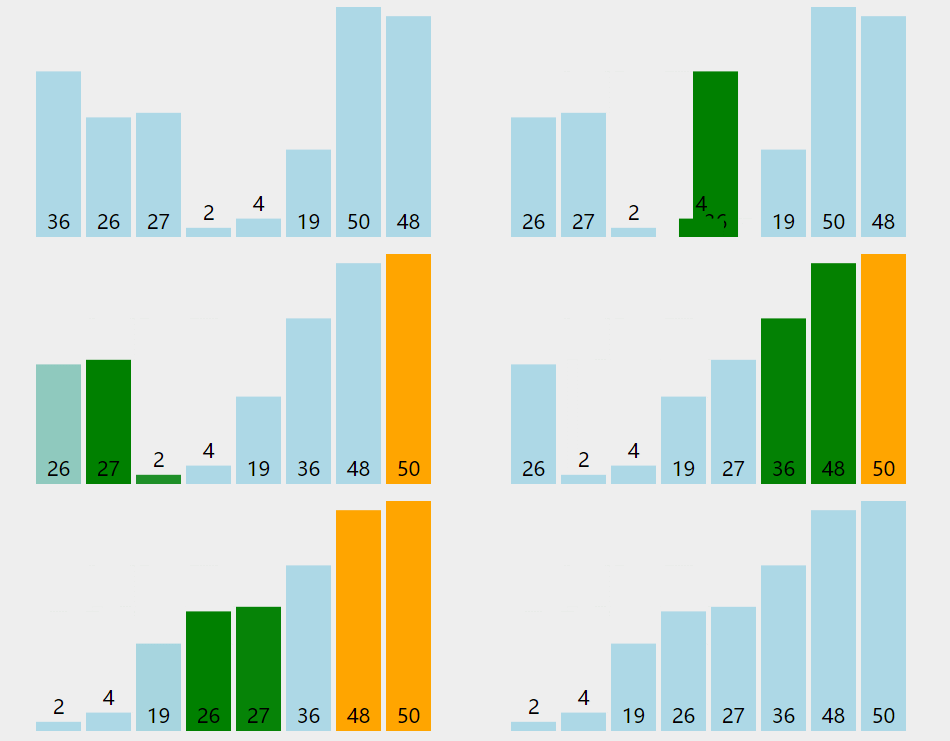
-
选择排序O(n^2),
public class Main { static Random random = new Random(); static int[] nums = new int[]{random.nextInt(100), random.nextInt(100), random.nextInt(100), random.nextInt(100), random.nextInt(100), random.nextInt(100), random.nextInt(100), random.nextInt(100), random.nextInt(100), random.nextInt(100), random.nextInt(100)}; public static void main(String[] args) { //选择排序:核心就是记录每一轮遍历的最小值的索引,进行交换 for (int i = 0; i < nums.length; i++) { int idx = i; for (int j = i + 1; j < nums.length; j++) { if (nums[j] < nums[idx]) { idx = j; } } swap(nums, i, idx); } for (int num : nums) { System.out.print(num + " "); } } private static void swap(int[] nums, int i, int j) { int temp = nums[i]; nums[i] = nums[j]; nums[j] = temp; } }- 1
- 2
- 3
- 4
- 5
- 6
- 7
- 8
- 9
- 10
- 11
- 12
- 13
- 14
- 15
- 16
- 17
- 18
- 19
- 20
- 21
- 22
- 23
- 24
- 25
- 26
- 27
- 28

-
插入排序O(n^2)
public class Main { static Random random = new Random(); static int[] nums = new int[]{random.nextInt(100), random.nextInt(100), random.nextInt(100), random.nextInt(100), random.nextInt(100), random.nextInt(100), random.nextInt(100), random.nextInt(100), random.nextInt(100), random.nextInt(100), random.nextInt(100), random.nextInt(100)}; public static void main(String[] args) { for (int i = 0; i < nums.length; i++) { int idx = i; for (int j = i - 1; j >= 0; j--) { if (nums[j] > nums[i]) { nums[idx] = nums[j]; idx = j; } else { break; } } nums[idx] = nums[i]; } for (int num : nums) { System.out.print(num + " "); } } }- 1
- 2
- 3
- 4
- 5
- 6
- 7
- 8
- 9
- 10
- 11
- 12
- 13
- 14
- 15
- 16
- 17
- 18
- 19
- 20
- 21
- 22
- 23
- 24
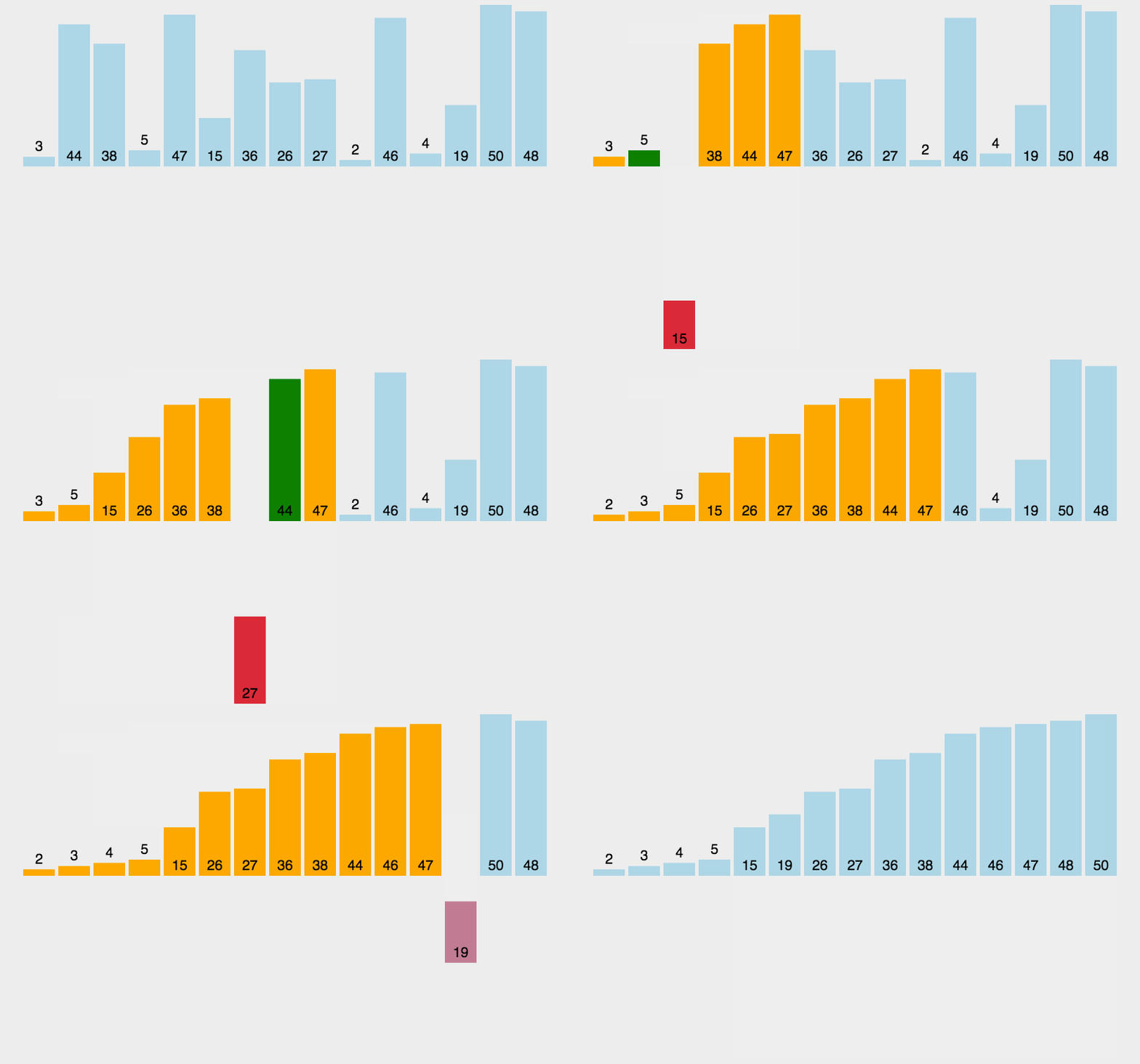
-
快速排序O(nlogn)
public class Main { static Random random = new Random(); static int[] nums = new int[]{random.nextInt(100), random.nextInt(100), random.nextInt(100), random.nextInt(100), random.nextInt(100), random.nextInt(100), random.nextInt(100), random.nextInt(100), random.nextInt(100), random.nextInt(100), random.nextInt(100), random.nextInt(100)}; public static void main(String[] args) { quickSort(nums, 0, nums.length - 1); for (int num : nums) { System.out.print(num + " "); } } public static void quickSort(int[] nums, int left, int right) { if (left >= right) { return; } //选择一个元素做基准值 int base = nums[left]; int i = left; int j = right; while (i < j) { //注意while的顺序不能颠倒,要确保找到比基准值小的数 while (i < j && nums[j] >= base) { j--; } while (i < j && nums[i] <= base) { i++; } swap(nums, i, j); } swap(nums, left, i); quickSort(nums, left, i - 1); quickSort(nums, i + 1, right); } private static void swap(int[] nums, int i, int j) { int temp = nums[i]; nums[i] = nums[j]; nums[j] = temp; } }- 1
- 2
- 3
- 4
- 5
- 6
- 7
- 8
- 9
- 10
- 11
- 12
- 13
- 14
- 15
- 16
- 17
- 18
- 19
- 20
- 21
- 22
- 23
- 24
- 25
- 26
- 27
- 28
- 29
- 30
- 31
- 32
- 33
- 34
- 35
- 36
- 37
- 38
- 39
- 40
- 41
- 42
-
-
相关阅读:
NLP涉及技术原理和应用简单讲解【二】:paddle(分布式训练、AMP自动混合精度训练、模型量化、模型性能分析)
「网页开发|前端开发|Vue」05 Vue实战:从零到一实现一个网站导航栏
深度解读智能化编码的技术架构与实践案例
python-后门脚本编写
京东官方平台API接口获得JD商品详情页信息数据采集产品价格、原价、销量、商品属性名等
SQL教学: MySQL进阶操作详解--探索DML语句的高级用法
机房监控系统PPT免费模板
springboot 配置文件密码加密处理
《研发效能(DevOps)工程师》课程简介(四)丨IDCF
冒泡排序与选择排序(最low的两兄弟)
- 原文地址:https://blog.csdn.net/qq_58616732/article/details/133720862
