-
[python 刷题] 33 Search in Rotated Sorted Array
[python 刷题] 33 Search in Rotated Sorted Array
题目:
There is an integer array
numssorted in ascending order (with distinct values).Prior to being passed to your function,
numsis possibly rotated at an unknown pivot indexk(1 <= k < nums.length) such that the resulting array is[nums[k], nums[k+1], ..., nums[n-1], nums[0], nums[1], ..., nums[k-1]](0-indexed). For example,[0,1,2,4,5,6,7]might be rotated at pivot index 3 and become[4,5,6,7,0,1,2].Given the array
numsafter the possible rotation and an integertarget, return the index oftargetif it is innums, or-1if it is not innums.You must write an algorithm with
O(log n)runtime complexity.这道题也是一道 sorted array,和 [python 刷题] 153 Find Minimum in Rotated Sorted Array 的处理逻辑有点像,不过 [python 刷题] 153 Find Minimum in Rotated Sorted Array 只要找最小数,因此只要判断
nums[m]和nums[r]的关系即可,这里的情况稍微复杂一些。图像上显示,一共会有两种情况:


每个情况又会延伸出两个需要解决的对应情况,因此总共需要手动处理 4 种对应的情况
-
找出比图 1 中高亮的元素小的元素
这个处理起来比想象中的稍微麻烦一些,因为比 9 小的值可能同时存在于两个 cluster 间:
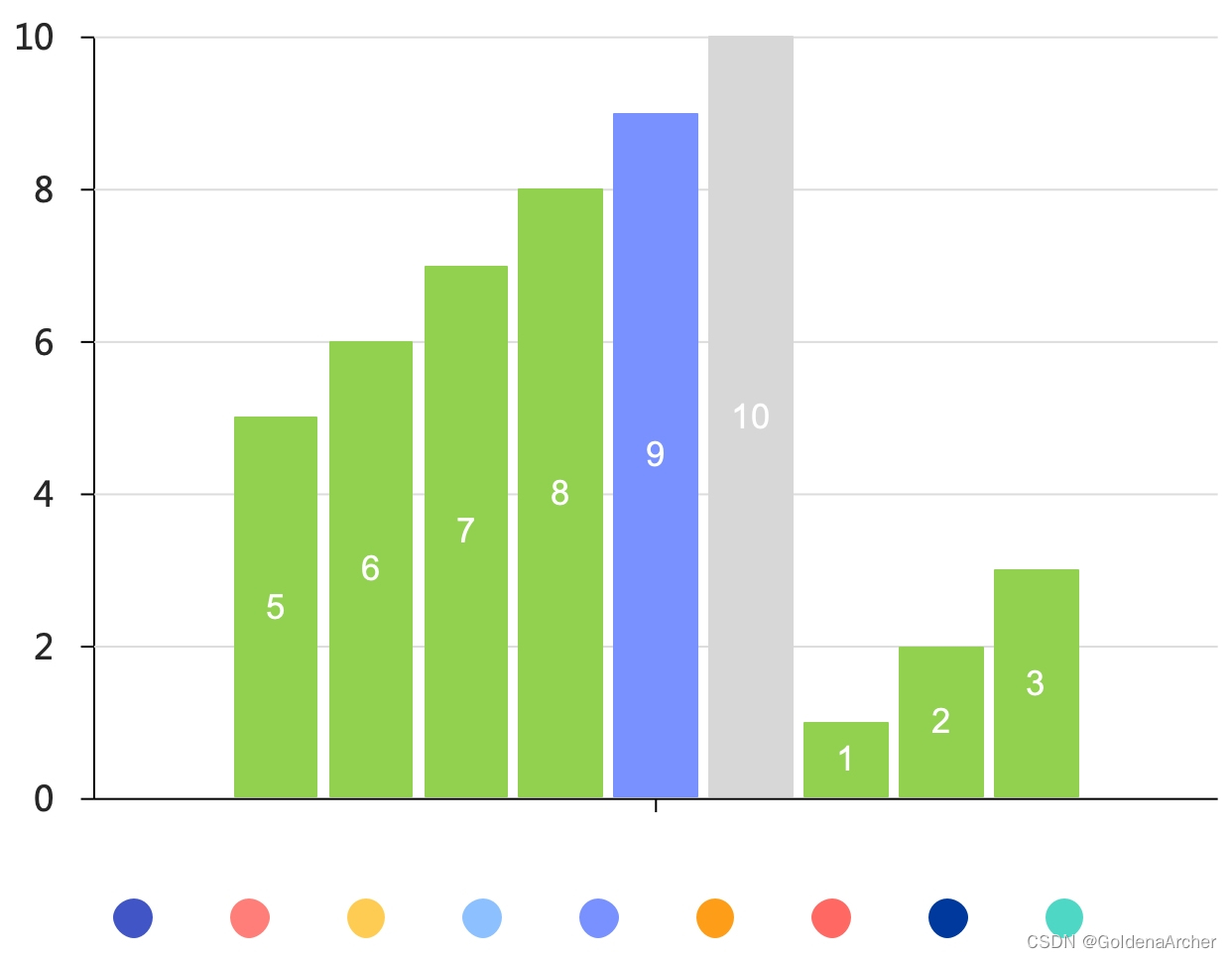
因此这个时候还需要判断 target 是否比
nums[l]小,如果比nums[l]小,那么就一定在右边的 cluster 中 -
找出比图 1 中高亮的元素大的元素
这个情况比较简单,只要从右边的 cluster 中搜索即可
-
找出比图 2 中高亮的元素大的元素
这个情况与情况 1 一样,也会同时坐落于两个区间:

也因此需要判断 target 和 nums[l] 之间的关系,如果 target 比 nums[l] 小,那么 target 一定坐落于右侧的 cluster
反之 target 一定坐落于左侧的 cluster 中
-
找出比图 2 中高亮的元素小的元素
这一定在 cluster 的左边
一旦思路理清了,那么代码写起来也很容易了:
class Solution: def search(self, nums: List[int], target: int) -> int: l, r = 0, len(nums) - 1 while l <= r: m = (l + r) // 2 if nums[m] == target: return m if nums[m] < nums[l]: # the it means there are 2 assending order in the curr subarray if target < nums[m] or target > nums[r]: r = m - 1 else: l = m + 1 else: if target > nums[m] or target < nums[l]: l = m + 1 else: r = m - 1 return -1- 1
- 2
- 3
- 4
- 5
- 6
- 7
- 8
- 9
- 10
- 11
- 12
- 13
- 14
- 15
- 16
- 17
- 18
- 19
- 20
- 21
- 22
另,如果刚开始的判断不是做
nums[m] < nums[l]的话,记得要用 ≥ \ge ≥:if nums[m] >= nums[l]: -
-
相关阅读:
NAT技术与代理服务器
【vSphere 8 自签名证书】企业 CA 签名证书替换 vSphere Machine SSL 证书Ⅳ—— 替换默认证书
做技术开发到老 or 晋升管理层,程序员的终极目标是什么?
使用JMeter进行接口压力测试
Single View Point Omnidirectional Camera Calibration from Planar Grids
PyTorchの可视化工具
Java并发编程的艺术笔记-Java中的并发工具类
L1-071 前世档案(Python3)
fabic.js Quadratic Curve /可控制的曲线
在ubuntu20.04下学习shell
- 原文地址:https://blog.csdn.net/weixin_42938619/article/details/133577930
