-
【进阶C语言】动态内存分配
本章大致内容介绍:
1.malloc函数和free函数
2.calloc函数
3.realloc函数
4.常见错误案例
5.笔试题详解
6.柔性数组
一、malloc和free
1.malloc函数
(1)函数原型
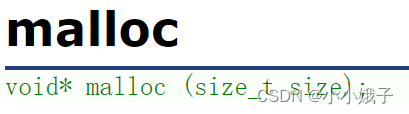
函数参数:根据用户的需求需要开辟多大的字节空间,为无符号的字节。
返回值:malloc函数成功开辟内存后,会返回该内存的起始地址,可以根据需要强制转换成任意的类型;若开辟空间失败,则会返回空指针(NULL)。
头文件:#include
(2)使用方法
1)申请空间:
- #include
- #include
- int main()
- {
- int* p = (int*)malloc(40);
- return 0;
- }
目的:申请十个整形空间,所以参数传:4*10=40。
结果:用一个整形指针来接收其返回值
2)检查安全和使用
- #include
- #include
- int main()
- {
- int* p = (int*)malloc(40);
- if (p == NULL)//必须对指针安全性检查
- {
- printf("申请空间失败\n");
- return;
- }
- //申请成功就开始用
- int i = 0;
- for (i=0;i<10;i++)
- {
- *(p+i) = i;
- }
- i = 0;
- for (i=0;i<10;i++)
- {
- printf("%d\n",*(p+i));
- }
- return 0;
- }
当使用结束之后,我们需要删除该动态生成的空间,则需要对空间进行释放,这就是我们接下来讲的free。
2.free函数
(1)函数原型

1.参数为动态开辟内存的首地址
2.无参数返回
3.头文件#include
(2)配合动态内存开辟的函数使用
前面malloc函数开辟的内存还没释放,接下来它们配合使用。
- #include
- #include
- int main()
- {
- int* p = (int*)malloc(40);
- if (p == NULL)
- {
- printf("申请空间失败\n");
- return;
- }
- //申请成功就开始用
- int i = 0;
- for (i=0;i<10;i++)
- {
- *(p+i) = i;
- }
- i = 0;
- for (i=0;i<10;i++)
- {
- printf("%d\n",*(p+i));
- }
- free(p);
- p = NULL;//及时将指针置空
- return 0;
- }
注意事项:
1.free只能释放由动态内存开辟的空间
2.free释放的是指针所指向的那块空间,释放后指针仍在,但是指向的空间不咋了,就会变成野指针,所以我们需要及时置空。
二、calloc
1.函数定义

函数参数:第一个参数是需要开辟的数据个数,第二个是该数据类型的内存大小。
返回值:calloc函数成功开辟内存后,会返回该内存的起始地址,可以根据需要强制转换成任意的类型;若开辟空间失败,则会返回空指针(NULL)。
头文件:#include
2.calloc的使用
目的:需要开辟10个整形空间
- #include
- #include
- int main()
- {
- int* p = (int*)calloc(10,sizeof(int));
- if (p == NULL)
- {
- printf("申请空间失败\n");
- return;
- }
- //申请成功就开始用
- int i = 0;
- for (i = 0; i < 10; i++)
- {
- *(p + i) = i;
- }
- i = 0;
- for (i = 0; i < 10; i++)
- {
- printf("%d\n", *(p + i));
- }
- free(p);
- p = NULL;//及时将指针置空
- return 0;
- }
运行结果:
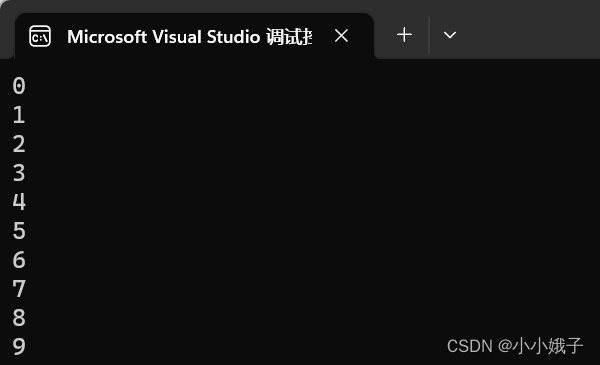
根据malloc和calloc函数使用的两段代码,好像除了名字和参数之外,其他没什么不同呀?其实他们还有一处区别。
3.calloc函数与malloc函数的区别
(1)区别
malloc函数开辟好空间之后,并不会对其初始化,但是calloc函数开辟好空间之后,会将数据的每一个字节都初始化成0。
(2)对照
1)malloc
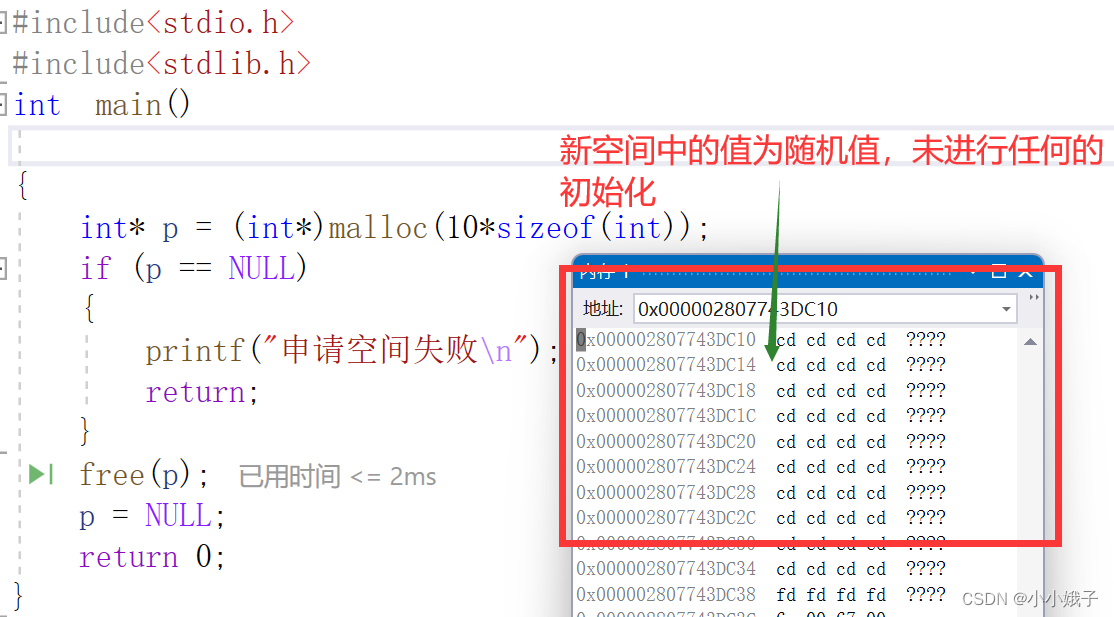
2)calloc
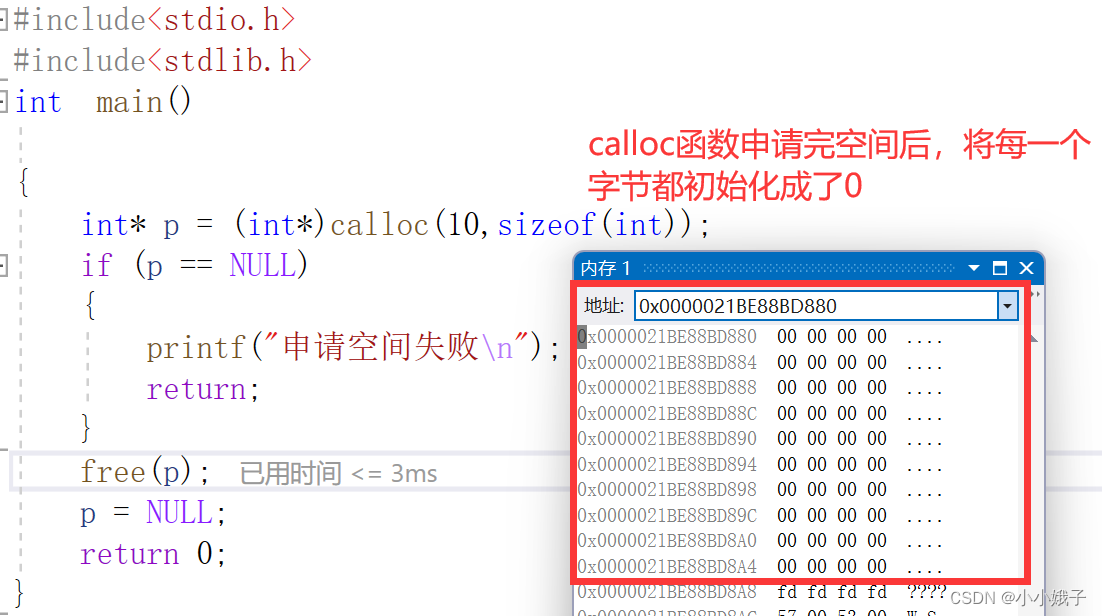
除了以上三点不同之外,其他的都一样。所以我们需要根据内存需求,需不需要初始化内存而选择合适的开辟方式。
三、realloc
1.函数定义
realloc可以对已有的内存进行调整

函数参数:ptr是要调整的内存地址,size为内存调整之后的新大小,单位是内存总大小(字节)
返回值:内存调整后的起始地址,同样有申请内存成功和失败两种情况
头文件:#include
2.realloc申请空间成功的两种情况
(1)原空间后的空间足够大
开辟空间方式:直接原有内存之后直接追加空间,原来空间的数据不发生变化。
(2)原空间之后没有足够大的空间
原有空间之后没有足够多的空间时,扩展的方法是:在堆空间上另找一个合适大小
的连续空间来使用。这样函数返回的是一个新的内存地址。而原有数据也会被拷贝到新内存中。3.realloc的使用
- #include
- #include
- int main()
- {
- int* p = (int*)calloc(10,sizeof(int));
- if (p == NULL)
- {
- printf("申请空间失败\n");
- return;
- }
- //申请成功就开始用
- int i = 0;
- for (i = 0; i < 10; i++)
- {
- *(p + i) = i;
- }
- i = 0;
- for (i = 0; i < 10; i++)
- {
- printf("%d\n", *(p + i));
- }
- //要求加大空间内存
- int* ptr = realloc(p,40*sizeof(int));
- if (ptr == NULL)
- {
- printf("内存开辟失败\n");
- return;
- }
- p = ptr;//将新开辟好的内存赋值原地址
- free(p);
- p = NULL;//及时将指针置空
- return 0;
- }
realloc的使用一般在原有空间的情况下,同样也需要对指针进行判空操作和free。
我们也可以看到,free和这些函数是紧紧联系在一起的。
四、常见错误解析
这些错误都是动态内存开辟前后的问题,与指针也有很大的联系
1.对NULL指针的解引用操作
错误写法:
- int main()
- {
- int* p = (int*)malloc(4);
- *p = 20;
- printf("%d\n",*p);
- return 0;
- }
malloc有可能开辟动态内存失败,则会返回NULL,这个时候对NULL指针解引用操作就是非法的。
正确写法:
- int main()
- {
- int* p = (int*)malloc(4);
- *p = 20;
- if (p == NULL)//对指针安全性限制
- {
- perror(malloc);
- return;
- }
- printf("%d\n",*p);
- //后续需要对内存释放
- return 0;
- }
知识点1:在每次动态内存开辟完成之后,都要先对其指针进行判空操作;若非空,才能对其进行后续的操作。
2.对动态开辟空间的越界访问
错误写法:
- int main()
- {
- int i = 0;
- int* p = (int*)malloc(10 * sizeof(int));
- if (NULL == p)
- {
- exit(EXIT_FAILURE);
- }
- for (i = 0; i <= 10; i++)
- {
- *(p + i) = i;//当i是10的时候越界访问
- }
- free(p);
- }
错误的后果提示:

知识点2:在对指针解引用操作时,要注意指针所指向的个数
3.对非动态开辟内存使用free释放
错误写法:
- test()
- {
- int a = 100;
- int* p = &a;
- free(p);//错误
- }
知识点3:free函数只能释放动态开辟的内存,否则会非法。
4.使用free释放一块动态开辟内存的一部分
错误写法:
- int *p = (int *)malloc(100);
- p++;
- free(p);//p不再指向动态内存的起始位置
当p++之后,p指向的起始位置就变了,当free(p)之后,会释放不完整,也会造成内存泄漏。
知识点4:使用指针,尽量不要改变指针指向的起始地址。可以再重新使用新指针进行++或--操作;或者+1/-1操作。
5.对同一块动态内存多次释放
错误写法:
- void test()
- {
- int *p = (int *)malloc(100);
- free(p);
- free(p);//重复释放
- }
知识点5:切记要对内存释放,但是每一块内存有且只能释放一次。
6.动态开辟内存忘记释放(内存泄漏)
错误:
- void test()
- {
- int *p = (int *)malloc(100);
- if(NULL != p)
- {
- *p = 20;
- }
- }
- int main()
- {
- test();
- while(1);
- }
这是忘记对动态内存的释放的,也是不可取的。
五、关于动态内存开辟的笔试题
分析下面四道代码题存在什么问题
运行Test函数会有什么样的后果
1.对NULL解引用操作
- void GetMemory(char *p)
- {
- p = (char *)malloc(100);
- }
- void Test(void)
- {
- char *str = NULL;
- GetMemory(str);
- strcpy(str, "hello world");
- printf(str);
- }
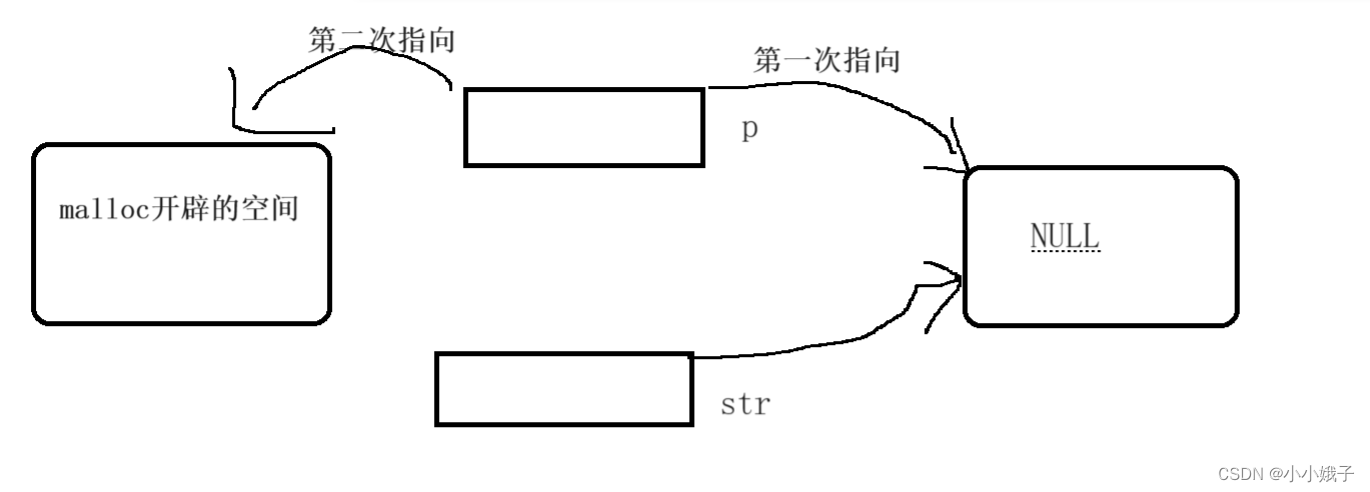
1.str指针为空
2.malloc开辟的空间只是被p指向,没有被str指向(相当于形参的改变不影响实参)
3.所以strcpy函数就会对NULL指针进行解引用操作
4.没有free操作,还会操作内存泄漏
图解:
正确写法:
- void GetMemory(char** p)
- {
- *p = (char*)malloc(100);
- }
- void Test(void)
- {
- char* str = NULL;
- GetMemory(&str);
- strcpy(str, "hello world");
- printf(str);
- free(str);
- str=NULL;
- }
2.
问题代码:
- char *GetMemory(void)
- {
- char p[] = "hello world";
- return p;
- }
- void Test(void)
- {
- char *str = NULL;
- str = GetMemory();
- printf(str);
- }
1.字符数组p为栈空间的局部变量,函数返回后会被销毁
2.数组被销毁,返回的p就是野指针(所指向的空间已不属于自己)
类型代码情况:
- int* test()
- {
- int a = 10;
- return &a;
- }
- int main()
- {
- int* p = test();
- printf("%d\n",*p);
- return 0;
- }
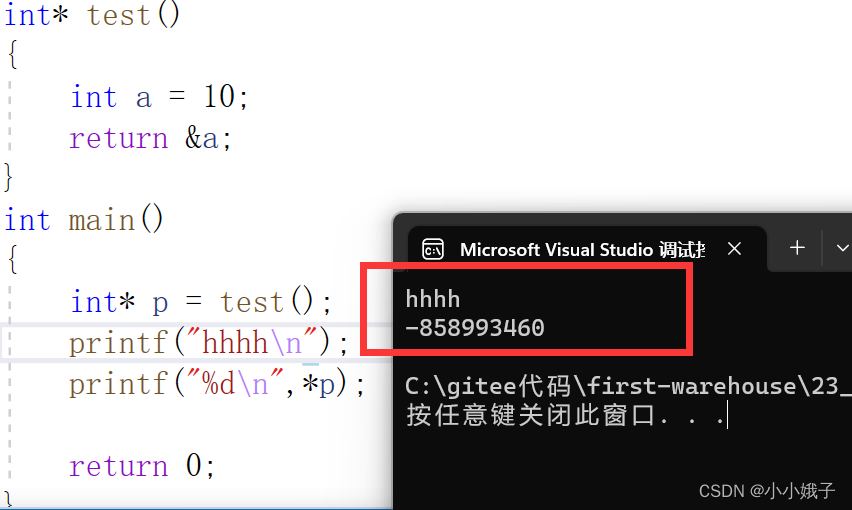
这种运行的结果仍然可以得到10,虽然空间依然属于p,但是值仍在,没有被其他的数据覆盖。但是下面这种情况则不行。
3.题目3
问题代码:
- void GetMemory(char **p, int num)
- {
- *p = (char *)malloc(num);
- }
- void Test(void)
- {
- char *str = NULL;
- GetMemory(&str, 100);
- strcpy(str, "hello");
- printf(str);
- }
动态开辟的内存,最后没有被free释放
4.
问题代码:
- void Test(void)
- {
- char *str = (char *) malloc(100);
- strcpy(str, "hello");
- free(str);
- if(str != NULL)
- {
- strcpy(str, "world");
- printf(str);
- }
- }
1.str所指向的空间已被销毁
2.str变成野指针,对其解引用操作为非法
六、柔性数组
1.柔性数组的定义
标准定义:C99 中,结构中的最后一个元素允许是未知大小的数组,这就叫做『柔性数组』成员。
也就是说,柔性数组不是指简单的数组,而是在结构体中的数组。
有两种写法:
第一种:
- typedef struct st_type
- {
- int i;
- int a[0];//柔性数组成员
- }type_a;
a数组就称为柔性数组。但是这种定义方式容易报错,所以我们还有第二种。
第二种:
- typedef struct st_type
- {
- int i;
- int a[];//柔性数组成员
- }type_a;
就是不需要指定数组的大小,数组的大小是未知的。
2.柔性数组的特点
(1)sizeof 返回的这种结构大小不包括柔性数组的内存。
(2)结构中的柔性数组成员前面必须至少一个其他成员。
因为柔性数组是不计入sizeof的计算的,只有柔性数组成员sizeof就会出错。
(3)包含柔性数组成员的结构用malloc ()函数进行内存的动态分配,并且分配的内存应该大于结构的大小,以适应柔性数组的预期大小。
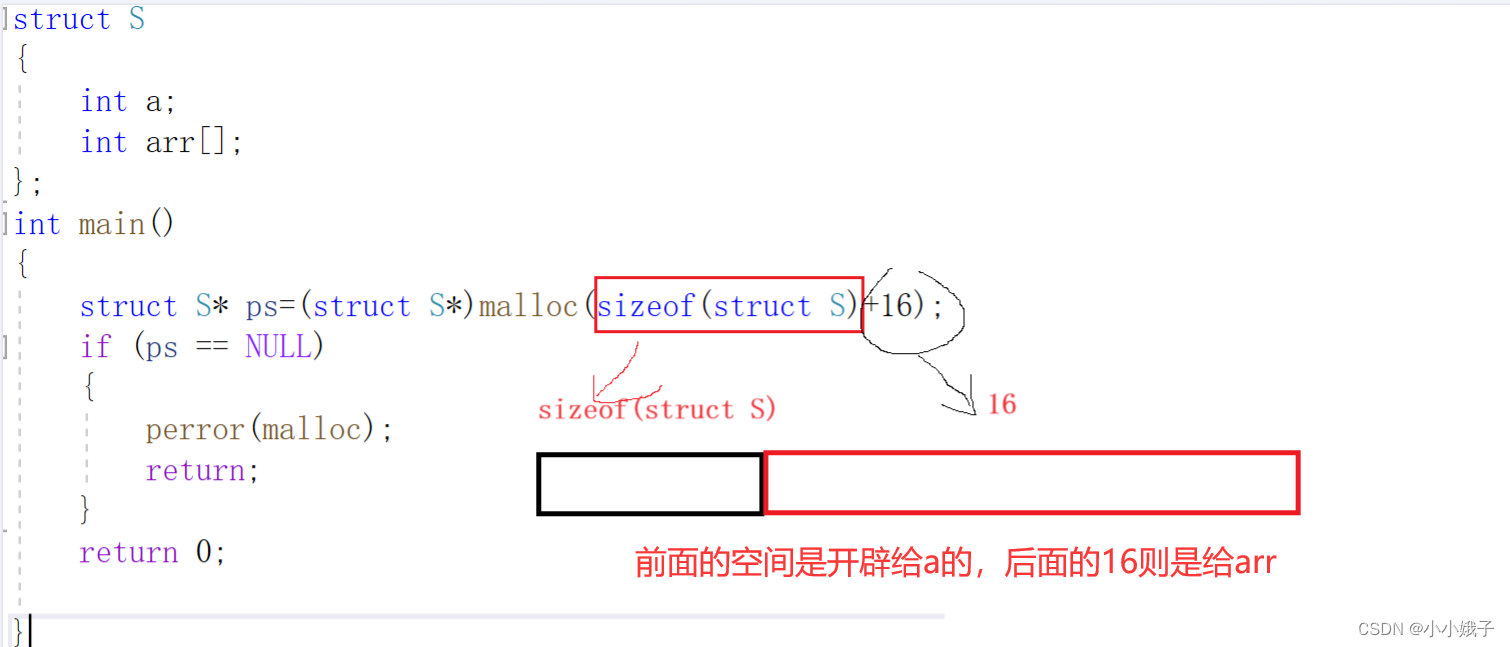
在计算包含柔性数组的结构体时,柔性数组是不计入内存的计算的。大于结构体内存大小的部分就会分配给柔性数组。
(4)代码验证
- struct S
- {
- int a;
- int arr[];
- };
- int main()
- {
- struct S s;
- printf("%zd\n",sizeof(s));//计算该结构体的内存大小
- return 0;
- }
运行的结果:
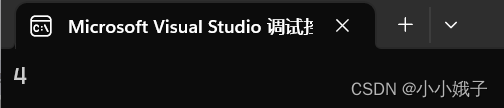
柔性数组确实是不会参加sizeof对结构体的计算
3.柔性数组的使用
(1)开辟空间
- #include
- #include
- #include
- struct S
- {
- int a;
- int arr[];
- };
- int main()
- {
- struct S* ps=(struct S*)malloc(sizeof(struct S)+16);
- if (ps == NULL)
- {
- perror(malloc);
- return;
- }
- return 0;
- }
(2)增容(realloc函数)
- #include
- #include
- #include
- struct S
- {
- int a;
- int arr[];
- };
- int main()
- {
- struct S* ps=(struct S*)malloc(sizeof(struct S)+16);
- if (ps == NULL)
- {
- perror(malloc);
- return;
- }
- struct S* str = (struct S*)realloc(ps,sizeof(struct S)+40);
- if (str != NULL)
- {
- ps = str;
- }
- else
- {
- perror(realloc);
- return;
- }
- return 0;
- }
用malloc开辟空间之后,再用reallo增容(减容)。增容之后的空间都会加在柔性数组上,这个时候数组的大小就可以根据realloc变化,因此称为柔性数组。
4.柔性数组的优势
(1)方便内存释放
- #include
- #include
- #include
- struct S
- {
- int a;
- int arr[];//定义一个柔性数组
- };
- int main()
- {
- struct S* ps=(struct S*)malloc(sizeof(struct S)+16);
- if (ps == NULL)
- {
- perror(malloc);
- return;
- }
- struct S* str = (struct S*)realloc(ps,sizeof(struct S)+40);
- if (str != NULL)
- {
- ps = str;
- }
- else
- {
- perror(realloc);
- return;
- }
- free(ps);
- ps = NULL;
- return 0;
- }
因为开辟的空间都是连续的,在一块内存中,所以只需要free一次即可。
我们再对比一下另一种写法就更加明显了。
结构体中有指针的写法:
- struct S
- {
- char c;
- int i;
- int* data;//定义一个指针
- };
- int main()
- {
- struct S* ps = (struct S*)malloc(sizeof(struct S));
- if (ps == NULL)
- {
- perror("malloc1");
- return 1;
- }
- ps->c = 'w';
- ps->i = 100;
- ps->data = (int*)malloc(20);
- if (ps->data == NULL)
- {
- perror("malloc2");
- return 1;
- }
- int i = 0;
- for (i = 0; i < 5; i++)
- {
- ps->data[i] = i;
- }
- for (i = 0; i < 5; i++)
- {
- printf("%d ", ps->data[i]);
- }
- //空间不够了,增容
- int* ptr = (int*)realloc(ps->data, 40);
- if (ptr == NULL)
- {
- perror("realloc");
- return 1;
- }
- else
- {
- ps->data = ptr;
- }
- //增容成功就使用
- //...
- //释放
- free(ps->data);//第一次
- ps->data = NULL;
- free(ps);//第二次
- ps = NULL;
- return 0;
- }
1.两次开辟空间的原因是使得他们的数据都开辟在堆区上
2.使得跟第一种一样的写法,突然第一种的优势
3.这种写法开辟的空间是不连续的,容易造成空间零碎空间,导致空间浪费。
(2)有利于访问速度和节约内存
连续的内存有益于提高访问速度,也有益于减少内存碎片,更大程度的利用内存空间。
-
相关阅读:
112.HBase Endpoint类型的Coprocessor开发与部署
跳跃游戏 I - VII
UML统一建模语言
Spring Boot技术知识点:如何解读@Validated注解
【宋红康 MySQL数据库 】【高级篇】【13】索引优化与查询优化
Linux中通过什么命令可以过滤控制字符?
计算机毕设(附源码)JAVA-SSM基于的装修公司运营管理管理系统
Linux命令笔记三
YOLOv5结合华为诺亚VanillaNet Block模块
甲基咪唑离子液体[MIM]Cl修饰Fe3O4@SiO2磁性纳米颗粒(Fe3O4@SiO2@[MIM]Cl)采用硅烷化法制备
- 原文地址:https://blog.csdn.net/2301_77053417/article/details/133276312
