-
1334. 阈值距离内邻居最少的城市
1334. 阈值距离内邻居最少的城市
原题链接:
https://leetcode.cn/problems/find-the-city-with-the-smallest-number-of-neighbors-at-a-threshold-distance/solutions
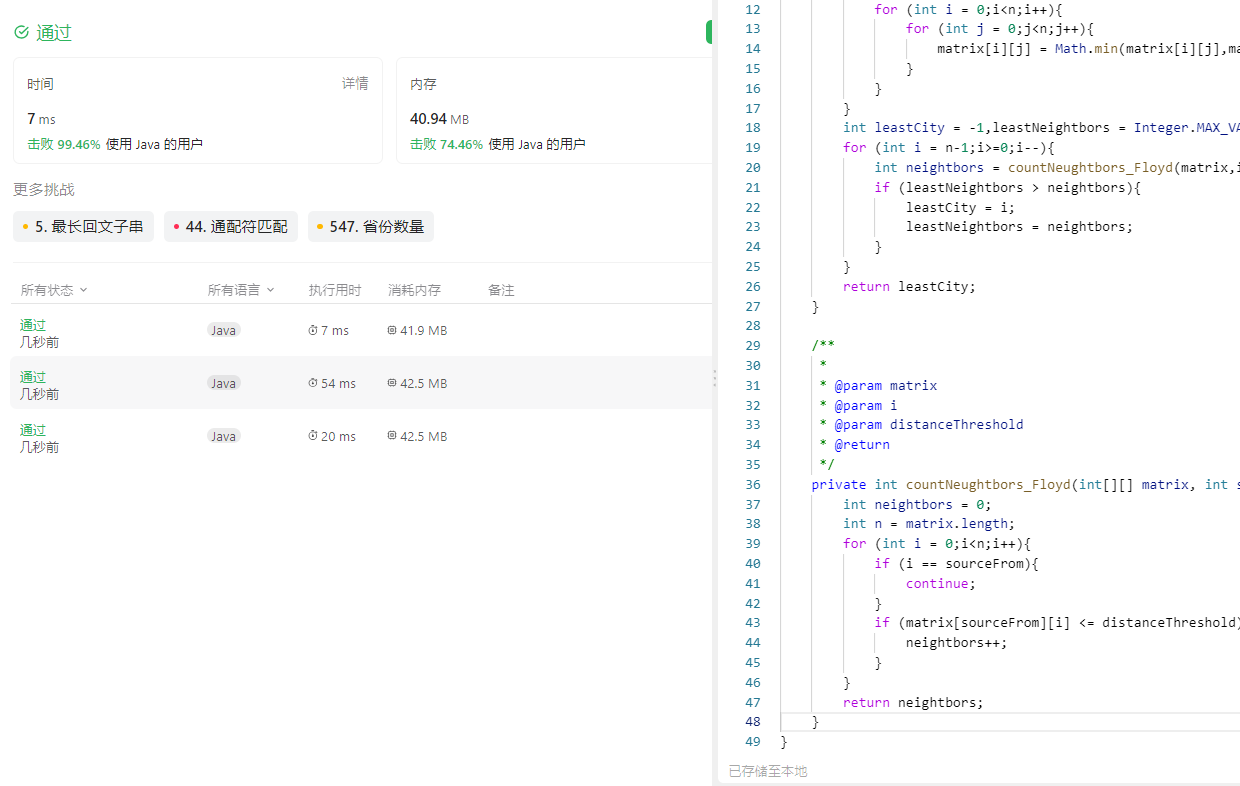
完成情况:
解题思路:
给你一个边数组 edges,其中 edges[i] = [fromi, toi, weighti] 代表 fromi 和 toi 两个城市之间的双向加权边 距离阈值是一个整数 distanceThreshold。 返回能通过某些路径到达其他城市数目最少、且路径距离 最大 为 distanceThreshold 的城市。如果有多个这样的城市,则返回编号最大的城市。 返回要求: 距离路径最大,且相连城市最少,然后同情况下编号最大的城市。 他的邻居指的不是相邻,而是只要在<=最大 为 distanceThreshold 的城市 解法: 对每一个节点,去计算满足在<=最大 为 distanceThreshold结点内的邻居数量,然后挨个节点去判断谁的邻居最少,并且节点编号能够更大。 题目就转化成了对所有节点,计算到其他结点的最短路径 Dijkstra算法 && Floyd算法- 1
- 2
- 3
- 4
- 5
- 6
- 7
- 8
- 9
- 10
- 11
- 12
- 13
参考代码:
Dijkstra
package LeetCode中等题02; import java.util.ArrayList; import java.util.Arrays; import java.util.List; public class __1334阈值距离内邻居最少的城市__Dijkstra{ /** * * @param n * @param edges * @param distanceThreshold * @return */ public int findTheCity(int n, int[][] edges, int distanceThreshold) { /** 给你一个边数组 edges,其中 edges[i] = [fromi, toi, weighti] 代表 fromi 和 toi 两个城市之间的双向加权边 距离阈值是一个整数 distanceThreshold。 返回能通过某些路径到达其他城市数目最少、且路径距离 最大 为 distanceThreshold 的城市。如果有多个这样的城市,则返回编号最大的城市。 返回要求: 距离路径最大,且相连城市最少,然后同情况下编号最大的城市。 他的邻居指的不是相邻,而是只要在<=最大 为 distanceThreshold 的城市 解法: 对每一个节点,去计算满足在<=最大 为 distanceThreshold结点内的邻居数量,然后挨个节点去判断谁的邻居最少,并且节点编号能够更大。 题目就转化成了对所有节点,计算到其他结点的最短路径 Dijkstra算法 && Floyd算法 */ List<int []> adjacentArray [] = new List[n]; for (int i = 0;i<n;i++){ adjacentArray[i] = new ArrayList<int[]>(); } for (int edge [] : edges){ int cityA = edge[0],cityB = edge[1],weigth = edge[2]; adjacentArray[cityA].add(new int[]{cityB,weigth}); adjacentArray[cityB].add(new int[]{cityA,weigth}); } int leastCity = Integer.MIN_VALUE,leastNeightbors = Integer.MAX_VALUE; for (int i=n-1;i>=0;i--){ int neighbors = Dijkstra(adjacentArray,i,distanceThreshold); if (leastNeightbors > neighbors){ leastCity = i; leastNeightbors = neighbors; } } return leastCity; } /** * * @param adjacentArray * @param sourceFrom * @param distanceThreshold * @return */ private int Dijkstra(List<int[]>[] adjacentArray, int sourceFrom, int distanceThreshold) { int n = adjacentArray.length; int distancces [] = new int[n]; Arrays.fill(distancces,Integer.MAX_VALUE / 2); distancces[sourceFrom] = 0; boolean [] visited = new boolean[n]; for (int i = 0;i<n;i++){ int curr = -1; for (int j=0;j<n;j++){ if (!visited[j] && (curr < 0 || distancces[curr] > distancces[j])){ curr = j; } } visited[curr] = true; for (int [] adjacent: adjacentArray[curr]){ int next = adjacent[0],weight = adjacent[1]; distancces[next] = Math.min(distancces[next],distancces[curr] + weight); } } int neighbors = 0; for (int i = 0;i<n;i++){ if (i == sourceFrom){ continue; } if (distancces[i] <= distanceThreshold){ neighbors++; } } return neighbors; } }- 1
- 2
- 3
- 4
- 5
- 6
- 7
- 8
- 9
- 10
- 11
- 12
- 13
- 14
- 15
- 16
- 17
- 18
- 19
- 20
- 21
- 22
- 23
- 24
- 25
- 26
- 27
- 28
- 29
- 30
- 31
- 32
- 33
- 34
- 35
- 36
- 37
- 38
- 39
- 40
- 41
- 42
- 43
- 44
- 45
- 46
- 47
- 48
- 49
- 50
- 51
- 52
- 53
- 54
- 55
- 56
- 57
- 58
- 59
- 60
- 61
- 62
- 63
- 64
- 65
- 66
- 67
- 68
- 69
- 70
- 71
- 72
- 73
- 74
- 75
- 76
- 77
- 78
- 79
- 80
- 81
- 82
- 83
- 84
- 85
- 86
- 87
- 88
Dijkstra_小顶堆
package LeetCode中等题02; import java.util.ArrayList; import java.util.Arrays; import java.util.List; import java.util.PriorityQueue; public class __1334阈值距离内邻居最少的城市__Dijkstra_小顶堆 { /** * @param n * @param edges * @param distanceThreshold * @return */ public int findTheCity(int n, int[][] edges, int distanceThreshold) { List<int []> adjacentArray [] = new List[n]; for (int i = 0;i<n;i++){ adjacentArray[i] = new ArrayList<int[]>(); } for (int edge [] : edges){ int cityA = edge[0],cityB = edge[1],weigth = edge[2]; adjacentArray[cityA].add(new int[]{cityB,weigth}); adjacentArray[cityB].add(new int[]{cityA,weigth}); } int leastCity = Integer.MIN_VALUE,leastNeightbors = Integer.MAX_VALUE; for (int i=n-1;i>=0;i--){ int neighbors = Dijkstra(adjacentArray,i,distanceThreshold); if (leastNeightbors > neighbors){ leastCity = i; leastNeightbors = neighbors; } } return leastCity; } /** * * @param adjacentArray * @param sourceFrom * @param distanceThreshold * @return */ private int Dijkstra(List<int[]>[] adjacentArray, int sourceFrom, int distanceThreshold) { int n = adjacentArray.length; int distancces [] = new int[n]; Arrays.fill(distancces,Integer.MAX_VALUE ); distancces[sourceFrom] = 0; //小顶堆,是基于队列 //Deque实现stack,PriorityQueue实现queue PriorityQueue<int []> pQueue = new PriorityQueue<int []>((a,b) -> a[1] - b[1]); //直接插入比较规则 pQueue.offer(new int[]{sourceFrom,0}); while (!pQueue.isEmpty()){ int pair[] = pQueue.poll(); int curr = pair[0],distancce = pair[1]; for (int [] adjancet : adjacentArray[curr]){ int next = adjancet[0],weight = adjancet[1]; if (distancces[next] > distancce + weight){ distancces[next] = distancce + weight; pQueue.offer(new int[]{next,distancces[next]}); } } } int neightbors = 0; for (int i = 0;i<n;i++){ if (i == sourceFrom){ continue; } if (distancces[i] <= distanceThreshold){ neightbors++; } } return neightbors; } }- 1
- 2
- 3
- 4
- 5
- 6
- 7
- 8
- 9
- 10
- 11
- 12
- 13
- 14
- 15
- 16
- 17
- 18
- 19
- 20
- 21
- 22
- 23
- 24
- 25
- 26
- 27
- 28
- 29
- 30
- 31
- 32
- 33
- 34
- 35
- 36
- 37
- 38
- 39
- 40
- 41
- 42
- 43
- 44
- 45
- 46
- 47
- 48
- 49
- 50
- 51
- 52
- 53
- 54
- 55
- 56
- 57
- 58
- 59
- 60
- 61
- 62
- 63
- 64
- 65
- 66
- 67
- 68
- 69
- 70
- 71
- 72
- 73
- 74
- 75
- 76
Floyd_martix方法
package LeetCode中等题02; import java.util.Arrays; public class __1334阈值距离内邻居最少的城市__Floyd_martix方法 { /** * * @param n * @param edges * @param distanceThreshold * @return */ public int findTheCity(int n, int[][] edges, int distanceThreshold) { int [][] matrix = new int[n][n]; for (int i = 0;i<n;i++){ Arrays.fill(matrix[i],Integer.MAX_VALUE / 2); } for (int edge [] : edges){ int cityA = edge[0],cityB = edge[1],weigth = edge[2]; matrix[cityA][cityB] = matrix[cityB][cityA] = weigth; } for (int k = 0;k<n;k++){ for (int i = 0;i<n;i++){ for (int j = 0;j<n;j++){ matrix[i][j] = Math.min(matrix[i][j],matrix[i][k] + matrix[k][j]); } } } int leastCity = -1,leastNeightbors = Integer.MAX_VALUE; for (int i = n-1;i>=0;i--){ int neightbors = countNeughtbors_Floyd(matrix,i,distanceThreshold); if (leastNeightbors > neightbors){ leastCity = i; leastNeightbors = neightbors; } } return leastCity; } /** * * @param matrix * @param i * @param distanceThreshold * @return */ private int countNeughtbors_Floyd(int[][] matrix, int sourceFrom, int distanceThreshold) { int neightbors = 0; int n = matrix.length; for (int i = 0;i<n;i++){ if (i == sourceFrom){ continue; } if (matrix[sourceFrom][i] <= distanceThreshold){ neightbors++; } } return neightbors; } }- 1
- 2
- 3
- 4
- 5
- 6
- 7
- 8
- 9
- 10
- 11
- 12
- 13
- 14
- 15
- 16
- 17
- 18
- 19
- 20
- 21
- 22
- 23
- 24
- 25
- 26
- 27
- 28
- 29
- 30
- 31
- 32
- 33
- 34
- 35
- 36
- 37
- 38
- 39
- 40
- 41
- 42
- 43
- 44
- 45
- 46
- 47
- 48
- 49
- 50
- 51
- 52
- 53
- 54
- 55
- 56
- 57
- 58
- 59
- 60
- 61
-
相关阅读:
P2444 [POI2000] 病毒
高教社杯数模竞赛特辑论文篇-2023年A题:定日镜场的优化设计(续)(附获奖论文及MATLAB代码实现)
Android Studio(数据存储)
h3C交换机禁止VLAN互访方法
hive表中导入数据 多种方法详细说明
ubuntu16 虚拟机单盘扩容
【15】c++设计模式——>抽象工厂模式
工厂模式——工厂方法模式+注册表
基于python+django+vue+MySQL的酒店推荐系统
多态到底有什么用?
- 原文地址:https://blog.csdn.net/weixin_43554580/article/details/133129419
