-
恒合仓库 - 角色管理、启动或禁用角色、为角色分配权限
角色管理
一、分页查询角色

1.1 实体类
1.1.1 分页实体类
/** * 分页信息实体类: */ @Data @NoArgsConstructor @AllArgsConstructor @ToString public class Page { //当前页码 private Integer pageNum; //每页显示行数 private Integer pageSize; //总行数 private Integer totalNum; //总页数 private Integer pageCount; //limit函数参数一每页起始行 private Integer limitIndex; //存储当前页查询到的数据的List集合 private List<?> resultList; //计算总页数 public Integer getPageCount() { return (totalNum%pageSize==0) ? totalNum/pageSize : totalNum/pageSize+1; } //计算limit函数参数一每页起始行 public Integer getLimitIndex() { return pageSize * (pageNum-1); }- 1
- 2
- 3
- 4
- 5
- 6
- 7
- 8
- 9
- 10
- 11
- 12
- 13
- 14
- 15
- 16
- 17
- 18
- 19
- 20
- 21
- 22
- 23
- 24
- 25
- 26
- 27
- 28
- 29
- 30
- 31
- 32
- 33
- 34
- 35
- 36
1.1.2 角色实体类
/** * 角色表的实体类 */ @Data @NoArgsConstructor @AllArgsConstructor @ToString public class Role implements Serializable { private int roleId;//角色id private String roleName;//角色名称 private String roleDesc;//角色描述 private String roleCode;//角色标识 private String roleState;//角色状态 private int createBy;//创建角色的用户id //json转换的日期格式 @JsonFormat(pattern="yyyy-MM-dd HH:mm:ss") private Date createTime;//创建时间 private int updateBy;//修改角色的用户id private Date updateTime;//修改时间 private String getCode;//追加的属性--创建角色的用户的用户名 }- 1
- 2
- 3
- 4
- 5
- 6
- 7
- 8
- 9
- 10
- 11
- 12
- 13
- 14
- 15
- 16
- 17
- 18
- 19
- 20
- 21
- 22
- 23
- 24
- 25
- 26
- 27
- 28
- 29
- 30
- 31
1.2 分页业务实现
1.2.1 Mapper
// 查询角色行数的方法 public Integer findRoleRowCount(@Param("role") Role role); // 分页查询角色的方法 public List<Role> findRolePage(@Param("page")Page page,@Param("role")Role role);- 1
- 2
- 3
- 4
<select id="findRoleRowCount" resultType="java.lang.Integer"> select count(*) from role r <where> <if test="role.roleName !=null and role.roleName!='' "> r.role_name like concat('%', #{role.roleName}, '%') if> <if test="role.roleCode !=null and role.roleCode!='' "> and r.role_code like concat('%', #{role.roleCode}, '%') if> <if test="role.roleState !=null and role.roleState!='' "> and r.role_state = #{role.roleState} if> where> select> <select id="findRolePage" resultType="com.pn.entity.Role"> select t1.*, t2.user_code getCode from role t1, user_info t2 <where> t1.create_by = t2.user_id <if test="role.roleName != null and role.roleName != ''"> and t1.role_name like concat('%', #{role.roleName}, '%') if> <if test="role.roleCode != null and role.roleCode != ''"> and t1.role_code like concat('%', #{role.roleCode}, '%') if> <if test="role.roleState != null and role.roleState != ''"> and t1.role_state = #{role.roleState} if> order by t1.create_time desc limit #{page.limitIndex}, #{page.pageSize} where> select>- 1
- 2
- 3
- 4
- 5
- 6
- 7
- 8
- 9
- 10
- 11
- 12
- 13
- 14
- 15
- 16
- 17
- 18
- 19
- 20
- 21
- 22
- 23
- 24
- 25
- 26
- 27
- 28
- 29
- 30
- 31
- 32
- 33
- 34
- 35
1.2.2 Service
@Override public Page queryRolePage(Page page, Role role) { Integer roleRowCount = roleMapper.findRoleRowCount(role); // 设置总数 page.setTotalNum(roleRowCount); // 设置从哪开始 page.setLimitIndex(page.getLimitIndex()); // 设置总页数 page.setPageCount(page.getPageCount()); // 分页查询数据 List<Role> rolePage = roleMapper.findRolePage(page, role); page.setResultList(rolePage); return page; }- 1
- 2
- 3
- 4
- 5
- 6
- 7
- 8
- 9
- 10
- 11
- 12
- 13
- 14
1.2.3 Controller
//分页查询角色 @RequestMapping("/role-page-list") public Result roleListPage(Page page, Role role) { return Result.ok(roleService.queryRolePage(page,role)); }- 1
- 2
- 3
- 4
- 5
1.2.4 效果图


二、添加角色
要考虑新增的角色是否存在
根据角色名称或角色代码查询是否已有角色

2.1 Mapper
// 根据角色名称或角色代码查询角色的方法 public Role findRoleByNameOrCode(@Param("roleName")String roleName,@Param("roleCode")String roleCode); // 添加角色的方法 public int insertRole(@Param("role")Role role);- 1
- 2
- 3
- 4
- 5
<select id="findRoleByNameOrCode" resultType="com.pn.entity.Role"> select * from role where role_name = #{roleName} or role_code = #{roleCode} select> <insert id="insertRole"> insert into role (role_name, role_code, role_desc, role_state, create_by, create_time) values (#{role.roleName}, #{role.roleCode}, #{role.roleDesc}, 0, #{role.createBy}, now()) insert>- 1
- 2
- 3
- 4
- 5
- 6
- 7
- 8
- 9
- 10
- 11
2.2 Service
@CacheEvict(key = "'all:role'")//记得清除一个Redis缓存中role角色信息 @Override public Result saveRole(Role role) { Role roleByNameOrCode = roleMapper.findRoleByNameOrCode(role.getRoleName(), role.getRoleCode()); if (roleByNameOrCode != null){ return Result.err(Result.CODE_ERR_BUSINESS, "添加角色失败!角色已存在"); } int success = roleMapper.insertRole(role); return success > 0 ? Result.ok("添加成功") : Result.err(Result.CODE_ERR_BUSINESS, "角色添加失败"); }- 1
- 2
- 3
- 4
- 5
- 6
- 7
- 8
- 9
- 10
- 11
2.3 Controller
//添加角色 @RequestMapping("/role-add") public Result addRole(@RequestBody Role role, @RequestHeader("Token") String token) { CurrentUser currentUser = tokenUtils.getCurrentUser(token); role.setCreateBy(currentUser.getUserId()); return roleService.saveRole(role); }- 1
- 2
- 3
- 4
- 5
- 6
- 7
- 8
2.4 效果图
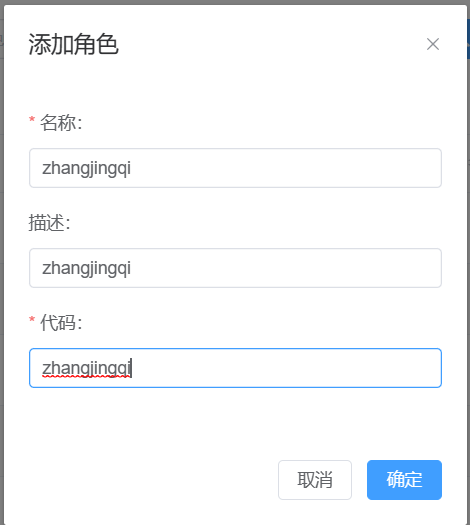


三、启用或禁用角色
2.1 Mapper
// 根据角色id修改角色状态的方法 public int setRoleStateByRid(@Param("roleId")Integer roleId,@Param("roleState")String roleState);- 1
- 2
<update id="setRoleStateByRid"> update role set role_state=#{roleState} where role_id = #{roleId} update>- 1
- 2
- 3
- 4
- 5
2.2 Service
@CacheEvict(key = "'all:role'")//记得清除一个Redis缓存中role角色信息 @Override public Result setRoleStateByRid(Role role) { int success = roleMapper.setRoleStateByRid(role.getRoleId(), role.getRoleState()); return success > 0 ? Result.ok("状态修改成功") : Result.err(Result.CODE_ERR_BUSINESS, "状态修改失败"); }- 1
- 2
- 3
- 4
- 5
- 6
2.3 Controller
//启动或禁用角色的url接口 @RequestMapping("/role-state-update") public Result updateRoleState(@RequestBody Role role){ return roleService.setRoleStateByRid(role); }- 1
- 2
- 3
- 4
- 5
2.4 效果图


加入说把“出库”禁用掉后,在给用户分配角色的时候看不到“出库”角色

四、删除角色
删除时只能单个删除
也记得删除角色用户关系表中的内容
记得删除角色权限表中内容
4.1 Mapper
// 根据角色id删除角色的方法 public int removeRoleById(@Param("roleId") Integer roleId);- 1
- 2
<delete id="removeRoleById"> delete from role where role_id = #{roleId} delete>- 1
- 2
- 3
- 4
- 5
// 根据角色id删除user_role表中对应关系 public int deleteRoleUserRelation(@Param("roleId") Integer roleId);- 1
- 2
<delete id="deleteRoleUserRelation"> delete from user_role where role_id = #{roleId} delete>- 1
- 2
- 3
- 4
- 5
//根据角色id删除user_role表中对应关系 public int deleteRoleAuthRelation(@Param("roleId") Integer roleId);- 1
- 2
<delete id="deleteRoleAuthRelation"> delete from role_auth where role_id = #{roleId} delete>- 1
- 2
- 3
- 4
- 5
4.2 Service
@CacheEvict(key = "'all:role'")//记得清除一个Redis缓存中role角色信息 @Override public Result deleteRoleById(Integer roleId) { int successRole = roleMapper.removeRoleById(roleId); if (successRole>0){ // 删除用户角色关系中对应内容 roleMapper.deleteRoleUserRelation(roleId); // 删除角色权限关系 authMapper.deleteRoleAuthRelation(roleId); } return Result.ok("删除成功"); }- 1
- 2
- 3
- 4
- 5
- 6
- 7
- 8
- 9
- 10
- 11
- 12
4.3 Controller
//删除角色的url接口 @RequestMapping("/role-delete/{roleId}") public Result deleteRole(@PathVariable("roleId") Integer roleId){ return roleService.deleteRoleById(roleId); }- 1
- 2
- 3
- 4
- 5
4.4 效果图
删除“采购”这个角色,id为11

user_role表中没有role_id为11的

role_auth表中没有role_id为11数据

五、为角色分配权限
5.1 实体类
首先是查询所有的权限菜单树
/auth/auth-tree 查询所有的权限菜单树
其次是为查询某个用户权限(权限回显)
/role/role-auth?roidId=17 根据roleId查询角色的权限
5.1.1 权限实体类
/** * auth_info表的实体类: */ @Data @NoArgsConstructor @AllArgsConstructor public class Auth { private int authId;//权限(菜单)id private Integer parentId;//父权限(菜单)id private String authName;//权限(菜单)名称 private String authDesc;//权限(菜单)描述 private int authGrade;//权限(菜单)层级 private String authType;//权限(菜单)类型 private String authUrl;//权限(菜单)访问的url接口 private String authCode;//权限(菜单)标识 private int authOrder;//权限(菜单)的优先级 private String authState;//权限(菜单)状态(1.启用,0.禁用) private int createBy;//创建权限(菜单)的用户id private Date createTime;//权限(菜单)的创建时间 private int updateBy;//修改权限(菜单)的用户id private Date updateTime;//权限(菜单)的修改时间 //追加的List集合属性 -- 用于存储当前权限(菜单)的子级权限(菜单) private List<Auth> childAuth; }- 1
- 2
- 3
- 4
- 5
- 6
- 7
- 8
- 9
- 10
- 11
- 12
- 13
- 14
- 15
- 16
- 17
- 18
- 19
- 20
- 21
- 22
- 23
- 24
- 25
- 26
- 27
- 28
- 29
- 30
- 31
- 32
- 33
- 34
- 35
- 36
- 37
- 38
- 39

5.2 查询所有的权限菜单树
5.2.1 Mapper
查询所有权限菜单的方法
// 查询所有权限菜单的方法 public List<Auth> findAllAuth();- 1
- 2
auth_type的值1 模块 、2 列表、 3 按钮
<select id="findAllAuth" resultType="com.pn.entity.Auth"> select * from auth_info where auth_state = 1and auth_type !='3' select>- 1
- 2
- 3
- 4
- 5
5.2.2 Service
查询所有权限菜单的方法
@Cacheable("'all:authTree'") @Override public List<Auth> allAuthTree() { // 查询出所有权限菜单 List<Auth> allAuth = authMapper.findAllAuth(); // 将所有权限菜单转成菜单树 return allAuthToAuthTree(allAuth, 0); } // 将所有菜单List转成菜单树List // 第一次的话pid是0 private List<Auth> allAuthToAuthTree( List<Auth> allAuthList,Integer pid){ List<Auth> firstLevelAuthList = new ArrayList<>(); // 查询出所有n级菜单(比如说一级菜单) for (Auth auth:allAuthList){ // pid=0,说明就是1级菜单 if ( auth.getParentId().equals(pid)){ firstLevelAuthList.add(auth); } } // 拿到每一个n级菜单的(n+1)级菜单 for (Auth firstAuth: firstLevelAuthList){ // 递归,获取(n+1)级菜单 List<Auth> secondLevelAuthList = allAuthToAuthTree(allAuthList,firstAuth.getAuthId()); firstAuth.setChildAuth(secondLevelAuthList); } return firstLevelAuthList; }- 1
- 2
- 3
- 4
- 5
- 6
- 7
- 8
- 9
- 10
- 11
- 12
- 13
- 14
- 15
- 16
- 17
- 18
- 19
- 20
- 21
- 22
- 23
- 24
- 25
- 26
- 27
- 28
- 29
- 30
5.2.3 Controller
查询所有权限菜单的方法
@Slf4j @RestController @RequestMapping("/auth") public class AuthController { @Autowired private AuthService authService; @RequestMapping("/auth-tree") public Result loadAllAuthTree(){ return Result.ok(authService.allAuthTree()); } }- 1
- 2
- 3
- 4
- 5
- 6
- 7
- 8
- 9
- 10
- 11
- 12
5.2.4 效果图
5.3 当前角色的权限回显
/role/role-auth?roidId=17 根据roleId查询角色已分配的所有权限id
5.3.1 Mapper
// 根据角色id查询分配的所有权限菜单的方法 public List<Integer> findAuthIdByRid(@Param("roleId") Integer roleId);- 1
- 2
<select id="findAuthIdByRid" resultType="java.lang.Integer"> select auth_info.auth_id from role_auth, auth_info where role_auth.auth_id = auth_info.auth_id and role_auth.role_id = #{roleId} and auth_info.auth_state=1 and auth_info.auth_type != 3 select>- 1
- 2
- 3
- 4
- 5
- 6
- 7
- 8
- 9
5.3.2 Service
@Override public List<Integer> findAuthByRid(Integer roleId) { return authMapper.findAuthIdByRid(roleId); }- 1
- 2
- 3
- 4
5.3.3 Controller
@Autowired private AuthService authService; @RequestMapping("/role-auth") public Result roleAuth(Integer roleId){ return Result.ok( authService.findAuthByRid(roleId));- 1
- 2
- 3
- 4
- 5
- 6
- 7
5.3.4 效果图

5.4 为角色分配权限
5.4.1 实体类
/** * 接收给角色分配权限(菜单)前端传递的数据的Dto类: */ @Data @NoArgsConstructor @AllArgsConstructor @ToString public class AssignAuthDto { //接收请求参数roleId -- 角色id private Integer roleId; //接收请求参数authIds -- 给角色分配的所有权限(菜单)的id private List<Integer> authIds; }- 1
- 2
- 3
- 4
- 5
- 6
- 7
- 8
- 9
- 10
- 11
- 12
- 13
- 14
- 15
5.4.2 Mapper
//根据角色id删除user_role表中对应关系 public int deleteRoleAuthRelation(@Param("roleId") Integer roleId);- 1
- 2
<delete id="deleteRoleAuthRelation"> delete from role_auth where role_id = #{roleId} delete>- 1
- 2
- 3
- 4
- 5
// 添加角色权限关系的方法 public int insertRoleAuth(@Param("roleId") Integer roleId,@Param("authId") Integer authId);- 1
- 2
<insert id="insertRoleAuth"> insert into role_auth values (null ,#{roleId},#{authId}) insert>- 1
- 2
- 3
- 4
5.4.3 Service
@Transactional @Override public void saveRoleAuth(AssignAuthDto assignAuthDto) { // 删除角色与权限之前的对应关系 authMapper.deleteRoleAuthRelation(assignAuthDto.getRoleId()); // 添加角色权限关系 List<Integer> authIds = assignAuthDto.getAuthIds(); for (Integer authId : authIds){ authMapper.insertRoleAuth(assignAuthDto.getRoleId(),authId); } }- 1
- 2
- 3
- 4
- 5
- 6
- 7
- 8
- 9
- 10
- 11
- 12
5.4.4 Controller
@RequestMapping("/auth-grant") public Result grantAuth(@RequestBody AssignAuthDto assignAuthDto){ roleService.saveRoleAuth(assignAuthDto); return Result.ok("权限分配成功"); }- 1
- 2
- 3
- 4
- 5
5.4.5 效果图

-
相关阅读:
【附源码】计算机毕业设计java原创网络文学管理系统设计与实现
Opencv项目实战:02 角度探测器
21.7 Python 使用Request库
初识数据结构——时间复杂度
如何通过企业数字化管理降本增效?
Vue+el-image-viewer显示tiff图片,并能够切换图片中的帧
OJ练习第180题——颠倒二进制位
项目实战:通过axios加载水果库存系统的首页数据
LeetCode_位运算_中等_260.只出现一次的数字 III
在docker上安装AWVS
- 原文地址:https://blog.csdn.net/weixin_51351637/article/details/133036016
