-
数据结构与算法 -二叉树
二叉树相关算法
1. 二叉树基本知识
(1)二叉树结构
public class Node { V value; Node left; Node right; }- 1
- 2
- 3
- 4
- 5

left和right只能往下指,没有节点就为空。
(2)创建二叉树
对于一个完全二叉树,父节点为i, 左子节点为2i+1,右子节点为2i+2,当节点index为i时,其父节点index为(i-1)/2。
对于非完全二叉树,我们可以将其看为完全二叉树,没有节点的地方补null。private static Node createBinaryTree(int[] numbers) { Node root = null; if (numbers != null && numbers.length > 0) { List<Node> nodeList = new ArrayList<>(); for (int number : numbers) { if (number == 0) { nodeList.add(null); } else { nodeList.add(new Node(number)); } } int tmp = 0; while (tmp <= (numbers.length - 2) / 2) { if (nodeList.get(tmp) != null) { if (2 * tmp + 1 < numbers.length) { nodeList.get(tmp).left = nodeList.get(2 * tmp + 1); } if (2 * tmp + 2 < numbers.length) { nodeList.get(tmp).right = nodeList.get(2 * tmp + 2); } } tmp++; } root = nodeList.get(0); } return root; }- 1
- 2
- 3
- 4
- 5
- 6
- 7
- 8
- 9
- 10
- 11
- 12
- 13
- 14
- 15
- 16
- 17
- 18
- 19
- 20
- 21
- 22
- 23
- 24
- 25
- 26
- 27
2. 二叉树遍历
二叉树的先序,中序,后序遍历(指头节点)
先序:任何子树的处理顺序都是,头节点->左子树->右子树
中序:任何子树的处理顺序都是,左子树->头节点->右子树
后序: 任何子树的处理顺序都是,左子树->右子树->头节点
注意:拿子树节点,就需要按照规则,把所有子树的先拿完。

(1)递归序private static void f(Node root){ if(root==null){ return; } //root第一次出现 prePass(root.left); //root第二次出现 prePass(root.right); //root第三次出现 }- 1
- 2
- 3
- 4
- 5
- 6
- 7
- 8
- 9
- 10
(2)先序遍历
在递归序中先打印头节点的值
① 递归实现private static void prePass(Node root){ if(root==null){ return; } System.out.println(root.value); prePass(root.left); prePass(root.right); }- 1
- 2
- 3
- 4
- 5
- 6
- 7
- 8

② 非递归实现

因为先序遍历,先打印头节点,再打印左节点,最后打印右节点。我们可以准备一个栈,头节点先进栈,每次弹出头节点之后,打印头节点的值,再将右子节点,左子节点依次放入栈中。然后继续弹出,因为栈具有逆序,所以会先弹出左子节点,再弹出右子节点。private static void noRecursivePrePass(Node root){ if(root!=null){ Stack<Node> nodeStack = new Stack<>(); nodeStack.add(root); while (!nodeStack.empty()){ Node tmp = nodeStack.pop(); System.out.print(tmp.value+" "); if(tmp.right!=null){ nodeStack.add(tmp.right); } if(tmp.left!=null){ nodeStack.add(tmp.left); } } } }- 1
- 2
- 3
- 4
- 5
- 6
- 7
- 8
- 9
- 10
- 11
- 12
- 13
- 14
- 15
- 16
(3)中序遍历
在左节点之后,打印头节点的值
① 递归实现private static void midPass(Node root){ if(root==null){ return; } midPass(root.left); System.out.println(root.value); midPass(root.right); }- 1
- 2
- 3
- 4
- 5
- 6
- 7
- 8
② 非递归实现
整条左链压入栈中,若已经没有左子节点,则弹出并打印节点,并将右子节点压入栈中。然后重复上面过程。private static void noRecursiveMidPass(Node root) { if (root != null) { Stack<Node> nodeStack = new Stack<>(); while (!nodeStack.isEmpty() || root != null) { if (root != null) { nodeStack.add(root); root = root.left; } else { root = nodeStack.pop(); System.out.print(root.value); root = root.right; } } } }- 1
- 2
- 3
- 4
- 5
- 6
- 7
- 8
- 9
- 10
- 11
- 12
- 13
- 14
- 15
(4)后序遍历
在左右节点之后,打印头节点的值
① 递归实现private static void postPass(Node root){ if(root==null){ return; } postPass(root.left); postPass(root.right); System.out.println(root.value); }- 1
- 2
- 3
- 4
- 5
- 6
- 7
- 8
② 非递归实现

解法一:
对于先序遍历的非递归实现,我们通过先将头节点压栈并出栈,然后将右子节点压栈,将左子节点压栈,之后再使左子节点出栈,右子节点出栈。从而出现了头左右的排序。若先将左子节点入栈,再将右子节点入栈,就会出现头右左的排序,倒叙为左右头,为后序遍历。因此再准备一个栈,每次节点弹出时,都进入另一个栈中,由于栈先进后出,具有倒叙特点,因此最后出这个栈的结果就是后序遍历结果。private static void noRecursivePostPass(Node root){ if(root!=null){ Stack<Node> nodeStack = new Stack<>(); Stack<Node> resultStack = new Stack<>(); Node tmp; nodeStack.add(root); while (!nodeStack.isEmpty()){ tmp = nodeStack.pop(); resultStack.add(tmp); if(tmp.left!=null){ nodeStack.add(tmp.left); } if(tmp.right!=null){ nodeStack.add(tmp.right); } } while (!resultStack.isEmpty()){ System.out.print(resultStack.pop().value); } } }- 1
- 2
- 3
- 4
- 5
- 6
- 7
- 8
- 9
- 10
- 11
- 12
- 13
- 14
- 15
- 16
- 17
- 18
- 19
- 20
- 21
解法二:
解法一使用了两个栈,空间占用多。我们可以使用两个Node指针,一个root一直指向栈顶位置,代表需要处理的节点,一个child指向上一次打印的节点,若child指向左子节点,则代表这次应该处理右子节点了,若指向右子节点,则表示左右子节点都已经打印,可以打印父节点了。private static void noRecursivePostPass(Node root) { if (root != null) { Stack<Node> nodeStack = new Stack<>(); nodeStack.push(root); Node child; while (!nodeStack.empty()) { child = nodeStack.peek(); if (child.left != null && root != child.left && root != child.right) { nodeStack.push(child.left); } else if (child.right != null && root != child.right) { nodeStack.push(child.right); } else { System.out.print(nodeStack.pop().value + " "); root = child; } } } }- 1
- 2
- 3
- 4
- 5
- 6
- 7
- 8
- 9
- 10
- 11
- 12
- 13
- 14
- 15
- 16
- 17
- 18
(5)实现二叉树的层次遍历
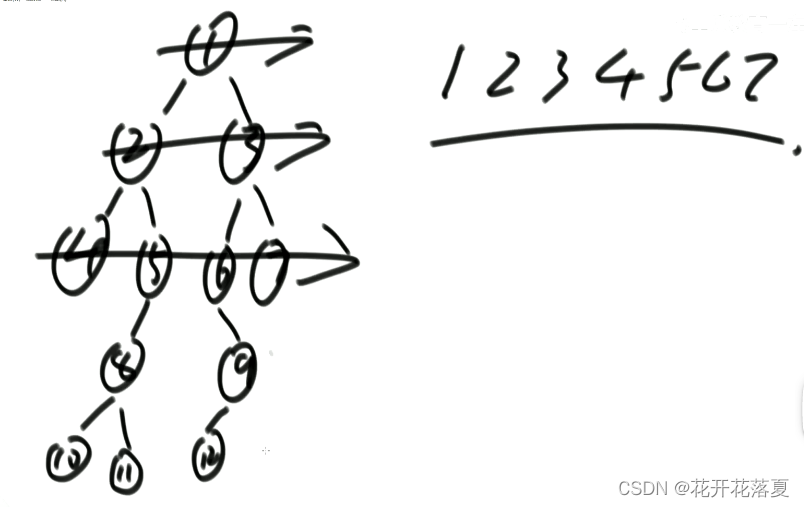
本质是宽度优先遍历,用队列
首先将父节点入队列,然后出队列一个节点,并打印此节点,若该节点的左子节点不为空,则将左子节点入队列,若右子节点不为空,则将右子节点入队列。每次都会出队列一个节点并打印。
private static void levelPass(Node root) { if (root != null) { Queue<Node> nodeQueue = new LinkedList<>(); Node tmp; nodeQueue.add(root); while (!nodeQueue.isEmpty()) { tmp = nodeQueue.poll(); System.out.print(tmp.value); if (tmp.left != null) { nodeQueue.add(tmp.left); } if (tmp.right != null) { nodeQueue.add(tmp.right); } } } }- 1
- 2
- 3
- 4
- 5
- 6
- 7
- 8
- 9
- 10
- 11
- 12
- 13
- 14
- 15
- 16
- 17
- 18
(6) 寻找二叉树最宽的一层
可以通过设置flag变量的方式,来发现某一层的结束。由此可以发现二叉树每层的宽度。
方案一
使用一个map来记录每个节点的层数,这样很容易区分每一层有多少个节点private static int getMaxWidthOfTree(Node root) { int max = 0, currentLevel, level, currentLevelCount = 0; Queue<Node> nodeQueue = new LinkedList<>(); Map<Node, Integer> nodeLevelMap = new HashMap<>(); Node tmp; level = 1; nodeLevelMap.put(root, level); nodeQueue.add(root); while (!nodeQueue.isEmpty()) { tmp = nodeQueue.poll(); currentLevel = nodeLevelMap.get(tmp); if (level == currentLevel) { currentLevelCount++; } else { max = Math.max(max, currentLevelCount); //The current node is the next level node, so set level to the next level, and set count to 1 level = currentLevel; currentLevelCount = 1; } if (tmp.left != null) { nodeLevelMap.put(tmp.left, currentLevel + 1); nodeQueue.add(tmp.left); } if (tmp.right != null) { nodeLevelMap.put(tmp.right, currentLevel + 1); nodeQueue.add(tmp.right); } } //We don't compare max and the last level count, so compare the in the below code. return Math.max(max, currentLevelCount); }- 1
- 2
- 3
- 4
- 5
- 6
- 7
- 8
- 9
- 10
- 11
- 12
- 13
- 14
- 15
- 16
- 17
- 18
- 19
- 20
- 21
- 22
- 23
- 24
- 25
- 26
- 27
- 28
- 29
- 30
- 31
方案二
使用两个遍历来记录最后的节点,一个记录当前层最后节点,一个记录下一层最后的节点。每次都子节点入队列时,都更新下一次最后一个节点,因此当当前层最后一个节点入队列时,一定能找到下一层最后一个节点。private static int getMaxWidthOfTree(Node root) { int max = 0, curLevelCount = 0; Queue<Node> nodeQueue = new LinkedList<>(); Node curEnd = root, nextEnd = null, tmp; nodeQueue.add(root); while (!nodeQueue.isEmpty()) { tmp = nodeQueue.poll(); curLevelCount++; if (tmp.left != null) { nextEnd = tmp.left; nodeQueue.add(tmp.left); } if (tmp.right != null) { nextEnd = tmp.right; nodeQueue.add(tmp.right); } if (tmp == curEnd) { max = Math.max(max, curLevelCount); curEnd = nextEnd; curLevelCount = 0; } } return max; }- 1
- 2
- 3
- 4
- 5
- 6
- 7
- 8
- 9
- 10
- 11
- 12
- 13
- 14
- 15
- 16
- 17
- 18
- 19
- 20
- 21
- 22
- 23
- 24

(7) 二叉树的序列化和反序列化
可以用先序或者中序或者后序或者层次遍历,来实现二叉树的序列化,用了什么方式序列化,就用什么样的方式反序列化。
注意:为了记录二叉树的结构,不要忽略空节点,用null补全。

例1:使用先序遍历序列化
注意:先序,中序,后序遍历都是类似操作private static Queue<Node> serializeBinaryTree(Node root) { Queue<Node> nodeQueue = new LinkedList<>(); prePass(root, nodeQueue); return nodeQueue; } private static void prePass(Node root, Queue<Node> nodeQueue) { if (root == null) { nodeQueue.add(null); return; } nodeQueue.add(root); prePass(root.left, nodeQueue); prePass(root.right, nodeQueue); }- 1
- 2
- 3
- 4
- 5
- 6
- 7
- 8
- 9
- 10
- 11
- 12
- 13
- 14
- 15
使用先序遍历反序列化
private static Node deSerializeBinaryTree(Queue<Node> nodeQueue) { Node node = nodeQueue.poll(); if (node == null) { return null; } else { node.left = deSerializeBinaryTree(nodeQueue); node.right = deSerializeBinaryTree(nodeQueue); } return node; }- 1
- 2
- 3
- 4
- 5
- 6
- 7
- 8
- 9
- 10
例2:使用层次遍历实现序列化

序列化:先层次遍历二叉树,将节点及其子节点加入队列中,若子节点为null,就把null也加入队列中private static Queue<Node> serializeBinaryTree(Node root) { Queue<Node> nodeQueue = new LinkedList<>(); Queue<Node> tmp = new LinkedList<>(); Node node; tmp.add(root); while (!tmp.isEmpty()){ node=tmp.poll(); nodeQueue.add(node); if(node!=null){ tmp.add(node.left); tmp.add(node.right); } } return nodeQueue; }- 1
- 2
- 3
- 4
- 5
- 6
- 7
- 8
- 9
- 10
- 11
- 12
- 13
- 14
- 15
反序列化:先遍历节点队列,取出一个节点,若节点不为null,则说明该节点有左右子节点,因此再取出该节点的左右子节点。使用一个队列tmp记录有子节点的节点,因此若左右子节点不为空,则加入到tmp中。
private static Node deSerializeBinaryTree(Queue<Node> nodeQueue) { Node root = nodeQueue.poll(); if (root != null) { Queue<Node> tmp = new LinkedList<>(); Node node; tmp.add(root); while (!tmp.isEmpty()) { node = tmp.poll(); node.left = nodeQueue.poll(); node.right = nodeQueue.poll(); if (node.left != null) { tmp.add(node.left); } if (node.right != null) { tmp.add(node.right); } } } return root; }- 1
- 2
- 3
- 4
- 5
- 6
- 7
- 8
- 9
- 10
- 11
- 12
- 13
- 14
- 15
- 16
- 17
- 18
- 19
- 20
3. 二叉树的递归套路
可以解决面试中绝大多数的二叉树问题,尤其是树型dp问题,本质是利用递归遍历二叉树的便利性
流程如下:
(1)假设以X节点为头,假设可以向X左树和X右树要任何信息
(2)在上一步的假设下,讨论以X为头节点的树,得到答案的可能性
(3)列出所有可能性后,确定到底需要向左树和右树要什么样的信息
(4)把左树信息和右树信息求全集,就是任何一棵子树都需要返回的信息S
(5)递归函数都返回S,每一棵子树都这么要求
(6)写代码,在代码中考虑如何把左树的信息和右树信息整合出整棵树的信息1. 如何设计一个打印整棵树的打印函数
注意打印整棵树,需要保持树的结构
(1)将整棵树填补成一个完全二叉树再打印

这种方法消耗太大,推荐采用第二种方法。
(2)倒着打印,不用补树

注意:可以将树逆时针旋转90度,当我们进行先右,再中,再左的遍历时,刚好可以使得节点按行打印。每个节点占一行。

//Because the diff value has diff length, so we set the length of value to length. //If the length of "tagvaluetag" is shorter, we use " " to fill the space //Use height to record the location of node,height is bigger, the location is far from begin of a line. private static void inOrder(Node root, String tag, int height, int length) { if (root == null) { return; } inOrder(root.right, "r", height + 1, length); String value = tag + root.value + tag; int leftLength = (length - value.length()) / 2; int rightLength = length - leftLength - value.length(); value = getSpace(leftLength) + value + getSpace(rightLength); System.out.println(getSpace(height * length) + value); inOrder(root.left, "l", height + 1, length); } private static String getSpace(int length) { return " ".repeat(Math.max(0, length)); }- 1
- 2
- 3
- 4
- 5
- 6
- 7
- 8
- 9
- 10
- 11
- 12
- 13
- 14
- 15
- 16
- 17
- 18
- 19
2. 求二叉树某个节点的后继节点
二叉树结构如下定义:
public class Node { int value; Node left; Node right; Node parent; }- 1
- 2
- 3
- 4
- 5
- 6
给你二叉树中的某个节点,返回该节点中序遍历的后续节点
注意:后继节点指,一个节点在其中序遍历的顺序中,下一个节点为后继节点。

题解:
对于一个节点,有以下三种情况:
(1)其有右子树,则后继节点为右子树的最左节点
(2)其没有右子树,但往上追溯,此节点或某个父节点为A节点的左子节点,则后继节点为A节点
(3)其没有右子树,且往上追溯,此节点或某个父节点没有父节点为左子节点,则为最右的节点,无后续节点。public Node getTheNextNode(Node targetNode) { Node nextNode = null; if (targetNode == null) { return targetNode; } else { //targetNode is the parent node, the next node of it is the most left node. if (targetNode.right != null) { nextNode = targetNode.right; while (nextNode.left != null) { nextNode = nextNode.left; } } else { //If the targetNode is the left child node, the next node is it's parent. Node parent = targetNode.parent; //In the while condition, the targetNode is the right node while (parent != null && parent.left != targetNode) { targetNode = parent; parent = targetNode.parent; } nextNode = parent; } return nextNode; } }- 1
- 2
- 3
- 4
- 5
- 6
- 7
- 8
- 9
- 10
- 11
- 12
- 13
- 14
- 15
- 16
- 17
- 18
- 19
- 20
- 21
- 22
- 23
- 24
- 25
3. 判断一棵树是否为平衡二叉树
平衡二叉树:该树中的每一颗树,左右子树的高度差都不超过1
每一颗子树都是平衡树
判断一棵树是否为平衡二叉树,我们需要:
1.知道该树的左右子树是不是平衡二叉树,若有一个不是,则该树也不可能是
2.知道该树的左右子树的高度,从而根据高度判断该树是不是平衡二叉树
因此需要从子树知道下面的信息public class Info { int height; boolean isBalance; public Info(int height, boolean isBalance) { this.height = height; this.isBalance = isBalance; } public int getHeight() { return height; } public void setHeight(int height) { this.height = height; } public boolean isBalance() { return isBalance; } public void setBalance(boolean balance) { isBalance = balance; } }- 1
- 2
- 3
- 4
- 5
- 6
- 7
- 8
- 9
- 10
- 11
- 12
- 13
- 14
- 15
- 16
- 17
- 18
- 19
- 20
- 21
- 22
- 23
- 24
- 25
使用递归从子树获得信息:
private static Info getInfoOfTree(Node root) { if (root == null) { return new Info(0, true); } else { Info leftInfo = getInfoOfTree(root.left); Info rightInfo = getInfoOfTree(root.right); int height = Math.max(leftInfo.getHeight(), rightInfo.getHeight()) + 1; boolean isBalance = false; if (leftInfo.isBalance && rightInfo.isBalance && Math.abs(rightInfo.height - leftInfo.height) < 2) { isBalance = true; } root.info = new Info(height, isBalance); return root.info; } }- 1
- 2
- 3
- 4
- 5
- 6
- 7
- 8
- 9
- 10
- 11
- 12
- 13
- 14
- 15
4. 求二叉树的最大距离
给定一棵二叉树的头节点head,任何两个节点之间都存在距离,返回整棵二叉树的最大距离。
节点之间的距离指从一个节点到另一个节点的最精简距离

对于一个根节点为X的二叉树,最大距离有两种可能:
(1)最大距离和根节点无关
此时的最大距离为左树的最大距离或者右树的最大距离

(2)最大距离与根节点有关,即通过根节点
左树离根节点最远的点到右树离根节点最远的点,即左高+1+右高二叉树递归就是跟左树和右树要信息,因为需要最大距离和树的高度,因此向左树和右树要最大距离和树的高度。对于任何一个节点,由于不知道它的最大距离与此节点是否有关系,因此需要同时求(1)(2)两种情况,并取最大的值作为最大距离。此外,在求最大距离时,由于要综合左右子树的情况,因此采用后序遍历。
package test; public class Info { int height; int maxInstance; public Info(int height, int maxInstance) { this.height = height; this.maxInstance = maxInstance; } public int getHeight() { return height; } public int getMaxInstance() { return maxInstance; } } private static Info getMaxInstance(Node node) { if (node == null) { return new Info(0, 0); } Info leftInfo = getMaxInstance(node.left); Info rightInfo = getMaxInstance(node.right); int height = Math.max(leftInfo.height, rightInfo.height) + 1; int instance = Math.max(Math.max(leftInfo.maxInstance, rightInfo.maxInstance), leftInfo.height + 1 + rightInfo.height); return new Info(height, instance); }- 1
- 2
- 3
- 4
- 5
- 6
- 7
- 8
- 9
- 10
- 11
- 12
- 13
- 14
- 15
- 16
- 17
- 18
- 19
- 20
- 21
- 22
- 23
- 24
- 25
- 26
- 27
- 28
- 29
- 30
- 31
- 32
- 33
5. 求派对的最大快乐值
员工信息定义如下:
class Employee{ public int happy;//这名员工可以带来的快乐值 List<Employee> subOrdinates;//这名员工的直属下级 }- 1
- 2
- 3
- 4
公司的每个员工都符合Employee类的描述。整个公司的人员结构可以看作是一棵标准的,没有环的多叉树。树的头节点是公司的唯一老板。除老板之外的每个员工都有唯一的直接上级。叶节点是没有任何下属的基层员工(subOrdinates列表为空),除基层员工外,每个员工都有一个或多个直接下级。
这个公司现在要办party,你可以绝对哪些员工来,哪些员工不来,规则:
1.如果某个员工来了,那这个员工的所有直接下级都不能来。
2.排队的整体快乐值是到场所有快乐值的累加
3.你的目标是让排队的整体快乐值尽量大。
给定一棵多叉树的头节点boss,请返回排队的最大快乐值

分析:对于一个下图所示的节点,有两种可能。
第一种X来,快乐值 = x的快乐值+a不来情况下a子树的最大值+b不来情况下b子树的最大值+c不来情况下c子树的最大快乐值
第二种X不来,X不来,不一定代表着a,b,c必须来,要看实际情况,哪个快乐值大选哪个。快乐值 = 0 + max{a来, a不来} + max{b来, b不来} + max{c来, c不来}
public class Node { public int happy;//这名员工可以带来的快乐值 List<Node> subOrdinates;//这名员工的直属下级 public Node(int happy, List<Node> subOrdinates) { this.happy = happy; this.subOrdinates = subOrdinates; } } private static Info mostHappyValue(Node node) { if (node == null) { return new Info(0, 0); } int comeHappy = node.happy; int notComeHappy = 0; List<Node> subOrdinates = node.subOrdinates; for (Node subNode : subOrdinates) { Info info = mostHappyValue(subNode); comeHappy += info.notComeHappy; notComeHappy += Math.max(info.comeHappy, info.notComeHappy); } return new Info(comeHappy, notComeHappy); }- 1
- 2
- 3
- 4
- 5
- 6
- 7
- 8
- 9
- 10
- 11
- 12
- 13
- 14
- 15
- 16
- 17
- 18
- 19
- 20
- 21
- 22
- 23
- 24
-
相关阅读:
隐私计算技术创新及产业实践研讨会:学习
Keil仿真闪退问题
JS之面向对象
torch.cat是什么,以及怎么用?
盘点国产ChatGPT十大模型
nodejs在pdf中绘制表格
AMRT 3D轻量化图形引擎发布预告,三维场景搭建、视频流交互,众多功能抢先体验!
django认证重写,用户表使用新表,不用默认auth_user
护眼灯显色指数应达多少?适合学生的护眼台灯推荐
使用Python Tkinter创建文件生成工具
- 原文地址:https://blog.csdn.net/boss1235/article/details/126220501
