-
Spring - BeanFactoryPostProcessor 扩展接口
文章目录
- Pre
- org.springframework.beans.factory.config.BeanFactoryPostProcessor
- 源码探究
- 1 是否实现BeanDefinitionRegistryPostProcessor 接口,分别写入集合
- 2 处理实现了的PriorityOrdered和 BeanDefinitionRegistryPostProcessors 的 bean
- 3. 处理实现了的Ordered和BeanDefinitionRegistryPostProcessors 的 bean
- 4 处理其他实现了BeanDefinitionRegistryPostProcessor的bean
- 5 invokeBeanFactoryPostProcessors
- 6 除了试下BeanDefinitionRegistryPostProcessor之外的其他 实现了BeanFactoryPostProcessor接口的bean 分类
- 7 处理 PriorityOrdered ,invokeBeanDefinitionRegistryPostProcessors
- 8 处理 Ordered ,invokeBeanDefinitionRegistryPostProcessors
- 9 处理剩下的 ,invokeBeanDefinitionRegistryPostProcessors
- 10 invokeBeanDefinitionRegistryPostProcessors & invokeBeanFactoryPostProcessors 分析
- BeanFactoryPostProcessor的处理流程
- 扩展方式

Pre
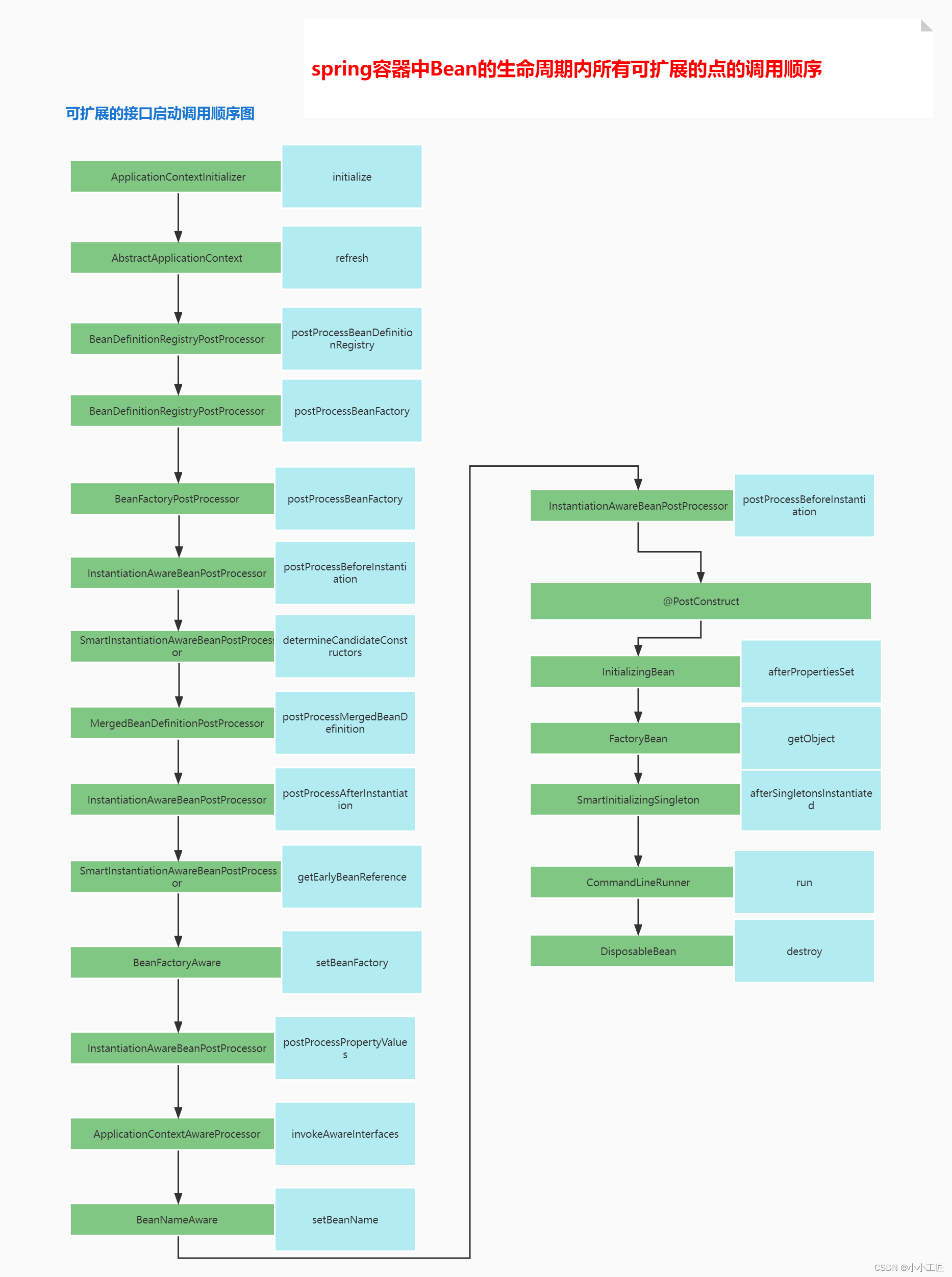
org.springframework.beans.factory.config.BeanFactoryPostProcessor
这个接口是beanFactory的扩展接口,调用时机在spring在读取beanDefinition信息之后,实例化bean之前。
在这个时机,用户可以通过实现这个扩展接口来自行处理一些东西,比如修改已经注册的beanDefinition的元信息
package org.springframework.beans.factory.config; import org.springframework.beans.BeansException; /** * Factory hook that allows for custom modification of an application context's * bean definitions, adapting the bean property values of the context's underlying * bean factory. * *Useful for custom config files targeted at system administrators that * override bean properties configured in the application context. See * {@link PropertyResourceConfigurer} and its concrete implementations for * out-of-the-box solutions that address such configuration needs. * *
A {@code BeanFactoryPostProcessor} may interact with and modify bean * definitions, but never bean instances. Doing so may cause premature bean * instantiation, violating the container and causing unintended side-effects. * If bean instance interaction is required, consider implementing * {@link BeanPostProcessor} instead. * *
Registration
*An {@code ApplicationContext} auto-detects {@code BeanFactoryPostProcessor} * beans in its bean definitions and applies them before any other beans get created. * A {@code BeanFactoryPostProcessor} may also be registered programmatically * with a {@code ConfigurableApplicationContext}. * *
Ordering
*{@code BeanFactoryPostProcessor} beans that are autodetected in an * {@code ApplicationContext} will be ordered according to * {@link org.springframework.core.PriorityOrdered} and * {@link org.springframework.core.Ordered} semantics. In contrast, * {@code BeanFactoryPostProcessor} beans that are registered programmatically * with a {@code ConfigurableApplicationContext} will be applied in the order of * registration; any ordering semantics expressed through implementing the * {@code PriorityOrdered} or {@code Ordered} interface will be ignored for * programmatically registered post-processors. Furthermore, the * {@link org.springframework.core.annotation.Order @Order} annotation is not * taken into account for {@code BeanFactoryPostProcessor} beans. * * @author Juergen Hoeller * @author Sam Brannen * @since 06.07.2003 * @see BeanPostProcessor * @see PropertyResourceConfigurer */
@FunctionalInterface public interface BeanFactoryPostProcessor { /** * Modify the application context's internal bean factory after its standard * initialization. All bean definitions will have been loaded, but no beans * will have been instantiated yet. This allows for overriding or adding * properties even to eager-initializing beans. * @param beanFactory the bean factory used by the application context * @throws org.springframework.beans.BeansException in case of errors */ void postProcessBeanFactory(ConfigurableListableBeanFactory beanFactory) throws BeansException; }- 1
- 2
- 3
- 4
- 5
- 6
- 7
- 8
- 9
- 10
- 11
- 12
- 13
- 14
- 15
- 16
- 17
- 18
- 19
- 20
- 21
- 22
- 23
- 24
- 25
- 26
- 27
- 28
- 29
- 30
- 31
- 32
- 33
- 34
- 35
- 36
- 37
- 38
- 39
- 40
- 41
- 42
- 43
- 44
- 45
- 46
- 47
- 48
- 49
- 50
- 51
- 52
- 53
- 54
- 55
- 56
- 57
- 58
- 59
- 60
- 61
spring容器初始化时,从资源中读取到bean的相关定义后,保存在beanFactory的成员变量中(DefaultListableBeanFactory#beanDefinitionMap)
private final Map<String, BeanDefinition> beanDefinitionMap = new ConcurrentHashMap<>(256);- 1
实例化bean的操作就是依据这些BeanDefinition来做的。
在实例化之前,spring允许我们通过自定义扩展来改变bean的定义,定义一旦变了,后面的实例也就变了,而beanFactory后置处理器BeanFactoryPostProcessor就是用来改变bean定义的。
源码探究
AbstractApplicationContext#refresh 继续走起
继续
// Invoke factory processors registered as beans in the context. invokeBeanFactoryPostProcessors(beanFactory);- 1
- 2
主要功能是: 找出所有beanFactory后置处理器,并且调用这些处理器来改变bean的定义
继续
org.springframework.context.support.AbstractApplicationContext#invokeBeanFactoryPostProcessors/** * Instantiate and invoke all registered BeanFactoryPostProcessor beans, * respecting explicit order if given. *Must be called before singleton instantiation. */
protected void invokeBeanFactoryPostProcessors(ConfigurableListableBeanFactory beanFactory) { PostProcessorRegistrationDelegate.invokeBeanFactoryPostProcessors(beanFactory, getBeanFactoryPostProcessors()); .......- 1
- 2
- 3
- 4
- 5
- 6
- 7
- 8
- 9
我们重点关注PostProcessorRegistrationDelegate#invokeBeanFactoryPostProcessors
PostProcessorRegistrationDelegate.invokeBeanFactoryPostProcessors(beanFactory, getBeanFactoryPostProcessors());- 1
代码比较长,我们逐段看一下
1 是否实现BeanDefinitionRegistryPostProcessor 接口,分别写入集合
for (BeanFactoryPostProcessor postProcessor : beanFactoryPostProcessors) { if (postProcessor instanceof BeanDefinitionRegistryPostProcessor) { BeanDefinitionRegistryPostProcessor registryProcessor = (BeanDefinitionRegistryPostProcessor) postProcessor; registryProcessor.postProcessBeanDefinitionRegistry(registry); registryProcessors.add(registryProcessor); } else { regularPostProcessors.add(postProcessor); } }- 1
- 2
- 3
- 4
- 5
- 6
- 7
- 8
- 9
- 10
- 11
遍历入参 beanFactoryPostProcessors , 是否实现了BeanDefinitionRegistryPostProcessor,分别放入两个集合:registryProcessors和regularPostProcessors;
2 处理实现了的PriorityOrdered和 BeanDefinitionRegistryPostProcessors 的 bean
// First, invoke the BeanDefinitionRegistryPostProcessors that implement PriorityOrdered. String[] postProcessorNames = beanFactory.getBeanNamesForType(BeanDefinitionRegistryPostProcessor.class, true, false); for (String ppName : postProcessorNames) { if (beanFactory.isTypeMatch(ppName, PriorityOrdered.class)) { currentRegistryProcessors.add(beanFactory.getBean(ppName, BeanDefinitionRegistryPostProcessor.class)); processedBeans.add(ppName); } } sortPostProcessors(currentRegistryProcessors, beanFactory); registryProcessors.addAll(currentRegistryProcessors); invokeBeanDefinitionRegistryPostProcessors(currentRegistryProcessors, registry, beanFactory.getApplicationStartup()); currentRegistryProcessors.clear();- 1
- 2
- 3
- 4
- 5
- 6
- 7
- 8
- 9
- 10
- 11
- 12
- 13
- 14
找出所有实现了BeanDefinitionRegistryPostProcessor接口和PriorityOrdered接口的bean,放入registryProcessors集合,根据PriorityOrdered接口来排序,然后这些bean会被
invokeBeanDefinitionRegistryPostProcessors方法执行;
3. 处理实现了的Ordered和BeanDefinitionRegistryPostProcessors 的 bean
// Next, invoke the BeanDefinitionRegistryPostProcessors that implement Ordered. postProcessorNames = beanFactory.getBeanNamesForType(BeanDefinitionRegistryPostProcessor.class, true, false); for (String ppName : postProcessorNames) { if (!processedBeans.contains(ppName) && beanFactory.isTypeMatch(ppName, Ordered.class)) { currentRegistryProcessors.add(beanFactory.getBean(ppName, BeanDefinitionRegistryPostProcessor.class)); processedBeans.add(ppName); } } sortPostProcessors(currentRegistryProcessors, beanFactory); registryProcessors.addAll(currentRegistryProcessors); invokeBeanDefinitionRegistryPostProcessors(currentRegistryProcessors, registry, beanFactory.getApplicationStartup()); currentRegistryProcessors.clear();- 1
- 2
- 3
- 4
- 5
- 6
- 7
- 8
- 9
- 10
- 11
- 12
找出所有实现了BeanDefinitionRegistryPostProcessor接口和Ordered接口的bean,放入registryProcessors集合,根据Ordered接口来排序,然后这些bean会被
invokeBeanDefinitionRegistryPostProcessors方法执行;
4 处理其他实现了BeanDefinitionRegistryPostProcessor的bean
// Finally, invoke all other BeanDefinitionRegistryPostProcessors until no further ones appear. boolean reiterate = true; while (reiterate) { reiterate = false; postProcessorNames = beanFactory.getBeanNamesForType(BeanDefinitionRegistryPostProcessor.class, true, false); for (String ppName : postProcessorNames) { if (!processedBeans.contains(ppName)) { currentRegistryProcessors.add(beanFactory.getBean(ppName, BeanDefinitionRegistryPostProcessor.class)); processedBeans.add(ppName); reiterate = true; } } sortPostProcessors(currentRegistryProcessors, beanFactory); registryProcessors.addAll(currentRegistryProcessors); invokeBeanDefinitionRegistryPostProcessors(currentRegistryProcessors, registry, beanFactory.getApplicationStartup()); currentRegistryProcessors.clear(); }- 1
- 2
- 3
- 4
- 5
- 6
- 7
- 8
- 9
- 10
- 11
- 12
- 13
- 14
- 15
- 16
- 17
- 18
对于那些实现了BeanDefinitionRegistryPostProcessor接口,但是没有实现PriorityOrdered和Ordered的bean也被找出来,然后这些bean会被
invokeBeanDefinitionRegistryPostProcessors方法执行
5 invokeBeanFactoryPostProcessors
// Now, invoke the postProcessBeanFactory callback of all processors handled so far. invokeBeanFactoryPostProcessors(registryProcessors, beanFactory); invokeBeanFactoryPostProcessors(regularPostProcessors, beanFactory);- 1
- 2
- 3
6 除了试下BeanDefinitionRegistryPostProcessor之外的其他 实现了BeanFactoryPostProcessor接口的bean 分类
// Do not initialize FactoryBeans here: We need to leave all regular beans // uninitialized to let the bean factory post-processors apply to them! String[] postProcessorNames = beanFactory.getBeanNamesForType(BeanFactoryPostProcessor.class, true, false); // Separate between BeanFactoryPostProcessors that implement PriorityOrdered, // Ordered, and the rest. List<BeanFactoryPostProcessor> priorityOrderedPostProcessors = new ArrayList<>(); List<String> orderedPostProcessorNames = new ArrayList<>(); List<String> nonOrderedPostProcessorNames = new ArrayList<>(); for (String ppName : postProcessorNames) { if (processedBeans.contains(ppName)) { // skip - already processed in first phase above } else if (beanFactory.isTypeMatch(ppName, PriorityOrdered.class)) { priorityOrderedPostProcessors.add(beanFactory.getBean(ppName, BeanFactoryPostProcessor.class)); } else if (beanFactory.isTypeMatch(ppName, Ordered.class)) { orderedPostProcessorNames.add(ppName); } else { nonOrderedPostProcessorNames.add(ppName); } }- 1
- 2
- 3
- 4
- 5
- 6
- 7
- 8
- 9
- 10
- 11
- 12
- 13
- 14
- 15
- 16
- 17
- 18
- 19
- 20
- 21
- 22
- 23
- 24
找出实现了BeanFactoryPostProcessor接口的bean,注意这里已将前面实现了BeanDefinitionRegistryPostProcessor接口的bean给剔除了
if (processedBeans.contains(ppName)) { // skip - already processed in first phase above }- 1
- 2
- 3
将这些bean分为三类:
- 实现了PriorityOrdered接口的放入priorityOrderedPostProcessors,
- 实现了Ordered接口的放入orderedPostProcessorNames,
- 其他的放入nonOrderedPostProcessorNames,这段代码是关键,自定义的实现BeanFactoryPostProcessor接口的bean就会在此处被查找出来。
7 处理 PriorityOrdered ,invokeBeanDefinitionRegistryPostProcessors
// First, invoke the BeanFactoryPostProcessors that implement PriorityOrdered. sortPostProcessors(priorityOrderedPostProcessors, beanFactory); invokeBeanFactoryPostProcessors(priorityOrderedPostProcessors, beanFactory);- 1
- 2
- 3
8 处理 Ordered ,invokeBeanDefinitionRegistryPostProcessors
// Next, invoke the BeanFactoryPostProcessors that implement Ordered. List<BeanFactoryPostProcessor> orderedPostProcessors = new ArrayList<>(orderedPostProcessorNames.size()); for (String postProcessorName : orderedPostProcessorNames) { orderedPostProcessors.add(beanFactory.getBean(postProcessorName, BeanFactoryPostProcessor.class)); } sortPostProcessors(orderedPostProcessors, beanFactory); invokeBeanFactoryPostProcessors(orderedPostProcessors, beanFactory);- 1
- 2
- 3
- 4
- 5
- 6
- 7
9 处理剩下的 ,invokeBeanDefinitionRegistryPostProcessors
// Finally, invoke all other BeanFactoryPostProcessors. List<BeanFactoryPostProcessor> nonOrderedPostProcessors = new ArrayList<>(nonOrderedPostProcessorNames.size()); for (String postProcessorName : nonOrderedPostProcessorNames) { nonOrderedPostProcessors.add(beanFactory.getBean(postProcessorName, BeanFactoryPostProcessor.class)); } invokeBeanFactoryPostProcessors(nonOrderedPostProcessors, beanFactory);- 1
- 2
- 3
- 4
- 5
- 6
- 7
10 invokeBeanDefinitionRegistryPostProcessors & invokeBeanFactoryPostProcessors 分析
从上面的分析可以发现,所有实现了
BeanFactoryPostProcessor接口的bean,都被作为入参,然后调用了invokeBeanDefinitionRegistryPostProcessors或者invokeBeanFactoryPostProcessors方法去处理/** * Invoke the given BeanDefinitionRegistryPostProcessor beans. */ private static void invokeBeanDefinitionRegistryPostProcessors( Collection<? extends BeanDefinitionRegistryPostProcessor> postProcessors, BeanDefinitionRegistry registry, ApplicationStartup applicationStartup) { for (BeanDefinitionRegistryPostProcessor postProcessor : postProcessors) { StartupStep postProcessBeanDefRegistry = applicationStartup.start("spring.context.beandef-registry.post-process") .tag("postProcessor", postProcessor::toString); postProcessor.postProcessBeanDefinitionRegistry(registry); postProcessBeanDefRegistry.end(); } }- 1
- 2
- 3
- 4
- 5
- 6
- 7
- 8
- 9
- 10
- 11
- 12
- 13
/** * Invoke the given BeanFactoryPostProcessor beans. */ private static void invokeBeanFactoryPostProcessors( Collection<? extends BeanFactoryPostProcessor> postProcessors, ConfigurableListableBeanFactory beanFactory) { for (BeanFactoryPostProcessor postProcessor : postProcessors) { StartupStep postProcessBeanFactory = beanFactory.getApplicationStartup().start("spring.context.bean-factory.post-process") .tag("postProcessor", postProcessor::toString); postProcessor.postProcessBeanFactory(beanFactory); postProcessBeanFactory.end(); } }- 1
- 2
- 3
- 4
- 5
- 6
- 7
- 8
- 9
- 10
- 11
- 12
- 13
对每个
BeanFactoryPostProcessor接口的实现类,都调用了其接口方法。
不同的是 对于实现了BeanDefinitionRegistryPostProcessor接口的bean,调用其postProcessBeanDefinitionRegistry方法的时候,入参是BeanDefinitionRegistry,而非BeanFactory,因此,实现了BeanDefinitionRegistryPostProcessor接口的bean,其postProcessBeanDefinitionRegistry在被调用时,可以通过入参BeanDefinitionRegistry来做更多和bean的定义有关的操作,例如注册bean等等、
BeanFactoryPostProcessor的处理流程
小结一下:
ApplicationContext扩展类可以调用AbstractApplicationContext.addBeanFactoryPostProcessor方法,将自定义的BeanFactoryPostProcessor实现类保存到ApplicationContext中;- spring容器初始化时,上一步中被加入到
ApplicationContext的bean会被优先调用其postProcessBeanFactory方法; - 自定义的
BeanFactoryPostProcessor接口实现类,也会被找出来,然后调用其postProcessBeanFactory方法; postProcessBeanFactory方法被调用时,beanFactory会被作为参数传入,自定义类中可以使用该参数来处理bean的定义,达到业务需求;- 此时的spring容器还没有开始实例化bean,因此自定义的
BeanFactoryPostProcessor实现类不要做与bean实例有关的操作,而是做一些与bean定义有关的操作,例如修改某些字段的值,这样后面实例化的bean的就会有相应的改变;
扩展方式
package com.artisan.bootspringextend.testextends; import lombok.extern.slf4j.Slf4j; import org.springframework.beans.BeansException; import org.springframework.beans.factory.config.BeanFactoryPostProcessor; import org.springframework.beans.factory.config.ConfigurableListableBeanFactory; import org.springframework.context.annotation.Configuration; /** * @author 小工匠 * @version 1.0 * @date 2022/11/27 16:58 * @mark: show me the code , change the world */ @Slf4j @Configuration public class ExtendBeanFactoryPostProcessor implements BeanFactoryPostProcessor { @Override public void postProcessBeanFactory(ConfigurableListableBeanFactory beanFactory) throws BeansException { log.info("----->postProcessBeanFactory called "); } }- 1
- 2
- 3
- 4
- 5
- 6
- 7
- 8
- 9
- 10
- 11
- 12
- 13
- 14
- 15
- 16
- 17
- 18
- 19
- 20
- 21
- 22
- 23
- 24

-
相关阅读:
Reids Cluster集群部署
list(链表)容器(二)
Netty 介绍 与 线程模型
测试系列:输入一个正整数n,然后输出n对应的二进制数-------要求采用递归算法实现
线性代数知识点搜刮
对产品实现汇率换算服务(将两个CompletableFuture对象整合起来,无论它们是否存在依赖)
计算机网络——物理层(数字传输系统)
【数据结构与算法】时间复杂度&&空间复杂度
足疗APP
UVA-12325 宝箱 题解答案代码 算法竞赛入门经典第二版
- 原文地址:https://blog.csdn.net/yangshangwei/article/details/128061731
