-
retrofit网络框架源码解析
- App应用程序通过Retrofit 请求网络,实际上是使用Retrofit接口层封装请求参数,之后由OkHttp完成后续的请求操作。
- 在服务器返回数据之后,OkHttp将原始的结果交给Retrofit,Retrofit根据用户的需求对结果进行解析。
一、retrofit框架网络请求过程7个步骤:
-
- 添加Retrofit库的依赖,添加网络权限
-
- 创建接收服务器返回数据的类
-
- 创建用于描述网络请求的接口
-
- 创建Retrofit实例
-
- 创建网络请求接口实例
-
- 发送网络请求(同步/异步)
-
- 处理服务器返回的数据
或者也可以将网络通信归纳成如下八步:
- 创建retrofit实例
- 定义一个网络请求接口并为接口中的方法添加注解
- 通过动态代理生产网络请求对象
- 通过网络请求适配器将网络请求对象进行平台适配
- 通过网络请求适配器发送网络请求
- 通过数据转换器解析数据
- 通过回调执行器切换线程
- 用户在主线程处理返回结果
二、代理
-
静态代理模式:为其他对象提供一种代理,用以控制对这个对象的访问

-
动态代理模式:代理类在程序运行时创建的代理方式
相比静态代理,动态代理的优势它能很方便的对我们代理类的函数进行统一的处理,不用频繁的修改每一个代理类函数
(1)jdk动态代理–需要客户端辅助写些接口来操作
(2)CGLIB–可以直接修改字节码 -
每个代理类的对象都会关联一个表示内部处理逻辑的InvocationHandler接口的实现
-
invoke方法的参数中可以获取参数
-
invoke方法的返回值被返回给使用者
三、Retrofit源码解析
Retrofit中成员变量:
-
private final Map
-
final okhttp3.Call.Factory callFactory; //请求网络的OkHttp的工厂,默认为OkHttpClient,该工厂的作用就是生产OkHttpClient
-
final HttpUrl baseUrl; //网络请求的基地址,跟接口注解中的相对地址可以拼接成一个完整的请求地址
-
final List
converterFactories; //数据转换器工厂的集合,数据转换器就是对请求网络之后得到的Response所进行的转换,转换成应用java对象,默认情况下使用的是GsonCoverterFactory。该集合就是用于放置数据转换器的工厂,同时这个工厂的作用也是用于生产所需要的数据转换器 -
final List
callAdapterFactories; //网络请求适配器的工厂集合,适配器就是把call对象转换成其他类型,比如Rxjava平台的call。该集合就是用于放置网络适配器工厂,同时这个工厂的作用也是用于生产CallAdapter -
final @Nullable Executor callbackExecutor; //用于执行回调,在Android平台中,默认使用的是MainThreadExecutor,即主线程中的executor
-
final boolean validateEagerly; // 表示的是一个标志位,是否需要立即解析接口中的方法,该标志位是用于动态代理中解析定义好接口中的方法和注解当中
Retrofit内部类Builder的成员变量:
-
private final Platform platform; //Retrofit适配的平台,包括android、ios、java8,默认情况下使用的是android平台
-
private @Nullable okhttp3.Call.Factory callFactory; //表示请求网络的okhttp工厂,默认情况下使用的是okhttp来进行网络请求的,默认值为OkHttpClient
-
private @Nullable HttpUrl baseUrl; //网络请求的Url基地址
-
private final List
converterFactories = new ArrayList<>(); //数据转换器工厂的集合,数据转换器就是对请求网络之后得到的Response所进行的转换,转换成应用java对象,默认情况下使用的是GsonCoverterFactory。该集合就是用于放置数据转换器的工厂,同时这个工厂的作用也是用于生产所需要的数据转换器 -
private final List
callAdapterFactories = new ArrayList<>(); //网络请求适配器的工厂集合,适配器就是把call对象转换成其他类型,比如Rxjava平台的call。该集合就是用于放置网络适配器工厂,同时这个工厂的作用也是用于生产CallAdapter -
private @Nullable Executor callbackExecutor; //用于执行回调,在Android平台中,默认使用的是MainThreadExecutor,即主线程中的executor
-
private boolean validateEagerly; /// 表示的是一个标志位,是否需要立即解析接口中的方法,该标志位是用于动态代理中解析定义好接口中的方法和注解当中
Builder类中的2~7成员变量跟Retrofit类中的2-7成员变量是一样的
Retrofit的build()
作用:build()方法就是将Retrofit类中所有成员变量配置完毕。public Retrofit build() { if (baseUrl == null) { throw new IllegalStateException("Base URL required."); } okhttp3.Call.Factory callFactory = this.callFactory; if (callFactory == null) { callFactory = new OkHttpClient(); //默认使用OkHttpClient进行网络请求 } Executor callbackExecutor = this.callbackExecutor; if (callbackExecutor == null) { callbackExecutor = platform.defaultCallbackExecutor(); } // Make a defensive copy of the adapters and add the default Call adapter. ListcallAdapterFactories = new ArrayList<>(this.callAdapterFactories); callAdapterFactories.addAll(platform.defaultCallAdapterFactories(callbackExecutor)); // Make a defensive copy of the converters. List converterFactories = new ArrayList<>( 1 + this.converterFactories.size() + platform.defaultConverterFactoriesSize()); // Add the built-in converter factory first. This prevents overriding its behavior but also // ensures correct behavior when using converters that consume all types. converterFactories.add(new BuiltInConverters()); converterFactories.addAll(this.converterFactories); converterFactories.addAll(platform.defaultConverterFactories()); return new Retrofit( callFactory, baseUrl, unmodifiableList(converterFactories), unmodifiableList(callAdapterFactories), callbackExecutor, validateEagerly); } - 1
- 2
- 3
- 4
- 5
- 6
- 7
- 8
- 9
- 10
- 11
- 12
- 13
- 14
- 15
- 16
- 17
- 18
- 19
- 20
- 21
- 22
- 23
- 24
- 25
- 26
- 27
- 28
- 29
- 30
- 31
- 32
- 33
- 34
- 35
- 36
- 37
- 38
CallAdapter

RxJavaCallAdapterFactory

retrofit请求
-
同步:OkHttpCall.execute()

-
异步:OkHttpCall.enqueue()
Retrofit采用的设计模式:
-
- 构建者模式
Retrofit retrofit = new Retrofit.Builder() .baseUrl("http://***.***.com/") //设置网络请求的url地址,这个是基地址 .addCallAdapterFactory(RxJava2CallAdapterFactory.create()) .addConverterFactory(AppGsonConverterFactory.create()) .build();- 1
- 2
- 3
- 4
- 5
-
- 工厂模式
CallAdapter.Factory
/** * Creates {@link CallAdapter} instances based on the return type of {@linkplain * Retrofit#create(Class) the service interface} methods. */ abstract class Factory { /** * Returns a call adapter for interface methods that return {@code returnType}, or null if it * cannot be handled by this factory. */ public abstract @Nullable CallAdapter get( Type returnType, Annotation[] annotations, Retrofit retrofit); /** * Extract the upper bound of the generic parameter at {@code index} from {@code type}. For * example, index 1 of {@code Map- 1
- 2
- 3
- 4
- 5
- 6
- 7
- 8
- 9
- 10
- 11
- 12
- 13
- 14
- 15
- 16
- 17
- 18
- 19
- 20
- 21
- 22
- 23
- 24
- 25
- 26
- 27
- 28
- 29
RxJava2CallAdapterFactory和DefaultCallAdapterFactory 继承于CallAdapter.Factory类,并复写get()方法来返回不同的CallAdapter类型
-
- 静态工厂模式
public class Platform { private static final Platform PLATFORM = findPlatform(); ... ... public static Platform get() { return PLATFORM; } ... ... /** Attempt to match the host runtime to a capable Platform implementation. */ private static Platform findPlatform() { if (isAndroid()) { return findAndroidPlatform(); } else { return findJvmPlatform(); } } ... ...- 1
- 2
- 3
- 4
- 5
- 6
- 7
- 8
- 9
- 10
- 11
- 12
- 13
- 14
- 15
- 16
- 17
-
- 外观/门面设计模式
定义:外部与一个子系统进行通信,必须通过一个统一外观的对象(也就是门面)来进行。为这个子系统的一组接口提供一个一致的界面。对外提供统一的接口,方便与外部之间的通信
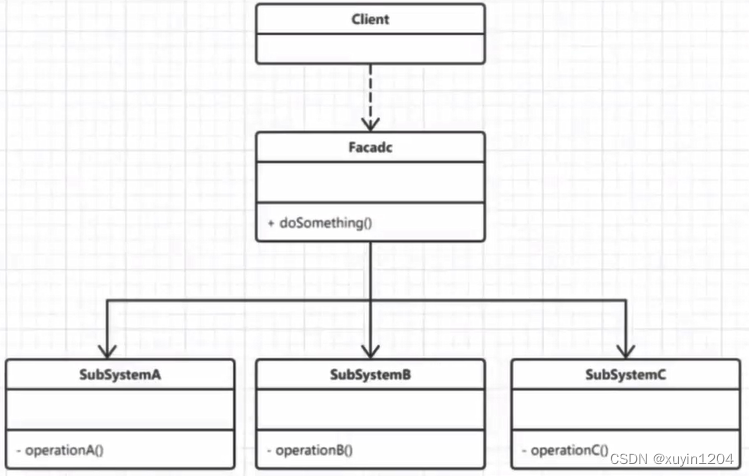
- 外观/门面设计模式
Retrofit retrofit = new Retrofit.Builder() .baseUrl("http://***.***.com/") //设置网络请求的url地址,这个是基地址 .addCallAdapterFactory(RxJava2CallAdapterFactory.create()) .addConverterFactory(AppGsonConverterFactory.create()) .build();- 1
- 2
- 3
- 4
- 5
Retrofit类的设计就是一个外观模式
-
- 策略模式

Retrofit中的CallAdapter采用了策略模式
策略模式和工厂模式的区别:策略模式强调的是不同对象的策略方法的具体实现,侧重于方法的实现;工厂模式强调的是生产对象
- 策略模式
-
- 适配器模式
Retrofit retrofit = new Retrofit.Builder() .baseUrl("http://***.***.com/") //设置网络请求的url地址,这个是基地址 .addCallAdapterFactory(RxJava2CallAdapterFactory.create()) //这个地方采用适配器模式 .addConverterFactory(AppGsonConverterFactory.create()) .build();- 1
- 2
- 3
- 4
- 5
CallAdapter类中adapter()方法
T adapt(Callcall); - 1
-
- 动态代理模式
publicT create(final Class service) { validateServiceInterface(service); return (T) Proxy.newProxyInstance( service.getClassLoader(), new Class[] {service}, new InvocationHandler() { private final Platform platform = Platform.get(); private final Object[] emptyArgs = new Object[0]; @Override public @Nullable Object invoke(Object proxy, Method method, @Nullable Object[] args) throws Throwable { // If the method is a method from Object then defer to normal invocation. if (method.getDeclaringClass() == Object.class) { return method.invoke(this, args); } args = args != null ? args : emptyArgs; return platform.isDefaultMethod(method) ? platform.invokeDefaultMethod(method, service, proxy, args) : loadServiceMethod(method).invoke(args); } }); } - 1
- 2
- 3
- 4
- 5
- 6
- 7
- 8
- 9
- 10
- 11
- 12
- 13
- 14
- 15
- 16
- 17
- 18
- 19
- 20
- 21
- 22
- 23
- 24
-
- 观察者设计模式
Call/OkHttpCall --> 被观察者
异步请求的Callback -->观察者
- 观察者设计模式
-
相关阅读:
力扣最热一百题——每日温度
【Unity】XML文件的解析和生成
湘潭大学 2023年下学期《C语言》作业0x03-循环1 XTU OJ 1094,1095,1096,1112,1113
人造肉在中国还有未来吗?
Loguru:一个超酷的Python库
flask-admin菜鸟学习笔记
【吃瓜之旅】第五章吃瓜学习
载银纳米TiO2/壳聚糖水凝胶/pH/GSH响应羧甲基壳聚糖水凝胶和纳米凝胶的制备
Javaweb安全——JSP Webshell
什么是腾讯云云硬盘?有哪些优势?应用于哪些场景?
- 原文地址:https://blog.csdn.net/xuyin1204/article/details/127887418
