-
处理一对多映射关系的两种方式
一对多关系实例:
员工表:

部门表:
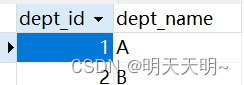
员工-部门关系表中,一个部门对应多个员工,想要在部门表中查询出对应的员工信息,就要解决一对多映射关系。解决方法:在Dept实体类中添加员工的LIst集合
public class Dept { private Integer deptId; private String deptName; //处理一对多的关系 private Listemps; } 有两种方式解决此问题
1. Collection标签
标签中映射Emp员工属性值 property:关联的属性
ofType:集合内部元素的类型(List
就是Emp类型) - Dept getDeptAndEmpByStepByCollection(@Param("deptId") Integer deptId);
- <resultMap id="getDeptAndEmpByStepByCollection" type="dept">
- <id column="dept_id" property="deptId">id>
- <result column="dept_name" property="deptName">result>
- <collection property="emps" ofType="emp">
- <id column="emp_id" property="empId">id>
- <result column="emp_name" property="empName">result>
- collection>
- resultMap>
- <select id="getDeptAndEmpByStepByCollection" resultMap="getDeptAndEmpByStepByCollection">
- SELECT * FROM t_dept left join t_emp on t_dept.dept_id = t_emp.dept_id WHERE t_dept.dept_id = #{deptId}
- select>
2. 分步查询
分别通过两个mapper查询各自的实体类属性,然后通过collection标签关联Emp.
Empmapper
- List<Emp> getDeptAndEmpByStepTwo(@Param("deptId") Integer deptId);
- <select id = "getDeptAndEmpByStepTwo" resultType="emp">
- select * from t_emp where dept_id = #{dept_id}
- select>
DeptMapper
- <resultMap id="getDeptAndEmpByStepOneResultMap" type="dept">
- <id column="dept_id" property="deptId">id>
- <result column="dept_name" property="deptName">result>
- <collection property="emps"
- select="com.zt.mybatis.mapper.EmpMapper.getDeptAndEmpByStepTwo"
- column="dept_id">
- collection>
- resultMap>
- <select id="getDeptAndEmpByStepOne" resultMap="getDeptAndEmpByStepOneResultMap">
- select * from t_dept where dept_id = #{deptId}
- select>
结果:
- Preparing: select * from t_dept where dept_id = ? (BaseJdbcLogger.java:137)
- Parameters: 2(Integer) (BaseJdbcLogger.java:137)
- Total: 1 (BaseJdbcLogger.java:137)
- Preparing: select * from t_emp where dept_id = ? (BaseJdbcLogger.java:137)
- Parameters: 2(Integer) (BaseJdbcLogger.java:137)
- Total: 2 (BaseJdbcLogger.java:137)
- Dept(deptId=2, deptName=B, emps=[Emp(empId=2, empName=李四, age=34, gender=男, dept=null), Emp(empId=4, empName=张涛, age=24, gender=男, dept=null)])
-
相关阅读:
MindStudio模型训练场景精度比对全流程和结果分析
在智能家居领域产品中常用芯片
【定时开关机】windows 10 如何设置定时开关机
leetcode/爬楼梯的最少成本
Northwestern University-844计算机科学与技术/软件工程-复试注意事项【考研复习】
用XML的方式装配Bean
漫画:国内都有哪些程序员大牛?
python爬虫小案例——汽车之家
cnn训练自己数据集
ES6 -- 模块化(CommonJS、AMD、ES Module)
- 原文地址:https://blog.csdn.net/qq_41950447/article/details/127822825
