-
代码随想录算法训练营004| 19.删除链表的倒数第N个节点,24. 两两交换链表中的节点,142.环形链表II,面试题 02.07. 链表相交
19. 删除链表的倒数第 N 个节点
题目链接:https://leetcode.cn/problems/remove-nth-node-from-end-of-list/
解题思路
1. 双指针法
双指针的经典应用,如果要删除倒数第 n 个节点,让 fast 移动 n 步,然后让 fast 和 slow 同时移动,直到 fast 指向链表末尾。删掉 slow 所指向的节点就可以了。
- 定义 fast 指针和 slow 指针,初始值为虚拟头结点
- fast 首先走 n + 1 步 ,为什么是 n+1 呢,因为只有这样同时移动的时候 slow 才能指向删除节点的上一个节点(方便做删除操作)
- fast 和 slow 同时移动,之道 fast 指向末尾
- 删除 slow 指向的下一个节点
代码
/** * Definition for singly-linked list. * function ListNode(val, next) { * this.val = (val===undefined ? 0 : val) * this.next = (next===undefined ? null : next) * } */ /** * @param {ListNode} head * @param {number} n * @return {ListNode} */ var removeNthFromEnd = function (head, n) { let dummyHead = new ListNode(0); // 设置一个虚拟头结点 dummyHead.next = head; // 将虚拟头结点指向head,这样方面后面做删除操作 let slow = dummyHead; // 慢指针 let fast = dummyHead; // 快指针 // 让快指针先走n步 while (n--) { fast = fast.next; } fast = fast.next; // fast再提前走一步,因为需要让slow指向删除节点的上一个节点 // 让fast和slow同时移动,直到fast指向链表末尾 while (fast !== null) { fast = fast.next; slow = slow.next; } // 删除节点 slow.next = slow.next.next; return dummyHead.next; };- 1
- 2
- 3
- 4
- 5
- 6
- 7
- 8
- 9
- 10
- 11
- 12
- 13
- 14
- 15
- 16
- 17
- 18
- 19
- 20
- 21
- 22
- 23
- 24
- 25
- 26
- 27
- 28
- 29
- 30
- 31
- 32
- 33
- 34
- 35
24. 两两交换链表中的节点[TODO]
题目链接:https://leetcode-cn.com/problems/swap-nodes-in-pairs/
解题思路
1. 迭代法
当前节点(cur)的下一个节点(node1)与下下一个节点(node2)交换。
a. cur 的 next 为 node2。
b. node2 的 next 为 node1。
c. node1 的 next 为 node2 的下一个节点。
将 cur 跳两步,即指向 node1。
终结条件为 cur 没有下一个节点或下下个节点。
由于需要从链表头节点开始交换,所以我们需要在链表头节点添加一个节点 dummy。代码
/** * Definition for singly-linked list. * function ListNode(val, next) { * this.val = (val===undefined ? 0 : val) * this.next = (next===undefined ? null : next) * } */ /** * @param {ListNode} head * @return {ListNode} */ var swapPairs = function (head) { let dummyHead = new ListNode(0); // 设置一个虚拟头结点 dummyHead.next = head; // 将虚拟头结点指向head,这样方面后面做删除操作 let cur = dummyHead; while (cur.next != null && cur.next.next != null) { let tmp = cur.next; // 记录临时节点 tmp1 = cur.next.next.next; // 记录临时节点 cur.next = cur.next.next; // 步骤一 cur.next.next = tmp; // 步骤二 cur.next.next.next = tmp1; // 步骤三 cur = cur.next.next; // cur移动两位,准备下一轮交换 } return dummyHead.next; };- 1
- 2
- 3
- 4
- 5
- 6
- 7
- 8
- 9
- 10
- 11
- 12
- 13
- 14
- 15
- 16
- 17
- 18
- 19
- 20
- 21
- 22
- 23
- 24
- 25
- 26
- 27
2.
题目要求不能改变节点里面的值。
1)首先先定义一个不动的首节点
firstNode,后面节点移来移去时才不会受影响
2)以[1, 2, 3, 4]为例,一开始要交换的是[1, 2],因此需要先储存[3, 4],稍后再处理(下图 1)
3)存储后将list要处理的部分[1, 2]跟不处理的部分[3, 4]切开(下图 2),切开的同时让[2]的 next 指向[1]
4)将前一个节点prev的next指向[2],因为[2]的 next 已经指向[1],因此这边已经完成[1, 2]->[2, 1]的步骤
5)接下来把之前存储的[3, 4]接到[1]后面,就可以继续处理[3, 4]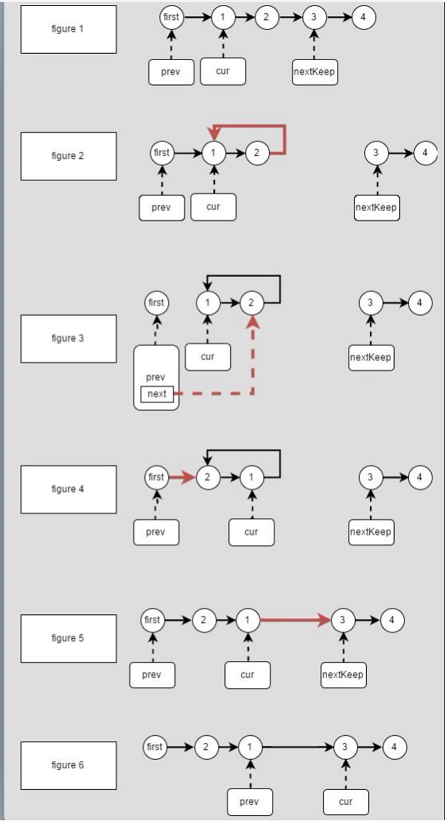
代码
/** * Definition for singly-linked list. * function ListNode(val, next) { * this.val = (val===undefined ? 0 : val) * this.next = (next===undefined ? null : next) * } */ /** * @param {ListNode} head * @return {ListNode} */ var swapPairs = function (head) { let firstNode = new ListNode(0); // 设置一个虚拟头结点 firstNode.next = head; // 将虚拟头结点指向head,这样方便后面做删除操作 let cur = head; let prev = firstNode; // 图1的部分, 目前除了的结点cur,前一个节点prev let nextKeep; // 预备用于存储后面未处理的节点 while (cur != null && cur.next != null) { // 图1,将后面的结点[3,4]存储起来 nextKeep = cur.next.next; // 记录临时节点 // 图2,将[1,2]与[3,4]断开,这时候[2]的next已经变成[1] cur.next.next = cur; // 图3,将prev的next指向[2],注意这时候[2]的next已经指向[1] // 整理一下其实如图4 prev.next = cur.next; // 图5,将[3,4]接回[1] cur.next = nextKeep; // 处理下一组 prev = cur; cur = cur.next; } return firstNode.next; };- 1
- 2
- 3
- 4
- 5
- 6
- 7
- 8
- 9
- 10
- 11
- 12
- 13
- 14
- 15
- 16
- 17
- 18
- 19
- 20
- 21
- 22
- 23
- 24
- 25
- 26
- 27
- 28
- 29
- 30
- 31
- 32
- 33
- 34
- 35
- 36
- 37
- 38
- 39
- 40
- 41
142.环形链表 II[TODO]
题目链接:https://leetcode-cn.com/problems/linked-list-cycle-ii/
解题思路
1. 快慢指针
- 声明两个指针快指针
fast、慢指针slow - 判断链表是否有环:
fast、slow从头部出发,fast走两步,slow走一步,如果可以相遇,则环存在 - 从环内某个节点开始计数,再回到此节点时得到链表环的长度
length fast、slow回到head节点,让fast先走length步,当slow和fast相遇时即为链表环的起点
代码
/** * Definition for singly-linked list. * function ListNode(val) { * this.val = val; * this.next = null; * } */ /** * @param {ListNode} head * @return {ListNode} */ var detectCycle = function (head) { if (!head || !head.next) { return null; } let slow = head.next; let fast = head.next.next; // 1. 判断是否有环 while (fast !== slow) { if (fast === null || fast.next === null) { return null; } slow = slow.next; fast = fast.next.next; } // 2. 获取环的长度 let temp = fast; let length = 1; slow = slow.next; while (temp !== slow) { slow = slow.next; length++; } // 3. 找公共节点 fast = slow = head; while (length--) { fast = fast.next; } while (fast !== slow) { fast = fast.next; slow = slow.next; } return fast; };- 1
- 2
- 3
- 4
- 5
- 6
- 7
- 8
- 9
- 10
- 11
- 12
- 13
- 14
- 15
- 16
- 17
- 18
- 19
- 20
- 21
- 22
- 23
- 24
- 25
- 26
- 27
- 28
- 29
- 30
- 31
- 32
- 33
- 34
- 35
- 36
- 37
- 38
- 39
- 40
- 41
- 42
- 43
- 44
- 45
- 46
- 47
- 48
- 49
- 50
- 51
- 52
-
相关阅读:
前端vue实现国际化
循环队列的实现
sublime 文件编辑器使用快捷键
UE4 C++设计模式:观察者模式(Observer Pattern)
三大范式,ER图,外键,视图,索引,触发器
[ 笔记 ] 计算机网络安全_4_网络扫描和网络监听
C++面试八股文:什么是左值,什么是右值?
使用Docker搭建MongoDB 5.0版本副本集集群
【计算机网络】NAT机制的工作流程
服务器密码机主要功能及特点 安当加密
- 原文地址:https://blog.csdn.net/weixin_37580235/article/details/127617497
