-
【10】Spring源码-分析篇-AOP源码分析

Spring源码-AOP分析
一、手写AOP回顾
本文我们开始讲解Spring中的AOP原理和源码,我们前面手写了AOP的实现,了解和自己实现AOP应该要具备的内容,我们先回顾下,这对我们理解Spring的AOP是非常有帮助的。
1. 涉及的相关概念
先回顾下核心的概念,比如:Advice,Pointcut,Aspect等

更加形象的描述:

2. 相关核心的设计
Advice:

Pointcut:


Advisor:

织入:


二、AOP相关概念的类结构
回顾了前面的内容,然后我们来看看Spring中AOP是如何来实现的了。
1. Advice类结构
我们先来看看Advice的类结构,advice–》通知,需要增强的功能

相关的说明

2. Pointcut类结构
然后来看看Pointcut的设计,也就是切入点的处理。

Pointcut的两种实现方式

3. Advisor类结构
Advisor的类结构比较简单。一个是PointcutAdvisor,一个是IntroductionAdvisor

我们要看的重点是 PointcutAdvisor 及实现 AspectJPointcutAdvisor。
三、织入的实现
1. BeanPostProcessor
1.1 案例演示
我们通过案例来看,首先使用AOP来增强。
定义切面类
/** * 切面类 */ @Component @EnableAspectJAutoProxy @Aspect public class AspectAdviceBeanUseAnnotation { // 定义一个全局的Pointcut @Pointcut("execution(* com.study.spring.sample.aop.*.do*(..))") public void doMethods() { } @Pointcut("execution(* com.study.spring.sample.aop.*.service*(..))") public void services() { } // 定义一个Before Advice @Before("doMethods() and args(tk,..)") public void before3(String tk) { System.out.println("----------- AspectAdviceBeanUseAnnotation before3 增强 参数tk= " + tk); } @Around("services() and args(name,..)") public Object around2(ProceedingJoinPoint pjp, String name) throws Throwable { System.out.println("--------- AspectAdviceBeanUseAnnotation arround2 参数 name=" + name); System.out.println("----------- AspectAdviceBeanUseAnnotation arround2 环绕-前增强 for " + pjp); Object ret = pjp.proceed(); System.out.println("----------- AspectAdviceBeanUseAnnotation arround2 环绕-后增强 for " + pjp); return ret; } @AfterReturning(pointcut = "services()", returning = "retValue") public void afterReturning(Object retValue) { System.out.println("----------- AspectAdviceBeanUseAnnotation afterReturning 增强 , 返回值为: " + retValue); } @AfterThrowing(pointcut = "services()", throwing = "e") public void afterThrowing(JoinPoint jp, Exception e) { System.out.println("----------- AspectAdviceBeanUseAnnotation afterThrowing 增强 for " + jp); System.out.println("----------- AspectAdviceBeanUseAnnotation afterThrowing 增强 异常 :" + e); } @After("doMethods()") public void after(JoinPoint jp) { System.out.println("----------- AspectAdviceBeanUseAnnotation after 增强 for " + jp); } /* * BeanDefinitionRegistryPostProcessor BeanFactoryPostProcessor * InstantiationAwareBeanPostProcessor Bean实例创建前后 BeanPostProcessor */ }- 1
- 2
- 3
- 4
- 5
- 6
- 7
- 8
- 9
- 10
- 11
- 12
- 13
- 14
- 15
- 16
- 17
- 18
- 19
- 20
- 21
- 22
- 23
- 24
- 25
- 26
- 27
- 28
- 29
- 30
- 31
- 32
- 33
- 34
- 35
- 36
- 37
- 38
- 39
- 40
- 41
- 42
- 43
- 44
- 45
- 46
- 47
- 48
- 49
- 50
- 51
- 52
- 53
需要增强的目标类
@Component public class BeanQ { public void do1(String task, int time) { System.out.println("-------------do1 do " + task + " time:" + time); } public String service1(String name) { System.out.println("-------------servce1 do " + name); return name; } public String service2(String name) { System.out.println("-------------servce2 do " + name); if (!"s1".equals(name)) { throw new IllegalArgumentException("参数 name != s1, name=" + name); } return name + " hello!"; } }- 1
- 2
- 3
- 4
- 5
- 6
- 7
- 8
- 9
- 10
- 11
- 12
- 13
- 14
- 15
- 16
- 17
- 18
- 19
- 20
- 21
测试代码
@Configuration @ComponentScan public class AopMainAnno { public static void main(String[] args) { ApplicationContext context = new AnnotationConfigApplicationContext(AopMainAnno.class); BeanQ bq = context.getBean(BeanQ.class); bq.do1("task1", 20); System.out.println(); bq.service1("service1"); System.out.println(); bq.service2("s1"); } }- 1
- 2
- 3
- 4
- 5
- 6
- 7
- 8
- 9
- 10
- 11
- 12
- 13
- 14
- 15
执行即可看到增强的效果
1.2 @EnableAspectJAutoProxy
我们需要使用代理增强处理,必须添加@EnableAspectJAutoProxy才生效。我们来看看他做了什么事情


在registerOrEscalateApcAsRequired方法中会把上面的Java类注入到容器中。

所以我们需要看看 AnnotationAwareAspectJAutoProxyCreator 的结构
1.3 AnnotationAwareAspectJAutoProxyCreator
我们直接来看类图结构,可以发现其本质就是一个 BeanPostProcessor ,只是扩展了更多的功能。

那么具体处理的逻辑
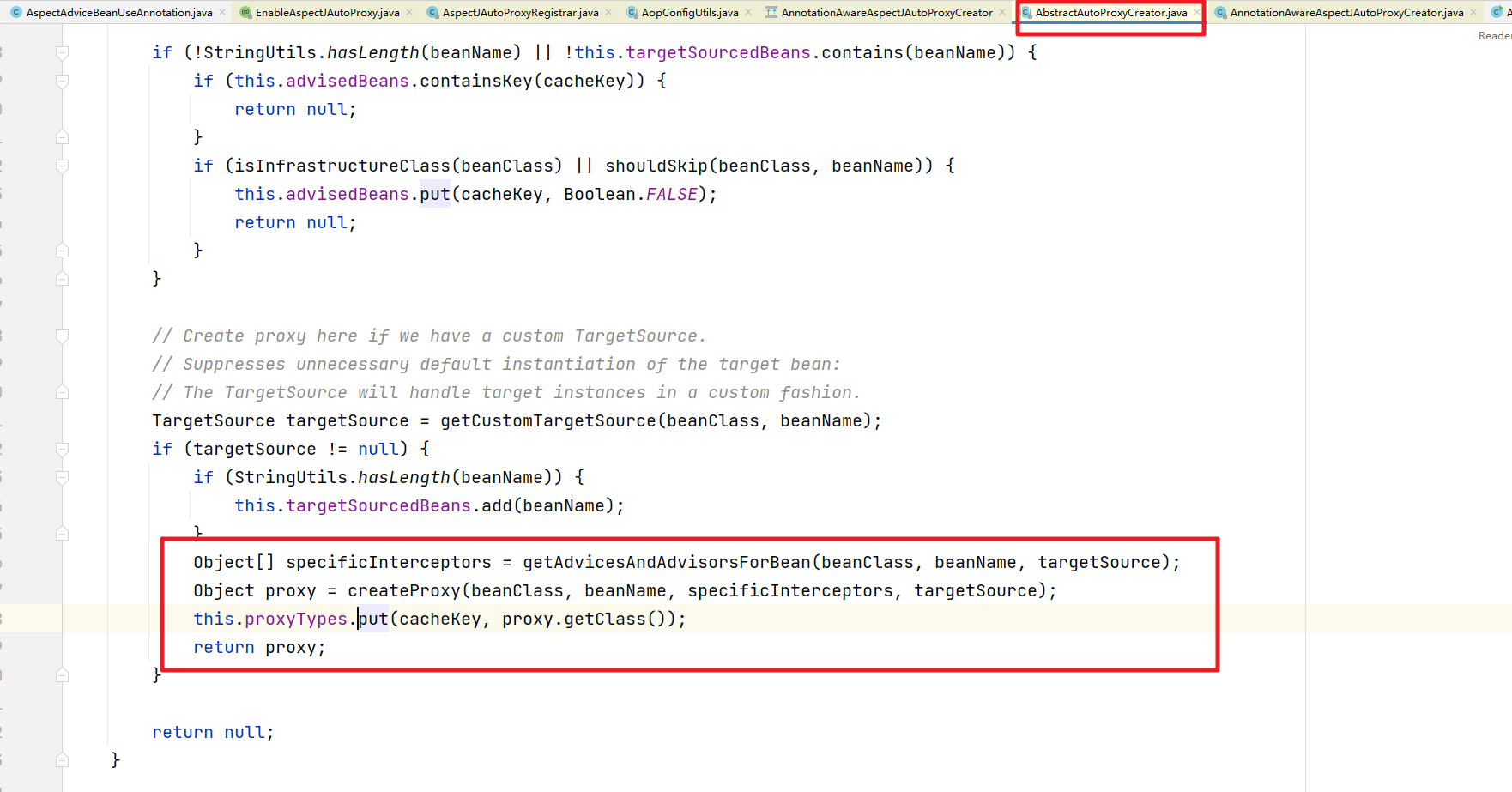
1.4 如何串联
Bean的IoC是如何和对应的BeanPostProcessor串联的呢?我们来看看。


isInfrastructureClass方法判断是否是基础设施

shouldSkip:是否应该跳过,会完成相关的advisor的收集

具体的处理流程
public List<Advisor> findAdvisorBeans() { // Determine list of advisor bean names, if not cached already. String[] advisorNames = this.cachedAdvisorBeanNames; if (advisorNames == null) { // Do not initialize FactoryBeans here: We need to leave all regular beans // uninitialized to let the auto-proxy creator apply to them! // 获取当前BeanFactory中所有实现了Advisor接口的bean的名称 advisorNames = BeanFactoryUtils.beanNamesForTypeIncludingAncestors( this.beanFactory, Advisor.class, true, false); this.cachedAdvisorBeanNames = advisorNames; } if (advisorNames.length == 0) { return new ArrayList<>(); } // 对获取到的实现Advisor接口的bean的名称进行遍历 List<Advisor> advisors = new ArrayList<>(); // 循环所有的beanName,找出对应的增强方法 for (String name : advisorNames) { // isEligibleBean()是提供的一个hook方法,用于子类对Advisor进行过滤,这里默认返回值都是true if (isEligibleBean(name)) { // 如果当前bean还在创建过程中,则略过,其创建完成之后会为其判断是否需要织入切面逻辑 if (this.beanFactory.isCurrentlyInCreation(name)) { if (logger.isTraceEnabled()) { logger.trace("Skipping currently created advisor '" + name + "'"); } } else { try { // 将当前bean添加到结果中 advisors.add(this.beanFactory.getBean(name, Advisor.class)); } catch (BeanCreationException ex) { // 对获取过程中产生的异常进行封装 Throwable rootCause = ex.getMostSpecificCause(); if (rootCause instanceof BeanCurrentlyInCreationException) { BeanCreationException bce = (BeanCreationException) rootCause; String bceBeanName = bce.getBeanName(); if (bceBeanName != null && this.beanFactory.isCurrentlyInCreation(bceBeanName)) { if (logger.isTraceEnabled()) { logger.trace("Skipping advisor '" + name + "' with dependency on currently created bean: " + ex.getMessage()); } // Ignore: indicates a reference back to the bean we're trying to advise. // We want to find advisors other than the currently created bean itself. continue; } } throw ex; } } } } return advisors; }- 1
- 2
- 3
- 4
- 5
- 6
- 7
- 8
- 9
- 10
- 11
- 12
- 13
- 14
- 15
- 16
- 17
- 18
- 19
- 20
- 21
- 22
- 23
- 24
- 25
- 26
- 27
- 28
- 29
- 30
- 31
- 32
- 33
- 34
- 35
- 36
- 37
- 38
- 39
- 40
- 41
- 42
- 43
- 44
- 45
- 46
- 47
- 48
- 49
- 50
- 51
- 52
- 53
- 54
- 55
2. 代理类的结构
在上面的分析中出现了很多代理相关的代码,为了更好的理解,我们来梳理下Spring中的代理相关的结构
2.1 AopProxy
在Spring中创建代理对象都是通过AopProxy这个接口的两个具体实现类来实现的,也就是jdk和cglib两种方式。

2.2 AopProxyFactory
在Spring中通过AopProxyFactory这个工厂类来提供AopProxy。

默认的实现类是DefaultAopProxyFactory
/** * 真正的创建代理,判断一些列条件,有自定义的接口的就会创建jdk代理,否则就是cglib * @param config the AOP configuration in the form of an * AdvisedSupport object * @return * @throws AopConfigException */ @Override public AopProxy createAopProxy(AdvisedSupport config) throws AopConfigException { // 这段代码用来判断选择哪种创建代理对象的方式 // config.isOptimize() 是否对代理类的生成使用策略优化 其作用是和isProxyTargetClass是一样的 默认为false // config.isProxyTargetClass() 是否使用Cglib的方式创建代理对象 默认为false // hasNoUserSuppliedProxyInterfaces目标类是否有接口存在 且只有一个接口的时候接口类型不是SpringProxy类型 if (config.isOptimize() || config.isProxyTargetClass() || hasNoUserSuppliedProxyInterfaces(config)) { // 上面的三个方法有一个为true的话,则进入到这里 // 从AdvisedSupport中获取目标类 类对象 Class<?> targetClass = config.getTargetClass(); if (targetClass == null) { throw new AopConfigException("TargetSource cannot determine target class: " + "Either an interface or a target is required for proxy creation."); } // 判断目标类是否是接口 如果目标类是接口的话,则还是使用JDK的方式生成代理对象 // 如果目标类是Proxy类型 则还是使用JDK的方式生成代理对象 if (targetClass.isInterface() || Proxy.isProxyClass(targetClass)) { return new JdkDynamicAopProxy(config); } // 配置了使用Cglib进行动态代理或者目标类没有接口,那么使用Cglib的方式创建代理对象 return new ObjenesisCglibAopProxy(config); } else { // 使用JDK的提供的代理方式生成代理对象 return new JdkDynamicAopProxy(config); } }- 1
- 2
- 3
- 4
- 5
- 6
- 7
- 8
- 9
- 10
- 11
- 12
- 13
- 14
- 15
- 16
- 17
- 18
- 19
- 20
- 21
- 22
- 23
- 24
- 25
- 26
- 27
- 28
- 29
- 30
- 31
- 32
- 33
- 34
2.3 ProxyFactory
ProxyFactory代理对象的工厂类,用来创建代理对象的工厂。

然后我们来看看 ProxyFactory的体系结构

ProxyConfig
这个类主要保存代理的信息,如果是否使用类代理,是否要暴露代理等。
public class ProxyConfig implements Serializable { /** use serialVersionUID from Spring 1.2 for interoperability. */ private static final long serialVersionUID = -8409359707199703185L; // 是否代理的对象是类,动态代理分为代理接口和类,这里的属性默认是代理的接口 private boolean proxyTargetClass = false; // 是否进行主动优化,默认是不会主动优化 private boolean optimize = false; // 是否由此配置创建的代理不能被转成Advised类型,默认时候可转 boolean opaque = false; // 是否会暴露代理在调用的时候,默认是不会暴露 boolean exposeProxy = false; // 是否冻结此配置,不能被修改 private boolean frozen = false; }- 1
- 2
- 3
- 4
- 5
- 6
- 7
- 8
- 9
- 10
- 11
- 12
- 13
- 14
- 15
- 16
- 17
- 18
- 19
Advised
由持有 AOP 代理工厂配置的类实现的接口。此配置包括拦截器和其他advice、advisor和代理接口。从 Spring 获得的任何 AOP 代理都可以转换为该接口,以允许操作其 AOP 通知。

AdvisedSupport
- AOP代理配置管理器的基类。 此类的子类通常是工厂,从中可以直接获取 AOP 代理实例。此类可释放Advices和Advisor的内部管理子类,但实际上并没有实现代理创建方法,实现由子类提供
- AdvisedSupport实现了Advised中处理Advisor和Advice的方法,添加Advice时会被包装成一个Advisor,默认使用的Advisor是DefaultPointcutAdvisor,DefaultPointcutAdvisor默认的Pointcut是TruePointcut(转换为一个匹配所有方法调用的Advisor与代理对象绑定)。
- AdvisedSupport同时会缓存对于某一个方法对应的所有Advisor(Map
ProxyCreatorSupport
继承了AdvisedSupport,ProxyCreatorSupport正是实现代理的创建方法,ProxyCreatorSupport有一个成员变量AopProxyFactory,而该变量的值默认是DefaultAopProxyFactory

这个也就和前面的AopProxyFactory串联起来了。
3. @Aspect解析
然后我们分析下@Aspect注解的解析过程
@Override protected boolean shouldSkip(Class<?> beanClass, String beanName) { // TODO: Consider optimization by caching the list of the aspect names List<Advisor> candidateAdvisors = findCandidateAdvisors(); for (Advisor advisor : candidateAdvisors) { if (advisor instanceof AspectJPointcutAdvisor && ((AspectJPointcutAdvisor) advisor).getAspectName().equals(beanName)) { return true; } } return super.shouldSkip(beanClass, beanName); }- 1
- 2
- 3
- 4
- 5
- 6
- 7
- 8
- 9
- 10
- 11
- 12
先进入到shouldSkip方法。然后进入到 findCandidateAdvisors方法。
/** * 查找通知器 * @return */ @Override protected List<Advisor> findCandidateAdvisors() { // Add all the Spring advisors found according to superclass rules. // 找到系统中实现了Advisor接口的bean List<Advisor> advisors = super.findCandidateAdvisors(); // Build Advisors for all AspectJ aspects in the bean factory. if (this.aspectJAdvisorsBuilder != null) { // 找到系统中使用@Aspect标注的bean,并且找到该bean中使用@Before,@After等标注的方法, // 将这些方法封装为一个个Advisor advisors.addAll(this.aspectJAdvisorsBuilder.buildAspectJAdvisors()); } return advisors; }- 1
- 2
- 3
- 4
- 5
- 6
- 7
- 8
- 9
- 10
- 11
- 12
- 13
- 14
- 15
- 16
- 17
在这个方法中就可以看到@Aspect 注解的处理了,进入到buildAspectJAdvisors方法
public ListbuildAspectJAdvisors() { // 获取切面名字列表 List aspectNames = this.aspectBeanNames; // 缓存字段aspectNames没有值,注意实例化第一个单实例bean的时候就会触发解析切面 if (aspectNames == null) { // 双重检查 synchronized (this) { aspectNames = this.aspectBeanNames; if (aspectNames == null) { // 用于保存所有解析出来的Advisors集合对象 List advisors = new ArrayList<>(); // 用于保存切面的名称的集合 aspectNames = new ArrayList<>(); /** * AOP功能中在这里传入的是Object对象,代表去容器中获取到所有的组件的名称,然后再 * 进行遍历,这个过程是十分的消耗性能的,所以说Spring会再这里加入了保存切面信息的缓存。 * 但是事务功能不一样,事务模块的功能是直接去容器中获取Advisor类型的,选择范围小,且不消耗性能。 * 所以Spring在事务模块中没有加入缓存来保存我们的事务相关的advisor */ String[] beanNames = BeanFactoryUtils.beanNamesForTypeIncludingAncestors( this.beanFactory, Object.class, true, false); // 遍历我们从IOC容器中获取处的所有Bean的名称 for (String beanName : beanNames) { // 判断当前bean是否为子类定制的需要过滤的bean if (!isEligibleBean(beanName)) { continue; } // We must be careful not to instantiate beans eagerly as in this case they // would be cached by the Spring container but would not have been weaved. // 通过beanName去容器中获取到对应class对象 Class beanType = this.beanFactory.getType(beanName, false); if (beanType == null) { continue; } // 判断当前bean是否使用了@Aspect注解进行标注 if (this.advisorFactory.isAspect(beanType)) { aspectNames.add(beanName); // 对于使用了@Aspect注解标注的bean,将其封装为一个AspectMetadata类型。 // 这里在封装的过程中会解析@Aspect注解上的参数指定的切面类型,如perthis // 和pertarget等。这些被解析的注解都会被封装到其perClausePointcut属性中 AspectMetadata amd = new AspectMetadata(beanType, beanName); // 判断@Aspect注解中标注的是否为singleton类型,默认的切面类都是singleton类型 if (amd.getAjType().getPerClause().getKind() == PerClauseKind.SINGLETON) { // 将BeanFactory和当前bean封装为MetadataAwareAspect- // InstanceFactory对象,这里会再次将@Aspect注解中的参数都封装 // 为一个AspectMetadata,并且保存在该factory中 MetadataAwareAspectInstanceFactory factory = new BeanFactoryAspectInstanceFactory(this.beanFactory, beanName); // 通过封装的bean获取其Advice,如@Before,@After等等,并且将这些 // Advice都解析并且封装为一个个的Advisor List classAdvisors = this.advisorFactory.getAdvisors(factory); // 如果切面类是singleton类型,则将解析得到的Advisor进行缓存, // 否则将当前的factory进行缓存,以便再次获取时可以通过factory直接获取 if (this.beanFactory.isSingleton(beanName)) { this.advisorsCache.put(beanName, classAdvisors); } else { this.aspectFactoryCache.put(beanName, factory); } advisors.addAll(classAdvisors); } else { // Per target or per this. // 如果@Aspect注解标注的是perthis和pertarget类型,说明当前切面 // 不可能是单例的,因而这里判断其如果是单例的则抛出异常 if (this.beanFactory.isSingleton(beanName)) { throw new IllegalArgumentException("Bean with name '" + beanName + "' is a singleton, but aspect instantiation model is not singleton"); } // 将当前BeanFactory和切面bean封装为一个多例类型的Factory MetadataAwareAspectInstanceFactory factory = new PrototypeAspectInstanceFactory(this.beanFactory, beanName); // 对当前bean和factory进行缓存 this.aspectFactoryCache.put(beanName, factory); advisors.addAll(this.advisorFactory.getAdvisors(factory)); } } } this.aspectBeanNames = aspectNames; return advisors; } } } if (aspectNames.isEmpty()) { return Collections.emptyList(); } // 通过所有的aspectNames在缓存中获取切面对应的Advisor,这里如果是单例的,则直接从advisorsCache // 获取,如果是多例类型的,则通过MetadataAwareAspectInstanceFactory立即生成一个 List advisors = new ArrayList<>(); for (String aspectName : aspectNames) { List cachedAdvisors = this.advisorsCache.get(aspectName); // 如果是单例的Advisor bean,则直接添加到返回值列表中 if (cachedAdvisors != null) { advisors.addAll(cachedAdvisors); } else { // 如果是多例的Advisor bean,则通过MetadataAwareAspectInstanceFactory生成 MetadataAwareAspectInstanceFactory factory = this.aspectFactoryCache.get(aspectName); advisors.addAll(this.advisorFactory.getAdvisors(factory)); } } return advisors; } - 1
- 2
- 3
- 4
- 5
- 6
- 7
- 8
- 9
- 10
- 11
- 12
- 13
- 14
- 15
- 16
- 17
- 18
- 19
- 20
- 21
- 22
- 23
- 24
- 25
- 26
- 27
- 28
- 29
- 30
- 31
- 32
- 33
- 34
- 35
- 36
- 37
- 38
- 39
- 40
- 41
- 42
- 43
- 44
- 45
- 46
- 47
- 48
- 49
- 50
- 51
- 52
- 53
- 54
- 55
- 56
- 57
- 58
- 59
- 60
- 61
- 62
- 63
- 64
- 65
- 66
- 67
- 68
- 69
- 70
- 71
- 72
- 73
- 74
- 75
- 76
- 77
- 78
- 79
- 80
- 81
- 82
- 83
- 84
- 85
- 86
- 87
- 88
- 89
- 90
- 91
- 92
- 93
- 94
- 95
- 96
- 97
- 98
- 99
- 100
- 101
- 102
- 103
- 104
- 105
然后我们需要看看 this.advisorFactory.getAdvisors(factory) 方法:完成 切入点表达式和对应Advice增强的方法绑定为Advisor。
@Override public List<Advisor> getAdvisors(MetadataAwareAspectInstanceFactory aspectInstanceFactory) { // 获取标记为AspectJ的类 Class<?> aspectClass = aspectInstanceFactory.getAspectMetadata().getAspectClass(); // 获取标记为AspectJ的name String aspectName = aspectInstanceFactory.getAspectMetadata().getAspectName(); // 对当前切面bean进行校验,主要是判断其切点是否为perflow或者是percflowbelow,Spring暂时不支持 // 这两种类型的切点 validate(aspectClass); // We need to wrap the MetadataAwareAspectInstanceFactory with a decorator // so that it will only instantiate once. // 将当前aspectInstanceFactory进行封装,这里LazySingletonAspectInstanceFactoryDecorator // 使用装饰器模式,主要是对获取到的切面实例进行了缓存,保证每次获取到的都是同一个切面实例 MetadataAwareAspectInstanceFactory lazySingletonAspectInstanceFactory = new LazySingletonAspectInstanceFactoryDecorator(aspectInstanceFactory); List<Advisor> advisors = new ArrayList<>(); // 这里getAdvisorMethods()会获取所有的没有使用@Pointcut注解标注的方法,然后对其进行遍历 for (Method method : getAdvisorMethods(aspectClass)) { // Prior to Spring Framework 5.2.7, advisors.size() was supplied as the declarationOrderInAspect // to getAdvisor(...) to represent the "current position" in the declared methods list. // However, since Java 7 the "current position" is not valid since the JDK no longer // returns declared methods in the order in which they are declared in the source code. // Thus, we now hard code the declarationOrderInAspect to 0 for all advice methods // discovered via reflection in order to support reliable advice ordering across JVM launches. // Specifically, a value of 0 aligns with the default value used in // AspectJPrecedenceComparator.getAspectDeclarationOrder(Advisor). // 判断当前方法是否标注有@Before,@After或@Around等注解,如果标注了,则将其封装为一个Advisor Advisor advisor = getAdvisor(method, lazySingletonAspectInstanceFactory, 0, aspectName); if (advisor != null) { advisors.add(advisor); } } // If it's a per target aspect, emit the dummy instantiating aspect. // 这里的isLazilyInstantiated()方法判断的是当前bean是否应该被延迟初始化,其主要是判断当前 // 切面类是否为perthis,pertarget或pertypewithiin等声明的切面。因为这些类型所环绕的目标bean // 都是多例的,因而需要在运行时动态判断目标bean是否需要环绕当前的切面逻辑 if (!advisors.isEmpty() && lazySingletonAspectInstanceFactory.getAspectMetadata().isLazilyInstantiated()) { // 如果Advisor不为空,并且是需要延迟初始化的bean,则在第0位位置添加一个同步增强器, // 该同步增强器实际上就是一个BeforeAspect的Advisor Advisor instantiationAdvisor = new SyntheticInstantiationAdvisor(lazySingletonAspectInstanceFactory); advisors.add(0, instantiationAdvisor); } // Find introduction fields. // 判断属性上是否包含有@DeclareParents注解标注的需要新添加的属性,如果有,则将其封装为一个Advisor for (Field field : aspectClass.getDeclaredFields()) { Advisor advisor = getDeclareParentsAdvisor(field); if (advisor != null) { advisors.add(advisor); } } return advisors; }- 1
- 2
- 3
- 4
- 5
- 6
- 7
- 8
- 9
- 10
- 11
- 12
- 13
- 14
- 15
- 16
- 17
- 18
- 19
- 20
- 21
- 22
- 23
- 24
- 25
- 26
- 27
- 28
- 29
- 30
- 31
- 32
- 33
- 34
- 35
- 36
- 37
- 38
- 39
- 40
- 41
- 42
- 43
- 44
- 45
- 46
- 47
- 48
- 49
- 50
- 51
- 52
- 53
- 54
- 55
- 56
- 57
然后我们需要关注的方法 根据对应的方法获取对应的Advisor 通知。

@Nullable public Advisor getAdvisor(Method candidateAdviceMethod, MetadataAwareAspectInstanceFactory aspectInstanceFactory, int declarationOrderInAspect, String aspectName) { // 校验当前切面类是否使用了perflow或者percflowbelow标识的切点,Spring暂不支持这两种切点 validate(aspectInstanceFactory.getAspectMetadata().getAspectClass()); // 获取当前方法中@Before,@After或者@Around等标注的注解,并且获取该注解的值,将其 // 封装为一个AspectJExpressionPointcut对象 AspectJExpressionPointcut expressionPointcut = getPointcut( candidateAdviceMethod, aspectInstanceFactory.getAspectMetadata().getAspectClass()); if (expressionPointcut == null) { return null; } // 将获取到的切点,切点方法等信息封装为一个Advisor对象,也就是说当前Advisor包含有所有 // 当前切面进行环绕所需要的信息 return new InstantiationModelAwarePointcutAdvisorImpl(expressionPointcut, candidateAdviceMethod, this, aspectInstanceFactory, declarationOrderInAspect, aspectName); }- 1
- 2
- 3
- 4
- 5
- 6
- 7
- 8
- 9
- 10
- 11
- 12
- 13
- 14
- 15
- 16
- 17
- 18
- 19
4. 多个切面的责任链实现

代理方法

invoke方法的处理
public Object invoke(Object proxy, Method method, Object[] args) throws Throwable { Object oldProxy = null; boolean setProxyContext = false; // 获取到我们的目标对象 TargetSource targetSource = this.advised.targetSource; Object target = null; try { // 若是equals方法不需要代理 if (!this.equalsDefined && AopUtils.isEqualsMethod(method)) { // The target does not implement the equals(Object) method itself. return equals(args[0]); } // 若是hashCode方法不需要代理 else if (!this.hashCodeDefined && AopUtils.isHashCodeMethod(method)) { // The target does not implement the hashCode() method itself. return hashCode(); } // 若是DecoratingProxy也不要拦截器执行 else if (method.getDeclaringClass() == DecoratingProxy.class) { // There is only getDecoratedClass() declared -> dispatch to proxy config. return AopProxyUtils.ultimateTargetClass(this.advised); } // isAssignableFrom方法:如果调用这个方法的class或接口与参数cls表示的类或接口相同,或者是参数cls表示的类或接口的父类,则返回true else if (!this.advised.opaque && method.getDeclaringClass().isInterface() && method.getDeclaringClass().isAssignableFrom(Advised.class)) { // Service invocations on ProxyConfig with the proxy config... return AopUtils.invokeJoinpointUsingReflection(this.advised, method, args); } Object retVal; /** * 这个配置是暴露我们的代理对象到线程变量中,需要搭配@EnableAspectJAutoProxy(exposeProxy = true)一起使用 * 比如在目标对象方法中再次获取代理对象可以使用这个AopContext.currentProxy() * 还有的就是事务方法调用事务方法的时候也是用到这个 */ if (this.advised.exposeProxy) { // Make invocation available if necessary. // 把我们的代理对象暴露到线程变量中 oldProxy = AopContext.setCurrentProxy(proxy); setProxyContext = true; } // Get as late as possible to minimize the time we "own" the target, // in case it comes from a pool. // 获取我们的目标对象 target = targetSource.getTarget(); // 获取我们目标对象的class Class<?> targetClass = (target != null ? target.getClass() : null); // Get the interception chain for this method. // 从Advised中根据方法名和目标类获取AOP拦截器执行链 List<Object> chain = this.advised.getInterceptorsAndDynamicInterceptionAdvice(method, targetClass); // Check whether we have any advice. If we don't, we can fallback on direct // reflective invocation of the target, and avoid creating a MethodInvocation. // 如果拦截器链为空 if (chain.isEmpty()) { // We can skip creating a MethodInvocation: just invoke the target directly // Note that the final invoker must be an InvokerInterceptor so we know it does // nothing but a reflective operation on the target, and no hot swapping or fancy proxying. // 通过反射直接调用执行 Object[] argsToUse = AopProxyUtils.adaptArgumentsIfNecessary(method, args); // 如果没有发现任何拦截器那么直接调用切点方法 retVal = AopUtils.invokeJoinpointUsingReflection(target, method, argsToUse); } else { // We need to create a method invocation... // 将拦截器封装在ReflectiveMethodInvocation,以便于使用其proceed进行处理 MethodInvocation invocation = new ReflectiveMethodInvocation(proxy, target, method, args, targetClass, chain); // Proceed to the joinpoint through the interceptor chain. // 执行拦截器链 retVal = invocation.proceed(); } // Massage return value if necessary. // 获取返回类型 Class<?> returnType = method.getReturnType(); if (retVal != null && retVal == target && returnType != Object.class && returnType.isInstance(proxy) && !RawTargetAccess.class.isAssignableFrom(method.getDeclaringClass())) { // Special case: it returned "this" and the return type of the method // is type-compatible. Note that we can't help if the target sets // a reference to itself in another returned object. retVal = proxy; } // 返回值类型错误 else if (retVal == null && returnType != Void.TYPE && returnType.isPrimitive()) { throw new AopInvocationException( "Null return value from advice does not match primitive return type for: " + method); } return retVal; } finally { // 如果目标对象不为空且目标对象是可变的,如prototype类型 // 通常我们的目标对象都是单例的,即targetSource.isStatic为true if (target != null && !targetSource.isStatic()) { // Must have come from TargetSource. // 释放目标对象 targetSource.releaseTarget(target); } if (setProxyContext) { // Restore old proxy. // 线程上下文复位 AopContext.setCurrentProxy(oldProxy); } } }- 1
- 2
- 3
- 4
- 5
- 6
- 7
- 8
- 9
- 10
- 11
- 12
- 13
- 14
- 15
- 16
- 17
- 18
- 19
- 20
- 21
- 22
- 23
- 24
- 25
- 26
- 27
- 28
- 29
- 30
- 31
- 32
- 33
- 34
- 35
- 36
- 37
- 38
- 39
- 40
- 41
- 42
- 43
- 44
- 45
- 46
- 47
- 48
- 49
- 50
- 51
- 52
- 53
- 54
- 55
- 56
- 57
- 58
- 59
- 60
- 61
- 62
- 63
- 64
- 65
- 66
- 67
- 68
- 69
- 70
- 71
- 72
- 73
- 74
- 75
- 76
- 77
- 78
- 79
- 80
- 81
- 82
- 83
- 84
- 85
- 86
- 87
- 88
- 89
- 90
- 91
- 92
- 93
- 94
- 95
- 96
- 97
- 98
- 99
- 100
- 101
- 102
- 103
- 104
- 105
- 106
- 107
- 108
- 109
- 110
- 111
proceed方法
/** * 递归获取通知,然后执行 * @return * @throws Throwable */ @Override @Nullable public Object proceed() throws Throwable { // We start with an index of -1 and increment early. // 从索引为-1的拦截器开始调用,并按序递增,如果拦截器链中的拦截器迭代调用完毕,开始调用target的函数,这个函数是通过反射机制完成的 // 具体实现在AopUtils.invokeJoinpointUsingReflection方法中 if (this.currentInterceptorIndex == this.interceptorsAndDynamicMethodMatchers.size() - 1) { return invokeJoinpoint(); } // 获取下一个要执行的拦截器,沿着定义好的interceptorOrInterceptionAdvice链进行处理 Object interceptorOrInterceptionAdvice = this.interceptorsAndDynamicMethodMatchers.get(++this.currentInterceptorIndex); if (interceptorOrInterceptionAdvice instanceof InterceptorAndDynamicMethodMatcher) { // Evaluate dynamic method matcher here: static part will already have // been evaluated and found to match. // 这里对拦截器进行动态匹配的判断,这里是对pointcut触发进行匹配的地方,如果和定义的pointcut匹配,那么这个advice将会得到执行 InterceptorAndDynamicMethodMatcher dm = (InterceptorAndDynamicMethodMatcher) interceptorOrInterceptionAdvice; Class<?> targetClass = (this.targetClass != null ? this.targetClass : this.method.getDeclaringClass()); if (dm.methodMatcher.matches(this.method, targetClass, this.arguments)) { return dm.interceptor.invoke(this); } else { // Dynamic matching failed. // Skip this interceptor and invoke the next in the chain. // 如果不匹配,那么proceed会被递归调用,知道所有的拦截器都被运行过位置 return proceed(); } } else { // It's an interceptor, so we just invoke it: The pointcut will have // been evaluated statically before this object was constructed. // 普通拦截器,直接调用拦截器,将this作为参数传递以保证当前实例中调用链的执行 return ((MethodInterceptor) interceptorOrInterceptionAdvice).invoke(this); } }- 1
- 2
- 3
- 4
- 5
- 6
- 7
- 8
- 9
- 10
- 11
- 12
- 13
- 14
- 15
- 16
- 17
- 18
- 19
- 20
- 21
- 22
- 23
- 24
- 25
- 26
- 27
- 28
- 29
- 30
- 31
- 32
- 33
- 34
- 35
- 36
- 37
- 38
- 39
- 40
- 41
- 42
-
相关阅读:
架构-三层架构:三层架构
利用爬虫采集音频信息完整代码示例
人工智能第2版学习——知识表示1
SimCSE 对比学习方法
鲸探发布点评:9月22日发售《“京华号”盾构机》数字藏品
2022-32周 项目问题整理
PackML 学习笔记(2) OPCUA /PackML
Hive分区表数据压缩
算法通关村-----数组中元素出现次数问题
UDP内网收发用netcat测试
- 原文地址:https://blog.csdn.net/qq_38526573/article/details/127263992